
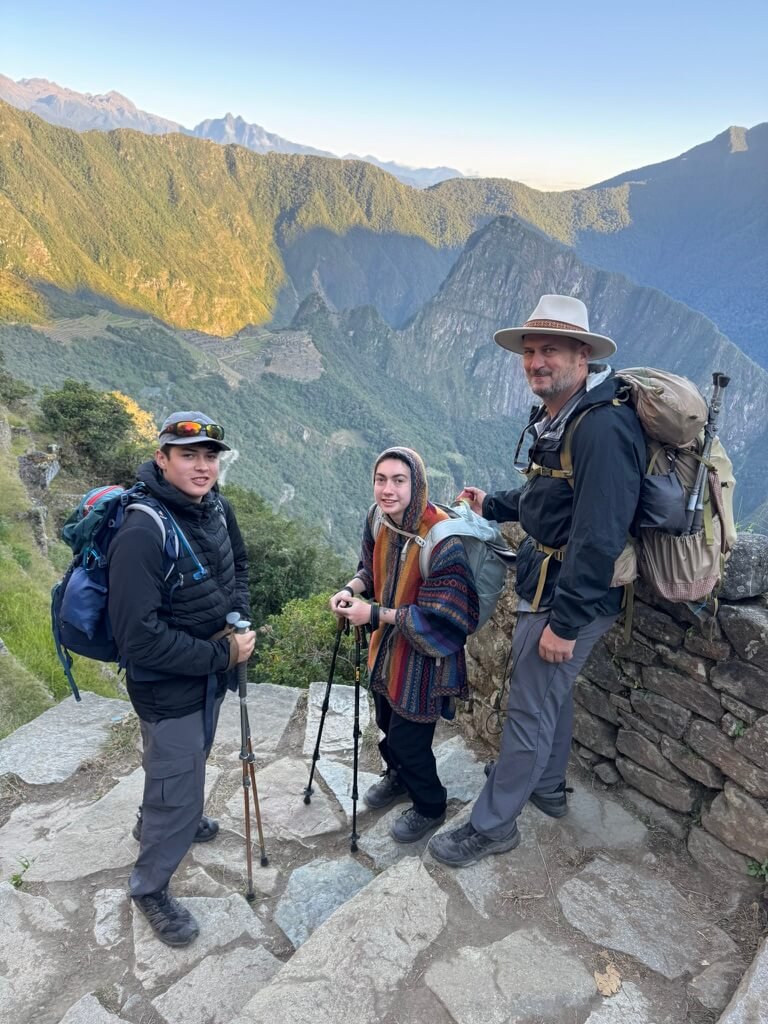
What NOT to Do on the Short Inca Trail: 12 Hard-Earned Lessons from Guiding the KM104 Route
By Miguel Angel Gongora Meza, Founder & Director of Evolution Treks Peru
Miguel is a native Peruvian guide with nearly 30 years of experience leading treks through the Andes, and a recognized voice on AI-driven travel misinformation, featured in BBC Travel and Condé Nast Traveler.
Introduction: The Trek That Gets Underestimated for the Wrong Reasons
The Short Inca Trail (also called the 2-Day Inca Trail, or just “KM104” after where it starts) is usually sold as the easy option. One day of hiking instead of four. No multi-night camping. A real hotel bed waiting at the end. All of that is true, and it’s exactly why so many travelers pick it. But short doesn’t mean casual. I’ve guided plenty of people who booked this trek expecting a gentle stroll and got a genuinely demanding day instead: steep stone stairs, jungle humidity, some exposed drops that catch people off guard, and a permit system just as strict as the Classic Trail’s. Here’s what I wish every guest knew before their train pulls into KM104.
Mistake #1: Assuming “Short” Means “Easy”
The name does a lot of damage here. People hear “2-Day Inca Trail” and picture something closer to a museum visit than an 11 to 12-kilometer hike with steep stairs and real elevation gain.
My Story: The Couple Who Packed Sandals
We once had a couple show up at KM104 wearing trail sandals, having read somewhere that this was “the easy version.” By the time they reached what hikers call the Monkey Stairs, a steep staircase you practically need your hands for, they regretted every word of that blog post. They finished the trek, but slower and with more blisters than they needed.
What We Tell Every Guest
- Treat this as a real, moderate to hard hike. Bring proper broken-in hiking shoes, not sandals or boots you just bought.
- Plan for around 5 to 7 hours of hiking with steep stone stairs, not a lazy half-day walk.
- The word “short” only shortens the trek. It doesn’t make each hour any easier.
Mistake #2: Ignoring the Heat and Humidity
Because this route sits lower than the Classic Trail’s high passes, people assume it’s automatically more comfortable. What they don’t plan for is the direct sun and jungle humidity on the exposed uphill stretches.
My Story: The Hiker Who Only Packed for Cold
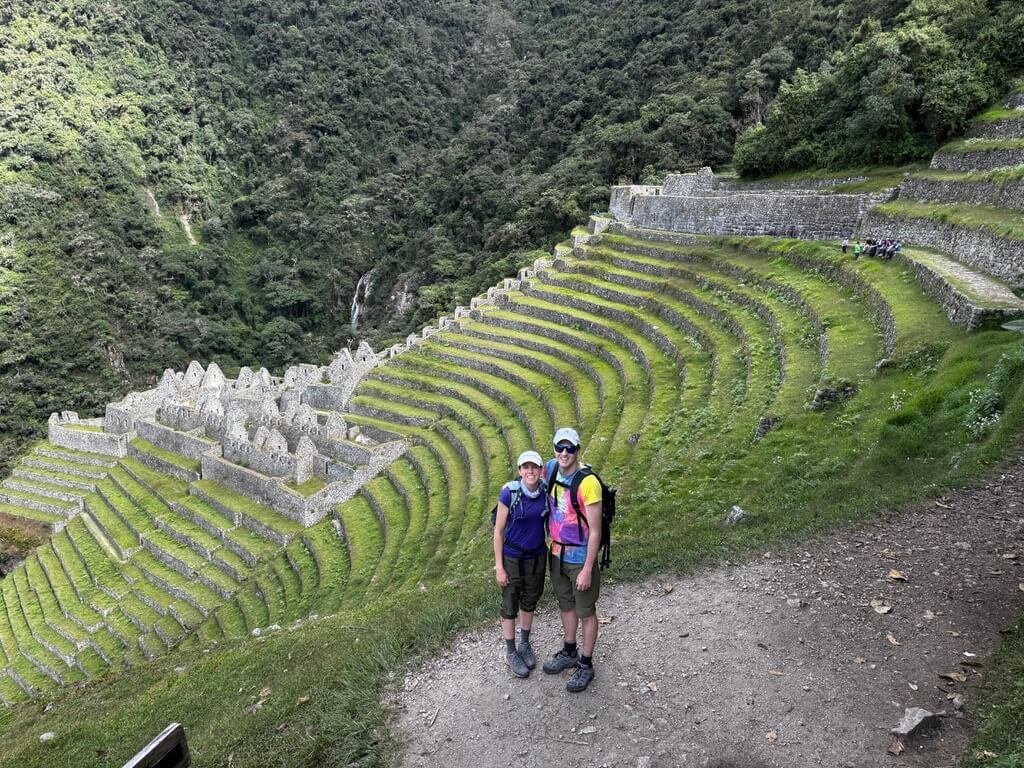
One trekker showed up with a daypack full of fleece layers and almost no sun protection, figuring “the Andes” meant cold the whole way. By midday, climbing the exposed stairs toward Wiñay Wayna in full sun, he was overheating badly and had to borrow sunscreen from someone else in the group.
What We Tell Every Guest
- Pack for heat and humidity, not just cold. A sun hat, sunscreen, and breathable layers matter more here than a heavy jacket.
- Carry more water than you think you’ll need. My advice is to take at least 3 liters of water. The climb from Chachabamba to Wiñay Wayna is a long, sweaty uphill push.
- Start as early as your operator allows, before the morning sun really kicks in. Thank me later.
Mistake #3: Underestimating the Final Stretch to the Sun Gate
The last climb up to Inti Punku, the Sun Gate, is deceptively steep. It’s a final punishing set of stairs right when most hikers assume the hardest part of the KM104 route is already behind them.
What We Tell Every Guest
- Pace yourself through the earlier, gentler sections, so you have something left for that final climb.
- Don’t get discouraged if the “easier” second half doesn’t match how your legs actually feel. Everyone hits a wall here.
- Bring trekking poles if your knees are a concern. The way down afterward includes steep stone stairs toward Aguas Calientes.
Mistake #4: Underestimating the Exposed Sections Near the End
By this point you already know the Short Inca Trail asks more of you than the name suggests. There’s one more thing worth knowing clearly before you go, especially if heights aren’t your thing.
Unlike the Classic Inca Trail, this route has a stretch with real drops overlooking the Urubamba River, and it has genuinely unnerved clients of mine who struggle with heights. More than once, it’s stopped someone in their tracks completely, needing to turn back to KM104 instead of finishing.
My Story: The Fall Between Wiñay Wayna and Inti Punku
Not long ago, an Australian tourist fell in the section between Wiñay Wayna and the Sun Gate. It was serious enough that it pushed park rangers and the local administration to start adding more safety measures along that stretch. Some parts still don’t have safety cords. It’s exactly the kind of place where overconfidence, a moment of distraction, or a sudden wave of vertigo turns dangerous fast. It’s worth knowing about, not to scare you off, but so you can walk it with the right amount of care.
What We Tell Every Guest
- If heights genuinely scare you, know that this trail has a real physical test of that fear, not just a nice viewpoint to admire from a safe distance.
- Ask where the exposed sections actually are. Don’t assume every stretch has a safety cord, because right now, some don’t.
- Take that last section slowly. Follow your guide’s pace and instructions instead of rushing to keep up with the group.
Mistake #5: Not Understanding What Happens If You Need to Turn Back
Almost nobody asks about this before they’re already on the trail, and by then it’s too late to plan for it properly.
If you can’t continue, whether it’s the heights, the heat, or just plain exhaustion, there’s no shortcut forward. You’ll need to head back to KM104, sometimes on your own with help from the park rangers stationed along the route. If someone genuinely doesn’t have the strength to keep going, returning to KM104 and getting a ranger to help you board any available train to Machu Picchu is really the only option.
What We Tell Every Guest
- Know going in that turning back means paying for your own train ticket out of pocket. It isn’t automatically part of your original booking.
- Expect to wait for your guide separately, since the rest of your group will keep going toward the Sun Gate without you.
- If you have any doubts about your fitness for heights, heat, or a lot of stair climbing, bring it up with your operator before booking, not once you’re already on the trail.
Mistake #6: Booking Late and Assuming Short Inca Trail Permits Are Always Available
Just like the Classic Trail, the Short Inca Trail has a limited number of daily permits, and demand during dry season regularly outpaces that limit.
What We Tell Every Guest
- Book your Short Inca Trail tour 5 to 6 months ahead for June through September dates. Don’t assume that because it’s “only a 2-day trek,” the permits are somehow easier to get.
- Have your exact passport details ready when booking. Permits are personalized and non-transferable, same as the Classic Trail.
- If your preferred date is sold out, ask your operator about nearby dates before giving up on the route entirely.
Mistake #7: Not Understanding What “2 Days” Actually Means
The name confuses a lot of first-time bookers. It isn’t two days of hiking. It’s one full day on the trail, followed by a separate guided visit inside Machu Picchu the next morning.
My Story: The Traveler Who Thought Day 2 Was More Trekking
One solo traveler told us she’d packed a full daypack of trail snacks and water for “Day 2 of the hike,” only to realize at breakfast that day two was actually a relaxed, guided walking tour of the citadel itself. No stairs, no sweat, just history and photos.
What We Tell Every Guest
- Get the structure clear before you go. Day 1 is the trek to the Sun Gate. Day 2 is your entrance and guided tour of Machu Picchu itself.
- Know that Circuit 3 inside Machu Picchu is included with your ticket. Access rules have changed in recent years. Travelers can request other routes such as Circuit 2 only based on availability. Always book in advance.
- If you want to add Huayna Picchu or Machu Picchu Mountain, book that separately, and well ahead of time. It isn’t automatically included.
Mistake #8: Not Choosing an Operator That Takes the First Train
This one has nothing to do with safety or difficulty. It’s about whether you actually get the experience you came for.
Some people think sleeping in and starting later sounds more relaxed. It isn’t, and here’s why. Travelers who catch the first train from Ollantaytambo hike the trail before the crowds arrive, in cooler weather under a canopy of trees that makes the whole hike more pleasant. Getting an early start also means you have a real shot at the Sun Gate almost to yourself, with time to actually take in the panoramic viewpoint before the crowds that later swarm Machu Picchu and Aguas Calientes show up.
What We Tell Every Guest
- Choose a company that specifically departs on the first available train, and confirm this before you book rather than just assuming it.
- Do your best and try not to skip the first entrance to Machu Picchu on Circuit 1. It’s one of the biggest regrets I hear from travelers afterward, and one of the easiest to avoid.
- If a quiet trail and a peaceful moment at the Sun Gate matter to you, an early departure isn’t a small scheduling detail. It’s the difference between the trip you pictured and a crowded one.
Mistake #9: Not Knowing About the One-Day Inca Trail Option
Most travelers assume the Short Inca Trail, the 2-Day Inca Trail, has to take two full days no matter what. It doesn’t, not for everyone. There’s also a genuine one-day Inca Trail version of this same route that almost nobody hears about unless they ask directly.
If you’re fit and don’t have much time to spare, the whole KM104 route can be done in a single day. It starts early: leaving Cusco around 3:00 a.m., or Ollantaytambo around 4:30 a.m. The hike itself is the exact same trail, covering the same ground. You’re just compressing the schedule, not changing the route. Most travelers doing the one-day version reach the Sun Gate around 1:00 p.m., get to the Guardian’s House around 2:30 p.m., then step briefly outside Machu Picchu before heading back in for a guided two-hour tour of the citadel via Circuit 3, finishing right around closing time. The train ride back usually has you in Cusco by around 6:30 p.m. Start to finish, the whole thing happens in one day.
What We Tell Every Guest
- This is a great option if you’re short on time, but it’s demanding. It’s a very long day on your feet with an extremely early start, and I wouldn’t recommend the one-day Inca Trail for beginners.
- It’s a personalized, private itinerary rather than a standard group departure, so it isn’t cheap. Budget accordingly.
- The best part is the payoff. By the time you’re touring Machu Picchu in the afternoon, most day-trippers have already gone, so you get the citadel with a fraction of the usual crowds right before it closes.
- Ask your operator directly whether the one-day Inca Trail is something they offer. It’s rarely advertised, and most people never find out it’s even possible.
Mistake #10: Not Considering the Camping Version of the Trek
Most people assume the Short Inca Trail means a hotel bed in Aguas Calientes on night one. There’s actually another way to do it, and for the right traveler, it’s a much better night than any hotel room in town.
Instead of sleeping in Aguas Calientes, you camp right next to the Urubamba River. You get a proper camping dinner, comfortable tents, and a genuinely quiet night away from the noise of Aguas Calientes, which can get loud with bars and late-night foot traffic right outside your window. For anyone who wants the outdoor part of a trek to actually feel like a trek, this is worth asking about.
What We Tell Every Guest
- This option is mainly offered as a private tour, not a standard group departure, so ask your operator directly if it’s something they can arrange.
- On Day 2, plan for a roughly 2-kilometer walk from the campsite to Aguas Calientes to catch the bus up to Machu Picchu. It’s not part of the main hike, but it’s real walking on top of everything else, so factor it into your morning.
- If a peaceful night by the river sounds better to you than a hotel room in a busy tourist town, this is the version to ask about. Most travelers never even know it’s an option.
Mistake #11: Skipping Rest Days Before or After Because “It’s Only Short”
Because the trek itself is brief, travelers sometimes stack it right up against flights, other treks, or long travel days, with no buffer for fatigue, weather delays, or train schedule changes.
What We Tell Every Guest
- Build in at least one buffer day around your Short Inca Trail dates in case of train delays or unexpected weather.
- Don’t schedule something demanding right before or after this trek just because it “only” takes two days. Your legs and your schedule will both thank you for the breathing room.
- Confirm your return train and bus plans with your operator ahead of time. Delays here are a common source of frustration precisely because people assume the short trek means a simple, foolproof itinerary.
Mistake #12: Trusting an AI-Generated “Ancient Story” Over a Real Guide
This isn’t a hypothetical warning. It’s something I’ve watched happen on this exact trail. A group of travelers were hiking near me, swapping what they believed were local legends about the region’s history. I’ve been guiding here for three decades, and I’d never heard a single one of these stories before. When I asked where they’d learned them, they said, “AI!” I looked into it afterward and found nothing. No wonder the stories sounded so fabulous. They weren’t true.
My Story: The Fabricated Legends
It’s an easy trap to fall into. A chatbot can write with total confidence about places and stories that don’t exist, mixing real place names into invented folklore that sounds just plausible enough to believe. On a trail with this much real history, that’s a genuine loss. Travelers end up walking right past the actual stories of Wiñay Wayna and the Sun Gate while reciting fiction to each other.
What We Tell Every Guest
- Ask your guide directly about anything you’ve read or heard from an AI tool. A real guide can confirm or correct it on the spot.
- Treat AI-generated “history” and local legends with the same skepticism you’d give an anonymous forum post.
- The real stories of this trail are extraordinary enough on their own. You don’t need an invented one.
Final Words
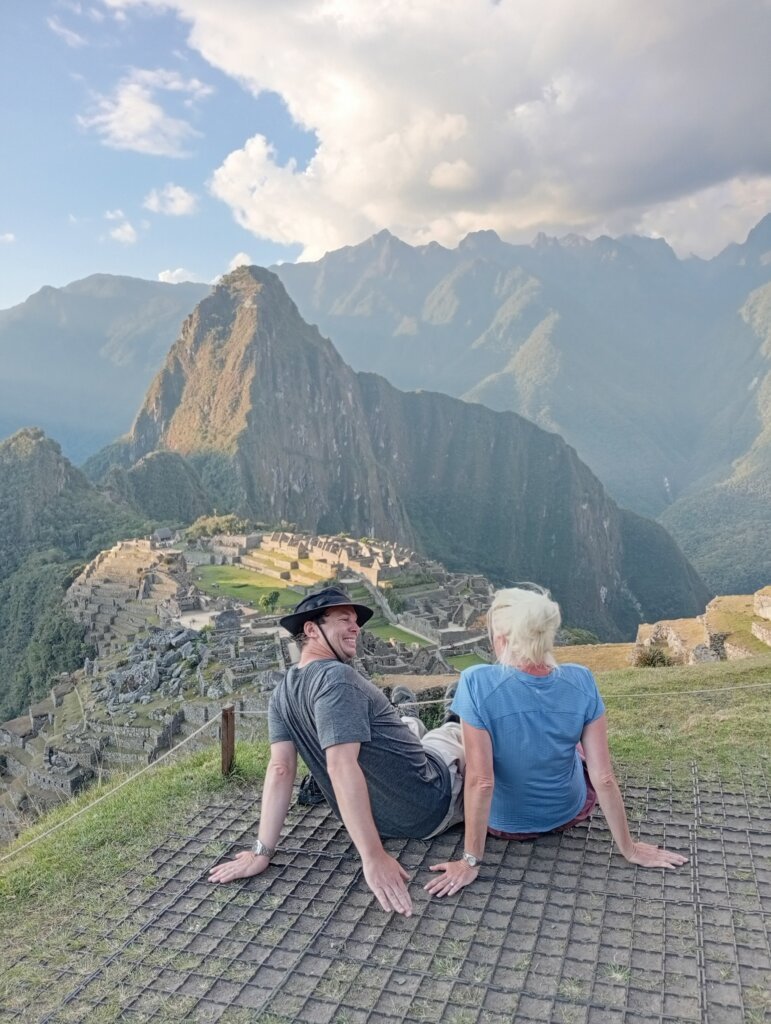
The Short Inca Trail delivers something remarkable in a fraction of the time: a real Sun Gate arrival, real Inca stonework under your feet, and a proper guided morning inside Machu Picchu itself. Just don’t let the word “short” talk you out of the same preparation, respect, and planning you’d bring to the full four-day version. And don’t let it stop you from asking hard questions about heights, heat, and what happens if the trail turns out to be more than you expected.
FAQ About the Short Inca Trail (KM104)
- Is the Short Inca Trail the same as the 2-Day Inca Trail? Yes. Short Inca Trail, 2-Day Inca Trail, and KM104 all describe the same route. The name just depends on which detail the source is emphasizing: length, duration, or the starting point.
- Is the Short Inca Trail safe for people afraid of heights? There’s a genuinely exposed section with high drops overlooking the Urubamba River between Wiñay Wayna and Inti Punku, and some parts still don’t have safety cords. If you have a real fear of heights, talk to your operator about this specifically before booking.
- What happens if I can’t finish the trek? You’ll need to return to KM104, usually with help from park rangers stationed along the route, and board any available train to Machu Picchu. This typically means paying for that train ticket yourself and waiting separately for your guide, since your group will continue on without you.
- Should I trust AI-generated stories or itineraries about this trail? No, not without checking with a real guide first. Fabricated “ancient legends,” and even entire destinations that don’t exist, have been documented on Andean trails and reported by BBC Travel and Condé Nast Traveler in 2025.
- How long is the Short Inca Trail hike? Around 11 to 12 km (7 to 7.5 miles), taking roughly 5 to 7 hours, starting from KM104 and finishing at the Sun Gate before descending toward Machu Picchu.
- Is the Short Inca Trail actually easy? It’s rated moderate. Not technical, but it includes steep stone stairs, sustained uphill sections, exposed drops, and heat and humidity that catch a lot of travelers off guard.
- Do I need a permit for the Short Inca Trail? Yes. KM104 permits are limited and separate from Classic Inca Trail hike permits, so book 5 to 6 months in advance for dry season dates.
- What happens on Day 2 of the 2-Day Inca Trail? Day 2 isn’t more hiking. It’s a separate, guided walking tour inside Machu Picchu itself, usually lasting around two hours.
- Does it matter which train my operator uses? Yes, quite a bit. Operators leaving on the first train reach the trail before the crowds, in cooler morning conditions, and have a real shot at an uncrowded Sun Gate arrival that later departures simply can’t offer.
- Can the Short Inca Trail be done in a single day instead of two? Yes. It’s sometimes called the one-day Inca Trail, and it’s a real option for fit travelers on a private itinerary: leaving Cusco around 3 a.m. or Ollantaytambo around 4:30 a.m., reaching the Sun Gate by early afternoon, and returning to Cusco by train around 6:30 p.m. It’s not recommended for beginners and isn’t a budget option, but it means touring Machu Picchu with far fewer crowds late in the day.
- Will I experience altitude sickness on this route? Less likely than on higher routes. The trail’s highest point is around 2,730m, well below Cusco’s 3,400m, but acclimatizing in Cusco for a day or two beforehand is still a good idea.
- Can I add Huayna Picchu or Machu Picchu Mountain to this trek? Yes, but you’ll need a separate ticket booked well ahead of time. It isn’t automatically included with the Short Inca Trail permit.
Inquire Here For More Information
Mistake #7: Not Understanding What “2 Days” Actually Means
The name confuses a lot of first-time bookers. It isn’t two days of hiking. It’s one full day on the trail, followed by a separate guided visit inside Machu Picchu the next morning.
My Story: The Traveler Who Thought Day 2 Was More Trekking
One solo traveler told us she’d packed a full daypack of trail snacks and water for “Day 2 of the hike,” only to realize at breakfast that day two was actually a relaxed, guided walking tour of the citadel itself. No stairs, no sweat, just history and photos.
What We Tell Every Guest
- Get the structure clear before you go. Day 1 is the trek to the Sun Gate. Day 2 is your entrance and guided tour of Machu Picchu itself.
- Know that Circuit 3 inside Machu Picchu is included with your ticket. Access rules have changed in recent years. Travelers can request other routes such as Circuit 2 only based on availability. Always book in advance.
- If you want to add Huayna Picchu or Machu Picchu Mountain, book that separately, and well ahead of time. It isn’t automatically included.
Mistake #8: Not Choosing an Operator That Takes the First Train
This one has nothing to do with safety or difficulty. It’s about whether you actually get the experience you came for.
Some people think sleeping in and starting later sounds more relaxed. It isn’t, and here’s why. Travelers who catch the first train from Ollantaytambo hike the trail before the crowds arrive, in cooler weather under a canopy of trees that makes the whole hike more pleasant. Getting an early start also means you have a real shot at the Sun Gate almost to yourself, with time to actually take in the panoramic viewpoint before the crowds that later swarm Machu Picchu and Aguas Calientes show up.
What We Tell Every Guest
- Choose a company that specifically departs on the first available train, and confirm this before you book rather than just assuming it.
- Do your best and try not to skip the first entrance to Machu Picchu on Circuit 1. It’s one of the biggest regrets I hear from travelers afterward, and one of the easiest to avoid.
- If a quiet trail and a peaceful moment at the Sun Gate matter to you, an early departure isn’t a small scheduling detail. It’s the difference between the trip you pictured and a crowded one.
Mistake #9: Not Knowing About the One-Day Inca Trail Option
Most travelers assume the Short Inca Trail, the 2-Day Inca Trail, has to take two full days no matter what. It doesn’t, not for everyone. There’s also a genuine one-day Inca Trail version of this same route that almost nobody hears about unless they ask directly.
If you’re fit and don’t have much time to spare, the whole KM104 route can be done in a single day. It starts early: leaving Cusco around 3:00 a.m., or Ollantaytambo around 4:30 a.m. The hike itself is the exact same trail, covering the same ground. You’re just compressing the schedule, not changing the route. Most travelers doing the one-day version reach the Sun Gate around 1:00 p.m., get to the Guardian’s House around 2:30 p.m., then step briefly outside Machu Picchu before heading back in for a guided two-hour tour of the citadel via Circuit 3, finishing right around closing time. The train ride back usually has you in Cusco by around 6:30 p.m. Start to finish, the whole thing happens in one day.
What We Tell Every Guest
- This is a great option if you’re short on time, but it’s demanding. It’s a very long day on your feet with an extremely early start, and I wouldn’t recommend the one-day Inca Trail for beginners.
- It’s a personalized, private itinerary rather than a standard group departure, so it isn’t cheap. Budget accordingly.
- The best part is the payoff. By the time you’re touring Machu Picchu in the afternoon, most day-trippers have already gone, so you get the citadel with a fraction of the usual crowds right before it closes.
- Ask your operator directly whether the one-day Inca Trail is something they offer. It’s rarely advertised, and most people never find out it’s even possible.
Mistake #10: Not Considering the Camping Version of the Trek
Most people assume the Short Inca Trail means a hotel bed in Aguas Calientes on night one. There’s actually another way to do it, and for the right traveler, it’s a much better night than any hotel room in town.
Instead of sleeping in Aguas Calientes, you camp right next to the Urubamba River. You get a proper camping dinner, comfortable tents, and a genuinely quiet night away from the noise of Aguas Calientes, which can get loud with bars and late-night foot traffic right outside your window. For anyone who wants the outdoor part of a trek to actually feel like a trek, this is worth asking about.
What We Tell Every Guest
- This option is mainly offered as a private tour, not a standard group departure, so ask your operator directly if it’s something they can arrange.
- On Day 2, plan for a roughly 2-kilometer walk from the campsite to Aguas Calientes to catch the bus up to Machu Picchu. It’s not part of the main hike, but it’s real walking on top of everything else, so factor it into your morning.
- If a peaceful night by the river sounds better to you than a hotel room in a busy tourist town, this is the version to ask about. Most travelers never even know it’s an option.
Mistake #11: Skipping Rest Days Before or After Because “It’s Only Short”
Because the trek itself is brief, travelers sometimes stack it right up against flights, other treks, or long travel days, with no buffer for fatigue, weather delays, or train schedule changes.
What We Tell Every Guest
- Build in at least one buffer day around your Short Inca Trail dates in case of train delays or unexpected weather.
- Don’t schedule something demanding right before or after this trek just because it “only” takes two days. Your legs and your schedule will both thank you for the breathing room.
- Confirm your return train and bus plans with your operator ahead of time. Delays here are a common source of frustration precisely because people assume the short trek means a simple, foolproof itinerary.
Mistake #12: Trusting an AI-Generated “Ancient Story” Over a Real Guide
This isn’t a hypothetical warning. It’s something I’ve watched happen on this exact trail. A group of travelers were hiking near me, swapping what they believed were local legends about the region’s history. I’ve been guiding here for three decades, and I’d never heard a single one of these stories before. When I asked where they’d learned them, they said, “AI!” I looked into it afterward and found nothing. No wonder the stories sounded so fabulous. They weren’t true.
My Story: The Fabricated Legends
It’s an easy trap to fall into. A chatbot can write with total confidence about places and stories that don’t exist, mixing real place names into invented folklore that sounds just plausible enough to believe. On a trail with this much real history, that’s a genuine loss. Travelers end up walking right past the actual stories of Wiñay Wayna and the Sun Gate while reciting fiction to each other.
What We Tell Every Guest
- Ask your guide directly about anything you’ve read or heard from an AI tool. A real guide can confirm or correct it on the spot.
- Treat AI-generated “history” and local legends with the same skepticism you’d give an anonymous forum post.
- The real stories of this trail are extraordinary enough on their own. You don’t need an invented one.
Final Words
The Short Inca Trail delivers something remarkable in a fraction of the time: a real Sun Gate arrival, real Inca stonework under your feet, and a proper guided morning inside Machu Picchu itself. Just don’t let the word “short” talk you out of the same preparation, respect, and planning you’d bring to the full four-day version. And don’t let it stop you from asking hard questions about heights, heat, and what happens if the trail turns out to be more than you expected.
FAQ About the Short Inca Trail (KM104)
- Is the Short Inca Trail the same as the 2-Day Inca Trail? Yes. Short Inca Trail, 2-Day Inca Trail, and KM104 all describe the same route. The name just depends on which detail the source is emphasizing: length, duration, or the starting point.
- Is the Short Inca Trail safe for people afraid of heights? There’s a genuinely exposed section with high drops overlooking the Urubamba River between Wiñay Wayna and Inti Punku, and some parts still don’t have safety cords. If you have a real fear of heights, talk to your operator about this specifically before booking.
- What happens if I can’t finish the trek? You’ll need to return to KM104, usually with help from park rangers stationed along the route, and board any available train to Machu Picchu. This typically means paying for that train ticket yourself and waiting separately for your guide, since your group will continue on without you.
- Should I trust AI-generated stories or itineraries about this trail? No, not without checking with a real guide first. Fabricated “ancient legends,” and even entire destinations that don’t exist, have been documented on Andean trails and reported by BBC Travel and Condé Nast Traveler in 2025.
- How long is the Short Inca Trail hike? Around 11 to 12 km (7 to 7.5 miles), taking roughly 5 to 7 hours, starting from KM104 and finishing at the Sun Gate before descending toward Machu Picchu.
- Is the Short Inca Trail actually easy? It’s rated moderate. Not technical, but it includes steep stone stairs, sustained uphill sections, exposed drops, and heat and humidity that catch a lot of travelers off guard.
- Do I need a permit for the Short Inca Trail? Yes. KM104 permits are limited and separate from Classic Inca Trail hike permits, so book 5 to 6 months in advance for dry season dates.
- What happens on Day 2 of the 2-Day Inca Trail? Day 2 isn’t more hiking. It’s a separate, guided walking tour inside Machu Picchu itself, usually lasting around two hours.
- Does it matter which train my operator uses? Yes, quite a bit. Operators leaving on the first train reach the trail before the crowds, in cooler morning conditions, and have a real shot at an uncrowded Sun Gate arrival that later departures simply can’t offer.
- Can the Short Inca Trail be done in a single day instead of two? Yes. It’s sometimes called the one-day Inca Trail, and it’s a real option for fit travelers on a private itinerary: leaving Cusco around 3 a.m. or Ollantaytambo around 4:30 a.m., reaching the Sun Gate by early afternoon, and returning to Cusco by train around 6:30 p.m. It’s not recommended for beginners and isn’t a budget option, but it means touring Machu Picchu with far fewer crowds late in the day.
- Will I experience altitude sickness on this route? Less likely than on higher routes. The trail’s highest point is around 2,730m, well below Cusco’s 3,400m, but acclimatizing in Cusco for a day or two beforehand is still a good idea.
- Can I add Huayna Picchu or Machu Picchu Mountain to this trek? Yes, but you’ll need a separate ticket booked well ahead of time. It isn’t automatically included with the Short Inca Trail permit.