
Group trek · 4 days / 3 nights
4-Day Inca Trail to Machu Picchu: Ethical Group Trek
By Miguel Angel Gongora Meza, co-founder and former Inca Trail porter · Updated November 2026
The 4-day Classic Inca Trail is a 42 km group trek from KM 82 to Machu Picchu, crossing Dead Woman's Pass at 4,215 m and arriving through the Sun Gate on day 4. You hike with up to 8 travellers, a licensed guide and a crew of fairly paid porters, women and men, who earn the same.
That is 26 miles on foot, with a high point of 13,829 ft. It is the only way to reach Machu Picchu through the Sun Gate, and it passes Inca sites such as Sayacmarca and Wiñay Wayna that visitors arriving by train never see.
Highest point 4,215 m
Moderate to challenging
Up to 8 hikers
Women porters on every trek
Quick facts
Group trek, per person
From $990
2027 price. Permit, guide, porters, meals, train and bus included.
2027 is fully available. Permits sell out months ahead, so book early.
Book now: $300 depositCheck availability on WhatsAppSecure card payment. The $300 deposit buys your permit; balance must be paid 30 days before the hike (8% fee for all credit card payments) or in cash in Cusco 2 days before with no fees.
Group or private?
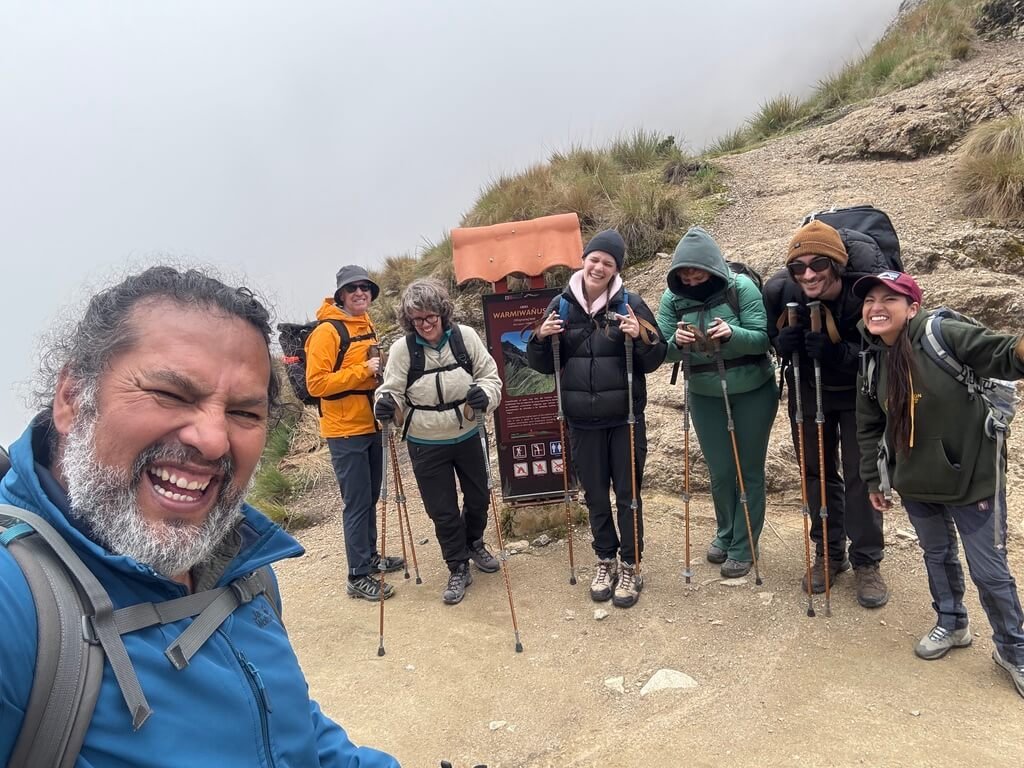
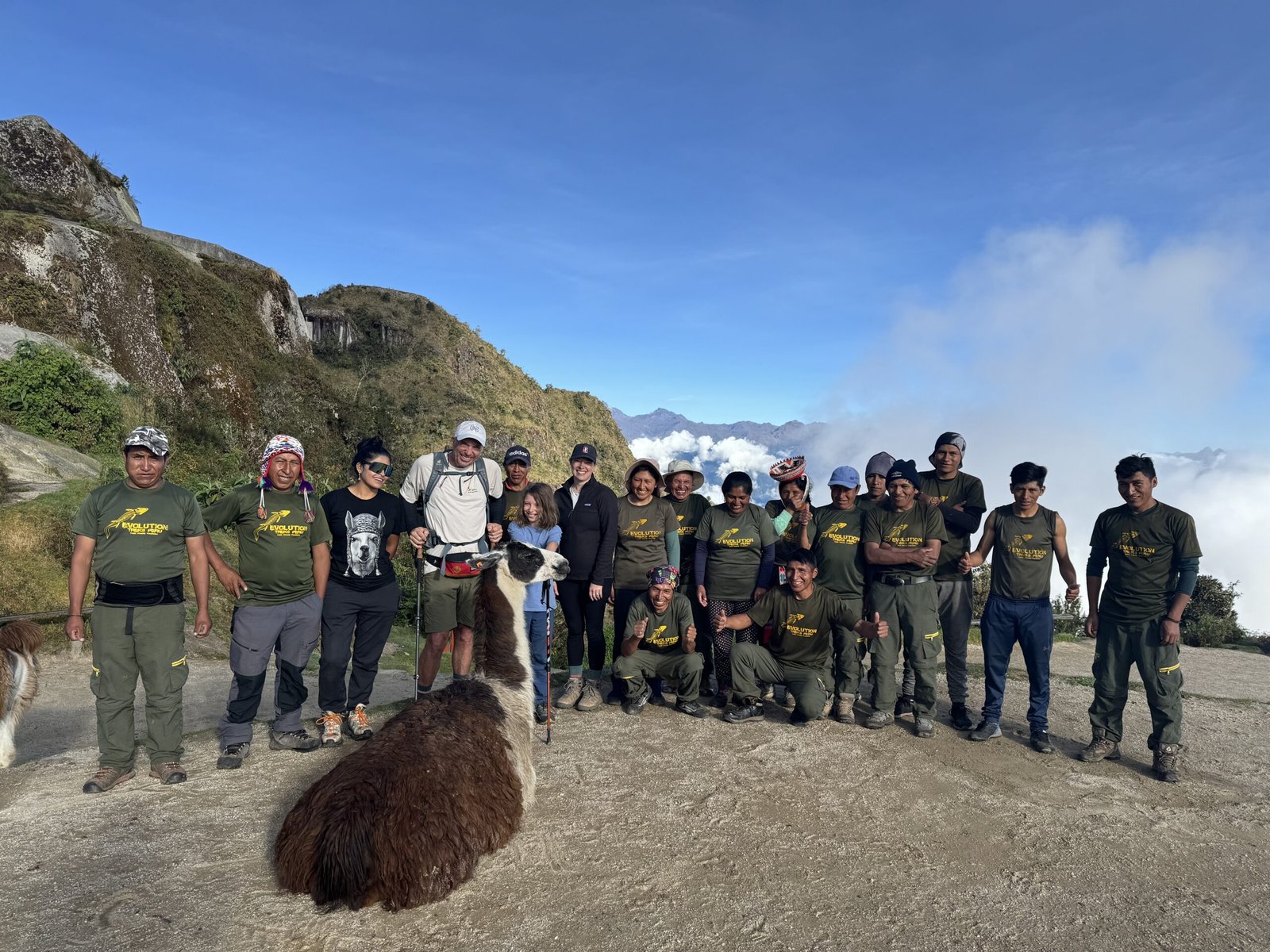
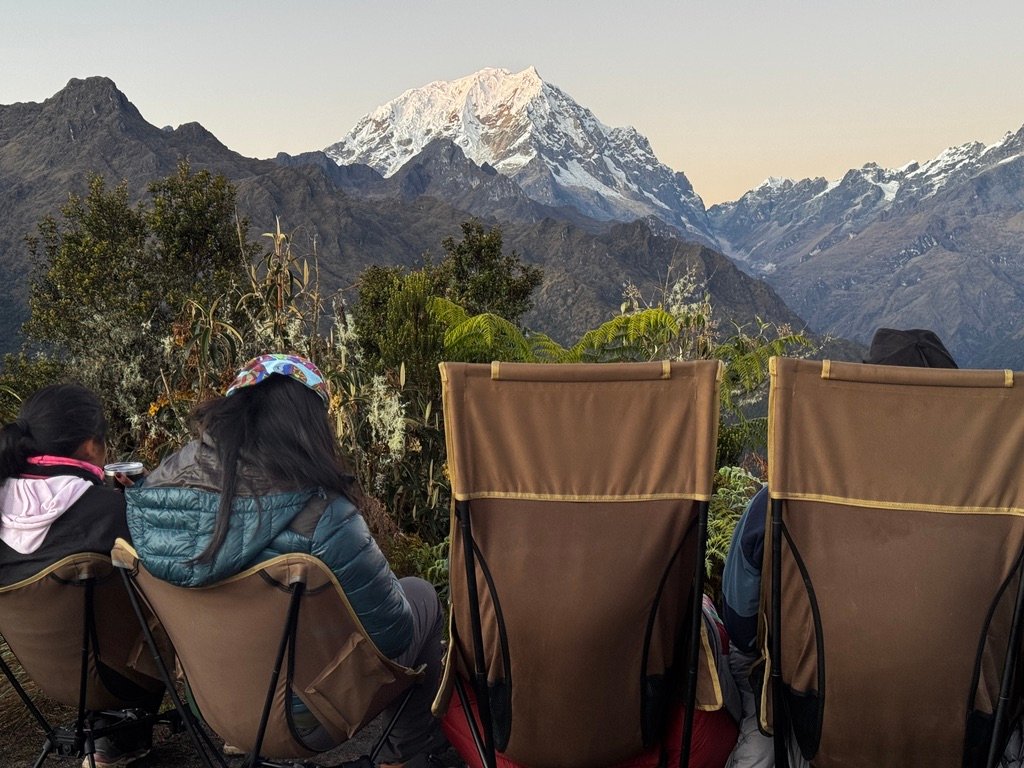
With one of our groups at Warmiwañusqa, Dead Woman's Pass (4,215 m)

Travel & Hospitality Award Winner 2024
As featured on






What our guests say







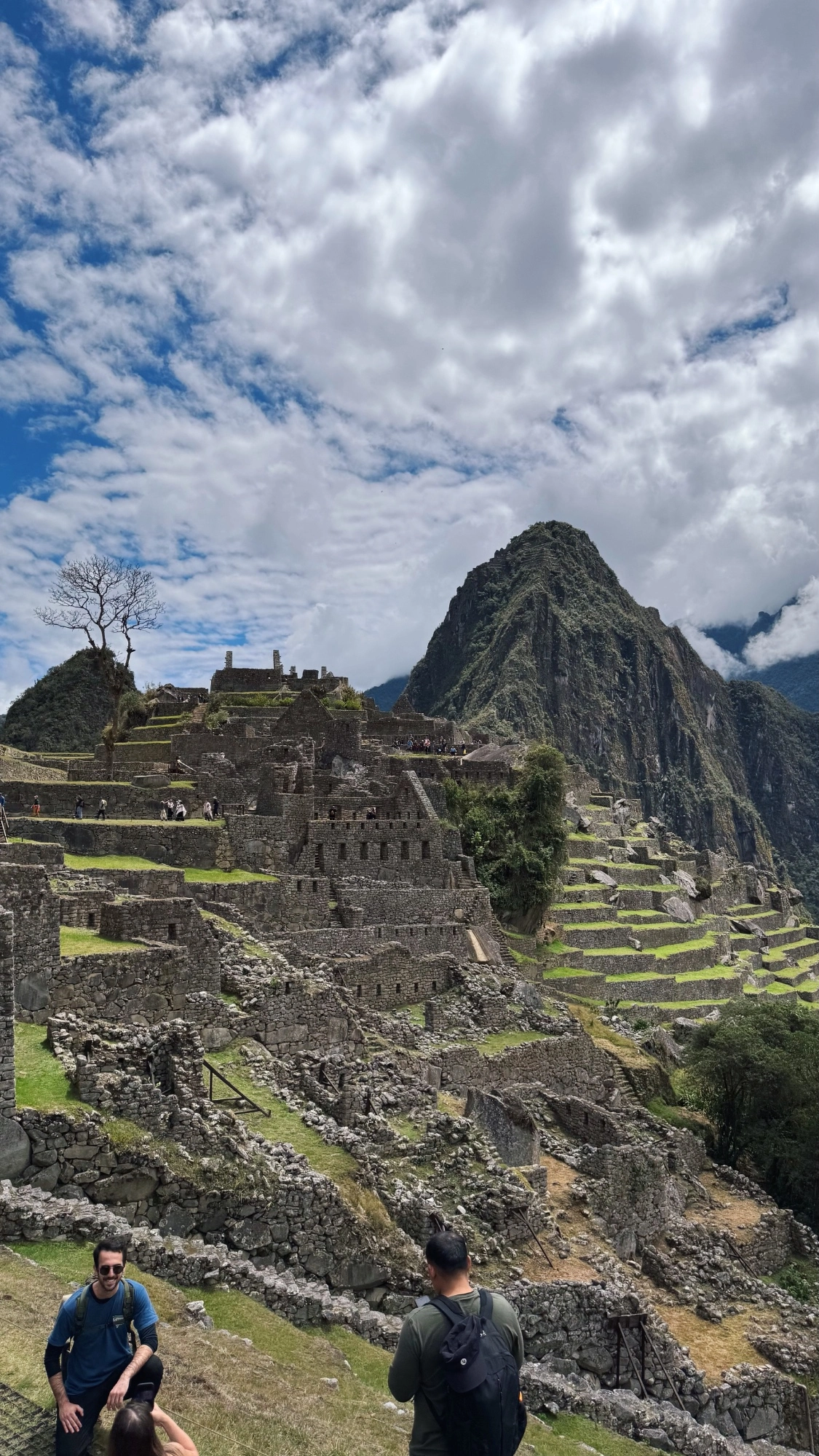





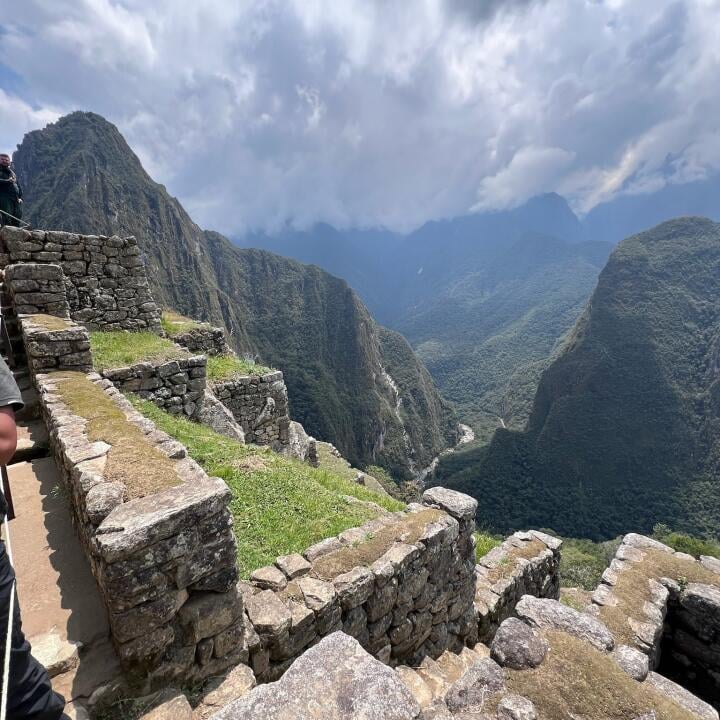

Should you join a group or go private?
Join the group trek if you enjoy meeting other hikers and want the best price; go private if you want your own guide, your own pace and your own start time.
| Group (this page) | Private | |
|---|---|---|
| Who you hike with | Up to 8 travellers | Only your party |
| Price per person | From $990 | From $1,250 per person (4 or more); $1,350 for 2 to 3; $2,500 solo |
| Pace | Set for the group, with a guide at the back | Yours, every day |
| Start time and campsites | Fixed | Flexible, subject to permits |
| Best for | Solo travellers, couples, friends on a budget | Families, slower hikers, special occasions |
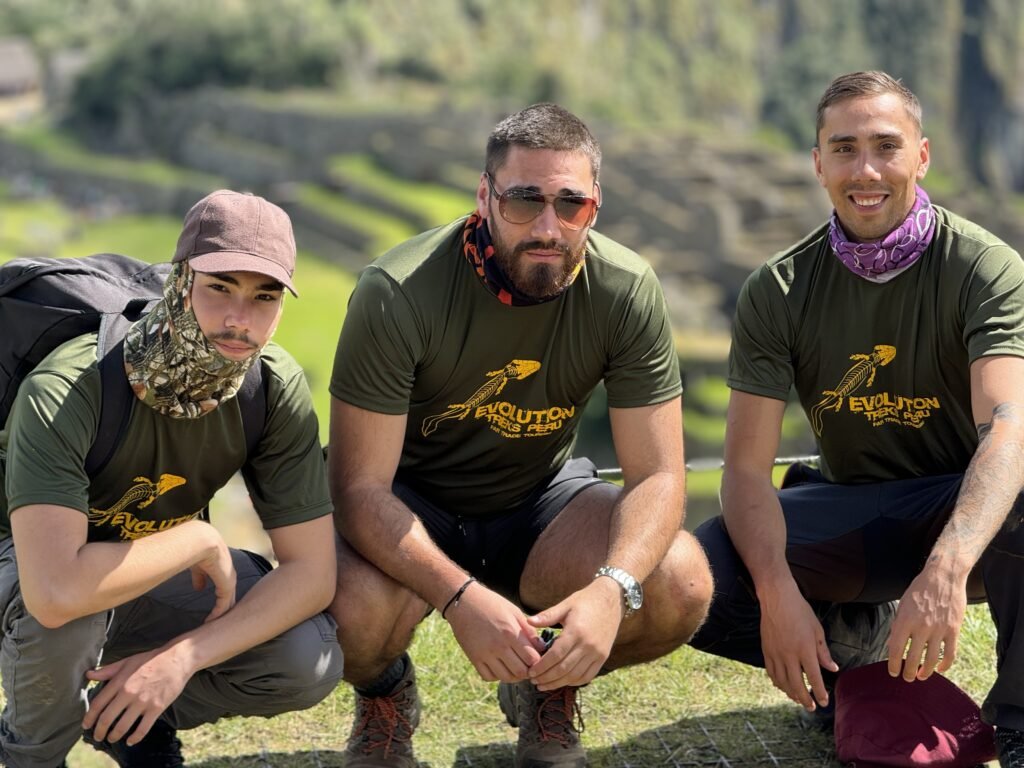
What happens on each day of the 4-day Inca Trail?
Day 1 is a warm-up, day 2 is the hard climb to Dead Woman's Pass, day 3 is the longest and most beautiful, and day 4 is a short early walk to the Sun Gate.
| Day | Route | Distance | Altitude | Camp |
|---|---|---|---|---|
| 1 | KM 82 to Huayllabamba | 11 km, 5 to 6 hours | 2,720 m to ~3,000 m | Huayllabamba |
| 2 | Dead Woman's Pass to Pacaymayu | 12 km, 6 to 7 hours | Up to 4,215 m, down to 3,550 m | Pacaymayu |
| 3 | Runkurakay Pass, Sayacmarca, Phuyupatamarca to Wiñay Wayna | 16 km, about 9 hours | Up to 4,000 m, down to 2,680 m | Wiñay Wayna |
| 4 | Sun Gate and Machu Picchu | About 5 km to Machu Picchu | 2,680 m to 2,430 m | Back in Cusco about 7:30 pm |
Day 1 · Cusco to Huayllabamba
Pickup at 4:30 to 5:00 am, 2 hours by bus to KM 82. An easy first day to get used to the altitude, with views of Wakay Willka (Veronica), 5,860 m. Lunch on the trail, dinner at camp.
Day 2 · Dead Woman's Pass
Up at 6:00 am for the hardest day: a steep climb through Polylepis cloud forest to 4,215 m, then 2 hours down to camp at Pacaymayu. Go slowly; your guide sets the breaks.
Day 3 · The ruins day
The most beautiful day: Runkurakay, Sayacmarca, Phuyupatamarca ("town in the clouds") and the Intipata terraces, ending at camp in Wiñay Wayna.
Day 4 · Sun Gate and Machu Picchu
Up at 3:30 am so the porters can catch their train. The checkpoint opens at 5:30 am, then 1 hour to the Sun Gate and down to Machu Picchu for the classic postcard view on Circuit 1, then your guided tour inside on Circuit 3.
See the complete day-by-day itinerary
Day 1 · Cusco to Huayllabamba: the warm-up day
11 km · 5 to 6 hours · 2,720 m up to about 3,000 m · Camp at Huayllabamba
We pick you up at your hotel in Cusco between 4:30 and 5:00 am, or between 7:00 and 8:00 am if you slept in the Sacred Valley. The bus takes about 2 hours to KM 82, where your original passport is checked at the checkpoint and the walk begins.
This is the gentlest walking of the trek. We use it for looking around, because the next two days ask more of your legs.
What we stop for that most groups walk past
- The Salapunku lookout. About 10 minutes after KM 82. We stop here before the group settles into its pace.
- The rock walls of the Urubamba valley. Before the first climb, up to Miskay, the river has cut straight through the rock. Open Rockd and it tells you what you are standing on and how old it is.
- Casa del Picaflor, the Hummingbird House at Miskay. A small hummingbird sanctuary. Leave a tip or buy a drink to help keep it going. Merlin Bird ID names the birds from a photo.
- Pulpituyoq at Llaqtapata. We take both our group and our private treks into this Inca site. Few other groups go in, so you see it without a crowd.
- Wakay Willka (Veronica), 5,860 m. The snow peak in view through the day. Point PeakFinder at the skyline and it names every summit.
Lunch is on the trail, cooked by our chef.
At camp
- A short walk to the Huayllabamba Inca site, close to camp.
- Feet in the river at Hatunchaca. After the first day in boots, these are the best ten minutes of the afternoon.
- From May to September your guide leads the first star talk. Bring SkyView Lite and a headlamp.
You meet the porters tonight
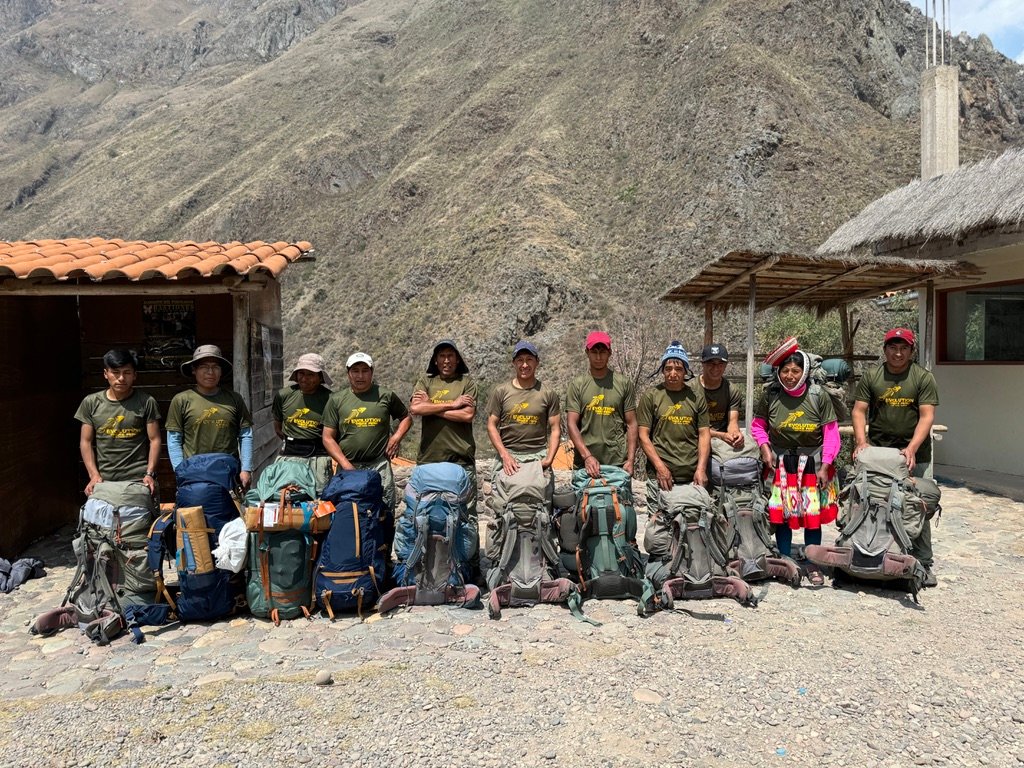
On the first evening at camp, the crew and the guests introduce themselves to each other: the porters, women and men, and the chef.
I started on this trail as a porter in 1996. We do the introductions on day 1 so that for the next three days you know who set up your tent and who cooked your dinner, and they know who they are walking with. Nobody is put on show. We introduce them because it matters that you know and value the people who make your trek possible.
Apps for today: Rockd, PeakFinder, Merlin Bird ID, SkyView Lite. How to set them up.
Day 2 · Dead Woman's Pass to Pacaymayu: the hard day
12 km · 6 to 7 hours · up to 4,215 m, down to 3,550 m · Camp at Pacaymayu
We wake at 6:00 am. Today is the steepest climb of the trek: from Huayllabamba up to Dead Woman's Pass at 4,215 m (13,829 ft), then about 2 hours down to camp at Pacaymayu.
Why we camp at Pacaymayu
Where a company plans its second night decides how the first two days feel. We plan ours at Pacaymayu, just over the pass. That choice lets day 1 stay short and unhurried, with a relaxed start on the trail, so you can enjoy it and use it as one more training day at altitude before the big climb.
A note on camps: the park assigns campsites on a first come, first served basis, so no company can guarantee a specific camp. These are the camps we plan for.
We walk it together
On this day your guide will ask the group to stay together, for two reasons.
The first is the slower hikers. The pass is hard for everyone and harder for some, and a group that keeps one pace helps its slowest member over the top. Go slowly. Your guide sets the breaks, and stopping to look around is how you keep a pace you can hold.
The second is our porters. When the group walks together, your guide can also check on the crew and their work along the way.
What to look for on the climb
- The Polylepis forest. The twisted, red-barked trees on the way up from Ayapata. Walk through slowly and look closely at the bark.
- Birds from Ayapata up. Look for the giant hummingbird, the largest hummingbird in the world, and the chiguanco thrush. Photograph first and identify later with Merlin Bird ID.
At camp
- From May to September, the second star talk with your guide.
Bring today: binoculars, Merlin Bird ID, SkyView Lite.
Day 3 · Runkurakay to Wiñay Wayna: the ruins day
16 km · about 9 hours · up to 4,000 m, down to 2,680 m · Camp at Wiñay Wayna
The longest day and the most beautiful one. You cross the Runkurakay pass, walk through Sayacmarca and Phuyupatamarca ("town in the clouds"), pass the Intipata terraces and finish at camp in Wiñay Wayna. Most groups see half of what this day holds. We give it time.
The Inca sites, in full
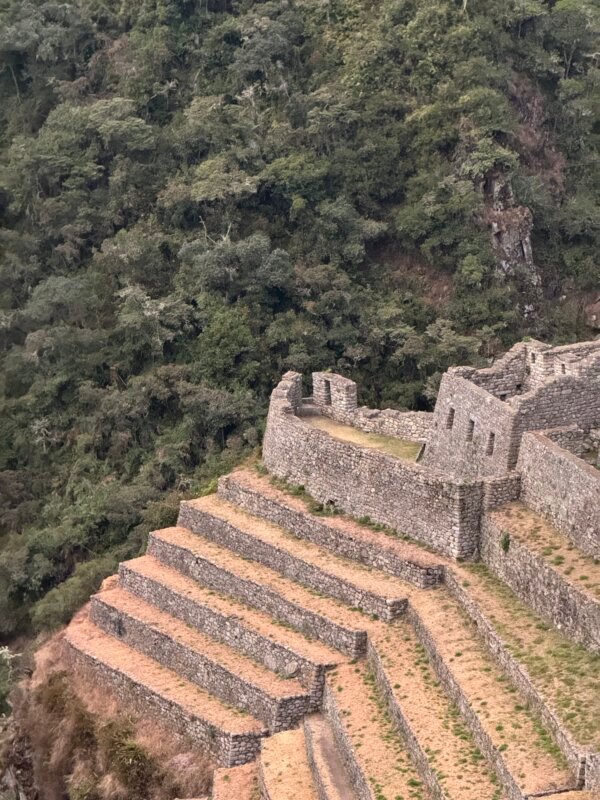
- Sayacmarca. We do not stop at the entrance. Find the huaca, the rock temple, then look at the whole site from the bottom of the mountain. Those are the two features I never let guests skip.
- Phuyupatamarca. Look for the torreón, or ushnu.
- The Torrepata trail to Intipata. More scenic than the usual path from Phuyupatamarca, and you walk it without crowds. It is easiest to arrange on a private trek, which has more flexibility.
Pay attention to the orchids and the rock
After Phuyupatamarca the trail drops towards Wiñay Wayna. This is the stretch where people walk fastest and see least.
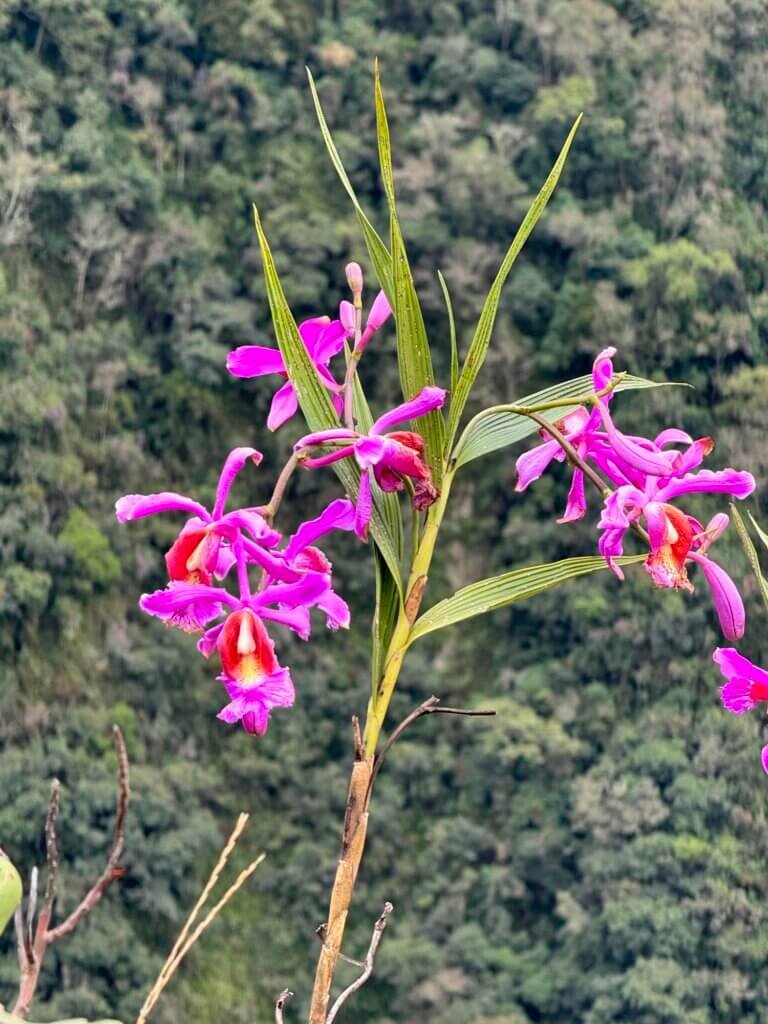
- Orchids. The descent to Wiñay Wayna has a wide variety of wild orchids, many of them small enough to miss. Slow down, look beside the steps, and photograph what you find. iNaturalist suggests a name even without signal.
- Rock formations. Look at the rock beside and under the trail as well. Open Rockd to see what kind of stone it is and how old.
Share what you found at dinner. Guests who compare their discoveries with the rest of the group get far more out of the trek.
The tipping ceremony, and why a tip is not a salary
Tonight is your last night with the porters. They leave before dawn tomorrow to catch their train, so the goodbye happens at Wiñay Wayna. The group thanks the crew, and tips are handed over in envelopes.
A tip is a thank-you. It is not a salary, and on our treks it is never treated as one. We pay our porters a wage for the work, the same for women and men: an average of S/ 450 in 2026 and S/ 500 in 2027. Whatever you give comes on top of that.
What we suggest, from the group as a whole: S/ 100 for each porter and S/ 300 for the chef. The porters share their tips evenly among themselves, women and men alike. If your group ended up smaller than planned, you never pay for travellers who are not there: we bring fewer porters, and each guest gives a fair share for the crew who actually worked your trek. Your guide is tipped separately, at the end of the trip. Tipping stays your choice. More on tipping in Peru.
Apps for today: iNaturalist, Rockd, PeakFinder.
Day 4 · The Sun Gate and Machu Picchu
About 5 km to Machu Picchu · 2,680 m down to 2,430 m · Back in Cusco about 7:30 pm
We wake at 3:30 am so the porters can catch their train. The checkpoint opens at 5:30 am, and from there it is about 1 hour to the Sun Gate (Inti Punku). Keep your phone in your pocket on this stretch. It is a hectic early morning, and for safety we do not recommend using the apps here.
Your first view: the Sun Gate and Circuit 1
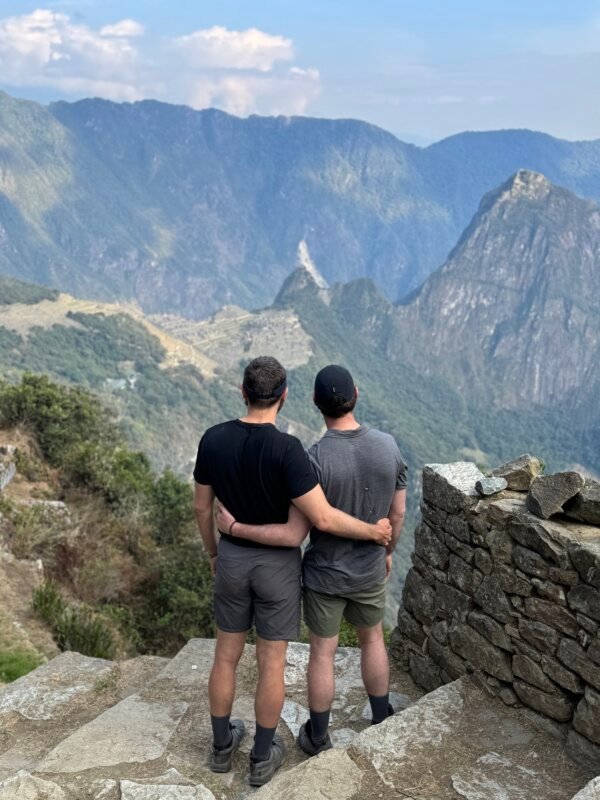
From the Sun Gate you see Machu Picchu from above, the way the Incas arrived. You then walk down for the classic postcard view on Circuit 1.
Your guided tour: Circuit 3
After the view from above, you go into the citadel with your guide on Circuit 3, the circuit assigned to hikers who arrive on the Inca Trail. It covers the lower, royal part of the city, including the Temple of the Sun and the Temple of the Condor. Every guide who enters Machu Picchu must be licensed, and yours checks in with the rangers at each gate.
Optional extras
Circuit 2-A can be added for $90 per person, and Huayna Picchu or Machu Picchu Mountain for $90 per person. Both must be booked in advance and depend on availability.
Back to Cusco
You take the Expedition train to Ollantaytambo, which is included and guaranteed, and our transfer takes you to your hotel in Cusco, arriving about 7:30 pm. A Vistadome seat is available as an upgrade for $70 per person.
What can you do on the Inca Trail besides hiking?
Each day has lookouts, quiet Inca sites, birds and orchids that most groups walk past, and from May to September your guide leads a star talk at camp. Tell your guide which ones you want to do.
I started on this trail as a porter in 1996 and became an assistant guide in 1998. In those years, the only way to name a star, a bird or a rock was a heavy book or a paper sky map that somebody had to carry. Now a phone does it. With a few apps you can explore the sky and the natural world around you in a way that did not exist when I started, and they work offline.
The apps matter most when you share what you find. Guests who use them on the trail and compare their discoveries with the rest of the group at dinner get far more out of the trek.
Miguel Ángel Góngora Meza, co-founder and former Inca Trail porter
Day 1 · KM 82 to Huayllabamba
On the trail
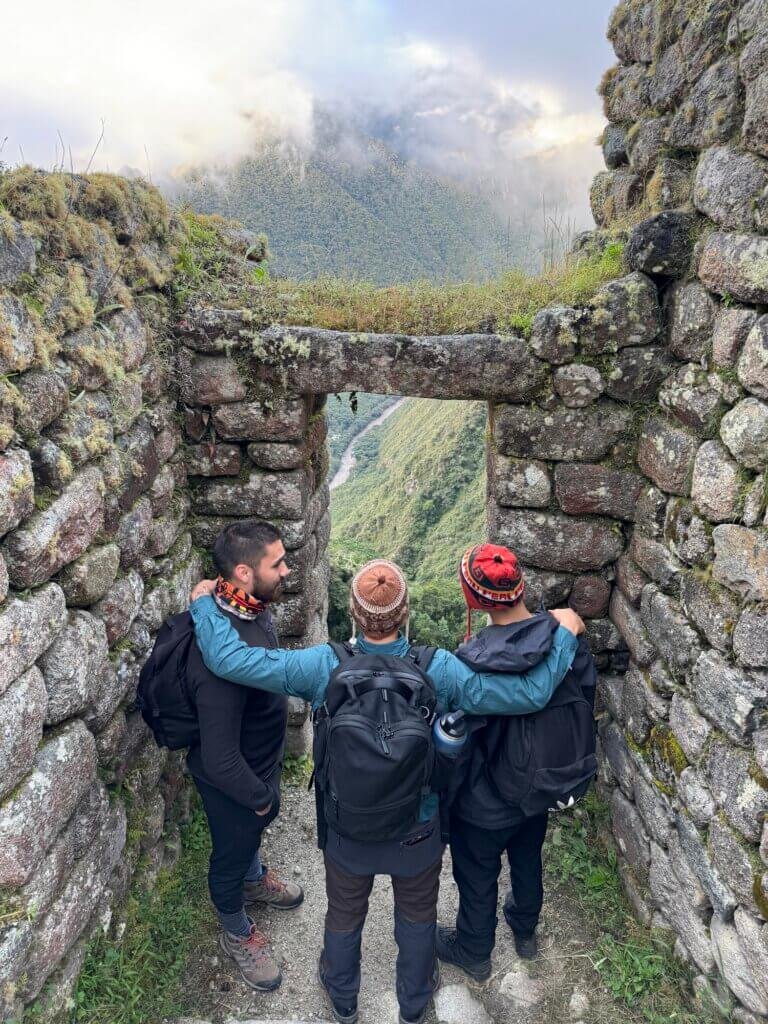
- The Salapunku lookout, about 10 minutes after KM 82
- The rock walls of the Urubamba valley, before the first climb to Miskay
- Casa del Picaflor, the Hummingbird House at Miskay. Leave a tip or buy a drink to support the sanctuary
- Pulpituyoq at Llaqtapata, an Inca site you visit away from the crowds
At camp
- The Huayllabamba Inca site, a short walk from camp
- A foot soak in the river at Hatunchaca
- First star talk with your guide, May to September
Bring:RockdPeakFinderSkyView Lite
Day 2 · Dead Woman's Pass
On the trail
- The Polylepis forest on the climb from Ayapata to the pass
- Birdwatching from Ayapata up: look for the giant hummingbird and the chiguanco thrush
At camp
- Second star talk with your guide, May to September
Bring:BinocularsMerlin Bird IDSkyView Lite
Day 3 · The ruins day
On the trail
- Sayacmarca in full: the huaca, or rock temple, and the view of the site from below
- The torreón, or ushnu, at Phuyupatamarca
- The quieter Torrepata trail to Intipata, easiest to arrange on a private tour
- Orchids on the way down to Wiñay Wayna
Bring:iNaturalistPeakFinder
Day 4 · Sun Gate and Machu Picchu
Keep your phone in your pocket. It is a hectic early morning, and for safety we do not recommend using the apps on this stretch of the trail.
Five apps that work offline
iNaturalist names plants and orchids from your photos. Merlin Bird ID names birds from a photo or their song. PeakFinder names the mountains on the skyline. Rockd shows the rock you are standing on. SkyView Lite names the stars during the star talks. Download them and their offline data in Cusco. PeakFinder is a small one-off purchase, and the other four are free. How to set them up.
Hiking with children or teenagers?
Give each of them a different app every day and ask them to share what they found at night. It is a good way to get them engaged with nature on the trail. More on the Inca Trail with children and teenagers.
With an extra day, the 5-day Inca Trail has the best chance of camping at Phuyupatamarca, with a third star talk and time for the parts of the site few people reach.
Read the full list: things to do on the Inca Trail besides hiking
How high does the Inca Trail go?
The trail climbs from 2,720 m at KM 82 to 4,215 m at Dead Woman's Pass on day 2, then drops to 2,430 m at Machu Picchu.
Approximate profile. Distances are per day, as walked on our group trek.
Walk the 4 days before you go
Play Miguel's 60-second video, then swipe through each day.
When can you hike the 4-day Inca Trail in 2027?
2027 group departures run every day from 1 March to 31 December at $990 per person; the trail closes every February. Permit sales for 2027 have not opened yet, so every date is still available. Check a date below, then book it with a $300 deposit.
Inca Trail permit availability 2027
4-Day Group Inca Trail · Classic route from KM 82 · Updated 5 November 2026
Permit sales for 2027 have not opened yet, so every date shows all spaces available.
Choose your 2027 departure date
What is included in the group trek?
Included
- Inca Trail permit and Machu Picchu entrance ticket
- Bilingual guide (English and Spanish)
- Chef and assistant cook
- Porters, women and men, for the cooking and camping equipment
- 3 breakfasts, 3 lunches, 3 dinners and snacks, made with local, organic ingredients
- Boiled drinking water after the first 4 hours of the trek
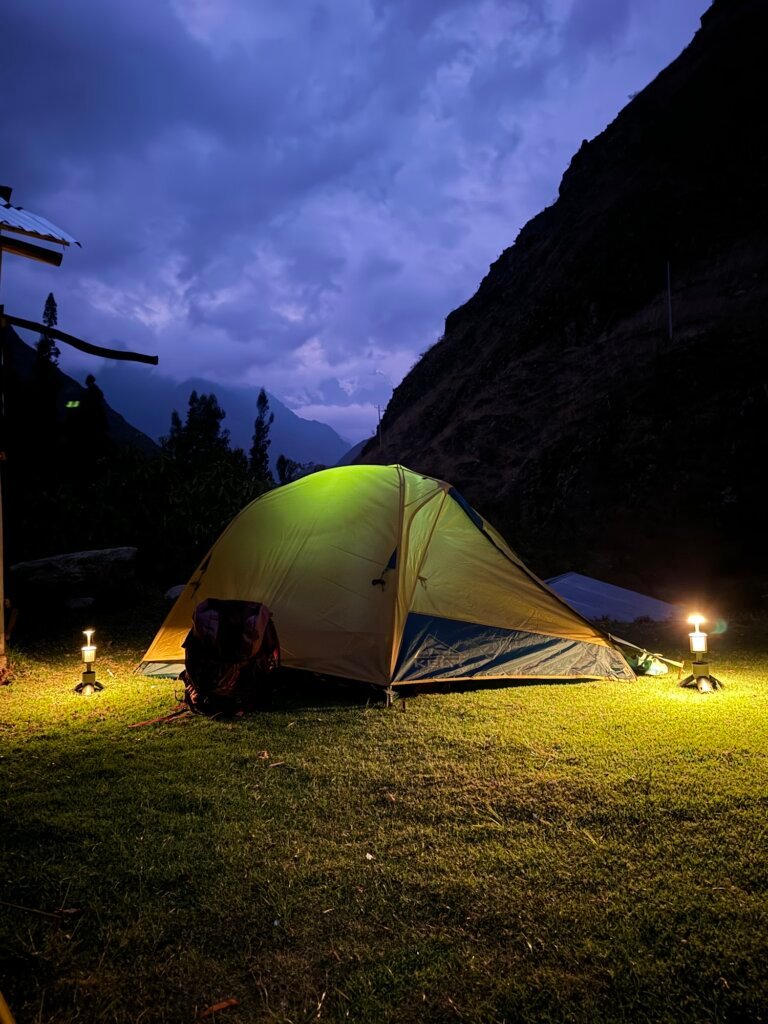
- Kelty Dirt Motel 3-person tents, one for every 2 hikers
- Basic foam sleeping pad
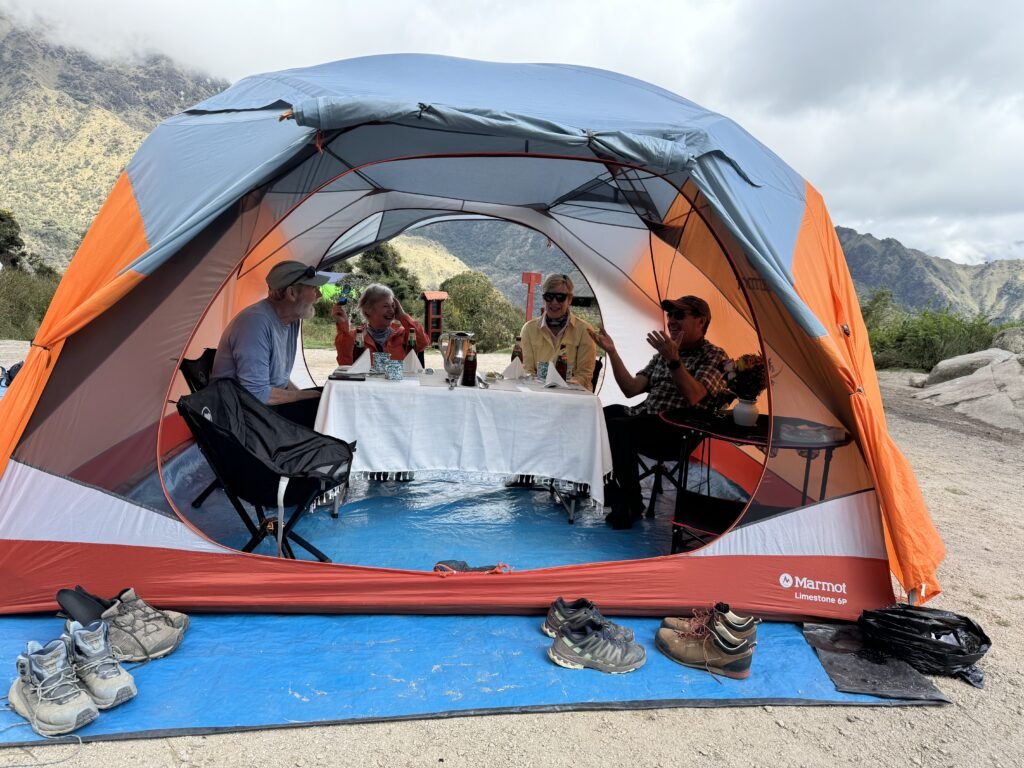
- Dining tent with tables and chairs
- Hotel pickup and transport to KM 82
- 1-way bus from Machu Picchu down to Aguas Calientes
- Expedition or Vistadome train to Ollantaytambo (based on availability), then transfer to your hotel in Cusco
- An Evolution Treks Peru T-shirt, bandana and trail map to keep
- Oxygen bottle, first aid kit and a crew trained in wilderness first aid
- Pre-trek safety briefing
- Free luggage storage while you hike
Not included
- Breakfast on day 1
- Lunch on day 4 in Aguas Calientes
- Drinking water for the first 4 hours of the trek
- Sleeping bag
- Tips for the crew
- Travel insurance (highly recommended)
Optional: rentals and porters
- Sleeping bag (Kelty synthetic, comfort 20°F / -7°C): $60
- Walking sticks (Kelty), per pair: $25
- Inflatable sleeping pad (Therm-a-Rest Pro Lite Plus): $50
- Camping pillow (Therm-a-Rest): $25
- Trekking Comfort Package, all 4 items above: $120
- Full porter, up to 14 kg (30 lbs), can be shared by 2 people: $220
- Half porter, up to 7 kg (15 lbs): $120
- Single tent supplement: $65
- Huayna Picchu or Machu Picchu Mountain ticket: $90 (subject to availability)
Our porters carry the cooking and camping equipment only. Rented gear is not carried for you: a rented sleeping bag and pad weigh about 3 kg. Hire a full or half porter if you prefer not to carry your own things.
What should you pack for the 4-day Inca Trail?
Pack light and in layers: days can reach 25 to 30 °C in the sun and nights drop close to 0 °C at the high camps, and it can rain in any month. Our porters carry the camp; your own things go in your daypack unless you hire a half porter (7 kg) or a full porter (14 kg), which includes a rented sleeping bag and pad (about 3 kg).
Daypack (you carry it every day)
- Original passport, valid 6 months or more (checked at the trail checkpoints)
- Water bottle or bladder, at least 2 litres
- Rain jacket or poncho
- Sun hat, warm beanie, sunglasses, SPF 50+ sunscreen and lip balm
- Insect repellent
- Headlamp with spare batteries
- Snacks, toilet paper and hand sanitiser
- Small Peruvian soles for tips, toilets and snacks
- Personal medication
Clothing and footwear
- 2 to 3 quick-dry T-shirts and 1 to 2 long-sleeve shirts
- Fleece or down jacket and a thermal base layer for the nights
- 2 to 3 pairs of trekking pants
- 4 to 5 pairs of hiking socks
- Gloves and a buff
- Broken-in waterproof hiking boots, plus camp sandals
Toiletries and first aid
- Toothbrush, quick-dry towel, wet wipes, biodegradable soap
- Blister kit, pain relief, anti-diarrhoea tablets, rehydration salts
- Altitude medication only if your doctor prescribes it
Nice to have
- Trekking poles (we rent them for $25 a pair)
- Power bank, earplugs and an eye mask
Why do we cost more than other Inca Trail operators?
Our price pays for fair, safe work for every porter and a smaller group for you; here is exactly where the difference goes.
Equal, fair pay
Every porter, woman or man, earns 450 soles per trip.
Ethical loads, better gear
Ergonomic framed backpacks that cost USD 450 each, and lightweight modern equipment, so no load goes over an ethical 20 to 25 kg.
A real night's rest for the crew
Porters get their own tents, sleeping bags and meals, not a tarp on the ground.
Women on the trail
The first company to hire women porters on the Inca Trail, in 2017, and women still guide and carry every season.
Small groups
Never more than 8 hikers per guide, so the pace and attention fit you.
Safety on every trek
A Garmin satellite communicator, emergency oxygen, a pulse oximeter, two-way radios and a crew trained in wilderness first aid.
You also get free luggage storage and bag delivery to your hotel, plus an Evolution Treks Peru T-shirt, bandana and trail map to keep.
How booking and the trek logistics work
A $300 deposit secures your permit, the balance is due by card 30 days before the trek (or in cash in Cusco 2 days before), and we handle pickups, the briefing, train and bus.
| Step | How it works |
|---|---|
| When to book | 4 to 6 months ahead, and earlier for May to September, when permits sell out first |
| Before you arrive | Train for about 12 weeks (training plan) and spend 2 to 3 nights in Cusco or the Sacred Valley to acclimatise |
| Deposit | $300 per person, non-refundable (it buys your permit) |
| Balance | By card at least 30 days before the trek, or in cash at our Cusco office at least 2 days before |
| Cancellation | 60 days or more before: you lose the deposit and non-refundable costs. 45 to 59 days: 50% of the price. 22 to 44 days: 80%. 21 days or less: 100%. Full details in our Terms and Conditions. Travel insurance is highly recommended. |
| Permits sold out or trail closed | If the Classic Inca Trail is sold out, we offer the Salkantay trek + Short Inca Trail. In February: the Lares trek or the Huchuy Qosqo trek. |
| Pre-trek briefing | At your hotel when you arrive, or at 5:00 pm the day before in Cusco; 6:00 pm by app call if you stay in the Sacred Valley |
| Pickup on day 1 | 4:30 to 5:00 am from your hotel in Cusco, or 7:00 to 8:00 am in the Sacred Valley |
| Your belongings | You carry your own pack; porters carry the cooking and camping equipment only. To have your things carried, hire a full porter (14 kg, $220) or a half porter (7 kg, $120) when you book. |
| Luggage storage | Free storage of your luggage while you hike, and free delivery of your bags to your hotel when you return |
| Machu Picchu entry | Circuit 1 for the classic postcard view from the upper terraces when you arrive, then Circuit 3, 8:00 am to 1:00 pm, guaranteed, for the guided tour inside the citadel. Huayna Picchu tickets depend on availability. |
| Return to Cusco | Expedition or Vistadome train (based on availability) to Ollantaytambo, then transfer to your hotel; back in Cusco about 7:30 pm |
Who carries the camp, and how are they treated?
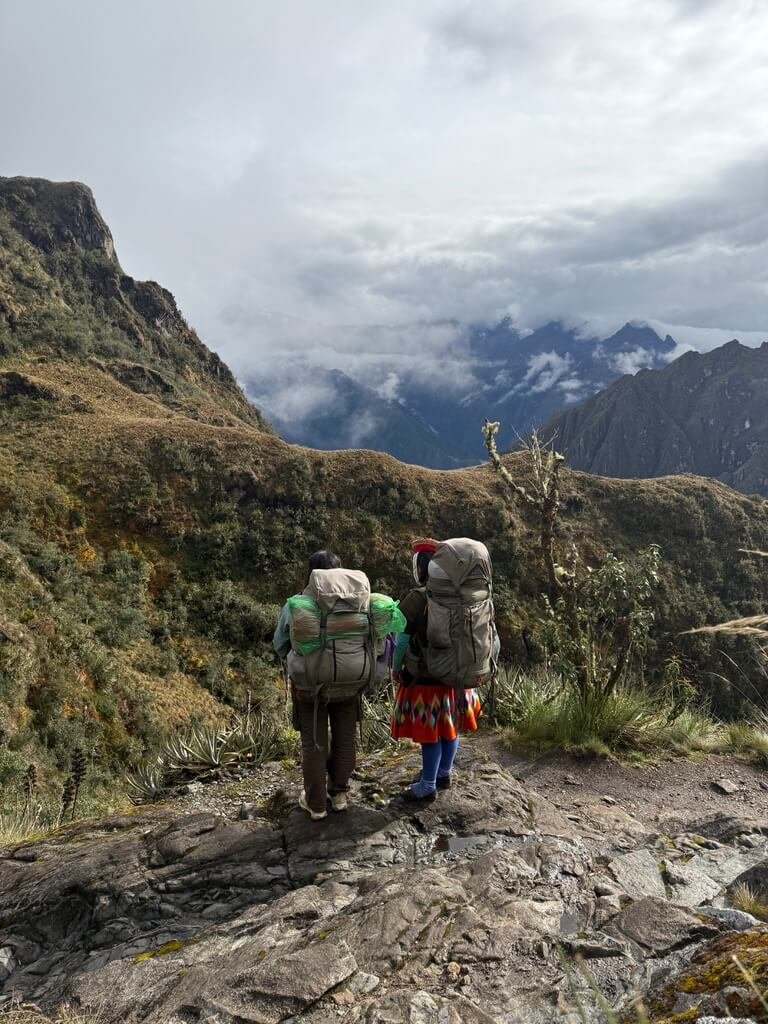
Our porters carry the tents, kitchen and food, at ethical loads of 20 to 25 kg, with their own tents, sleeping bags and meals, and women and men earn the same: 450 soles per trip.
I started on this trail as a porter. In 2017 we became the first company to hire women porters on the Inca Trail, and our lightweight modern gear means nobody carries more than they should. By 2024 we employed nearly 60% of all women porters on the Inca Trail while running less than 4% of its tours.
Your guides and porters are Andean, many from Quechua-speaking communities near Cusco, and they share that culture, its stories and its words along the trail.
Read how to choose an ethical Inca Trail operatorFrom our Instagram
How to spot an ethical Inca Trail operator
- Women and men earn the same: 450 soles per trip
- Every load stays at an ethical 20 to 25 kg or less
- Porters get their own tents, sleeping bags and meals
Meet your crew
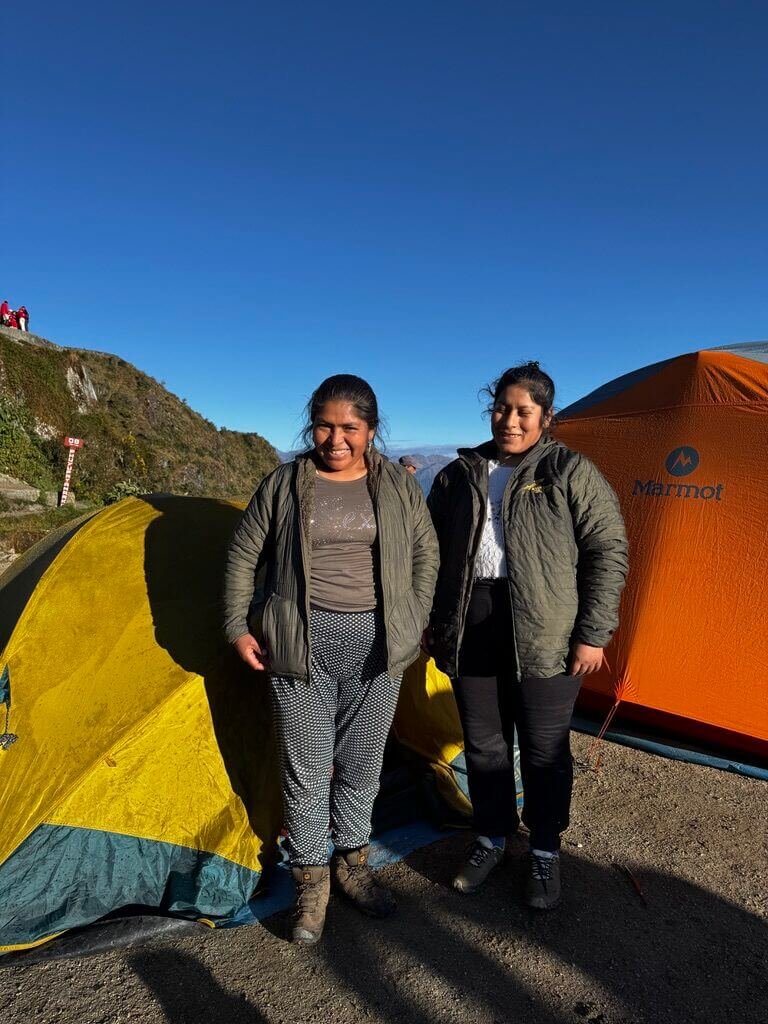
Several of our guides started as porters, and women guide and carry on every season.
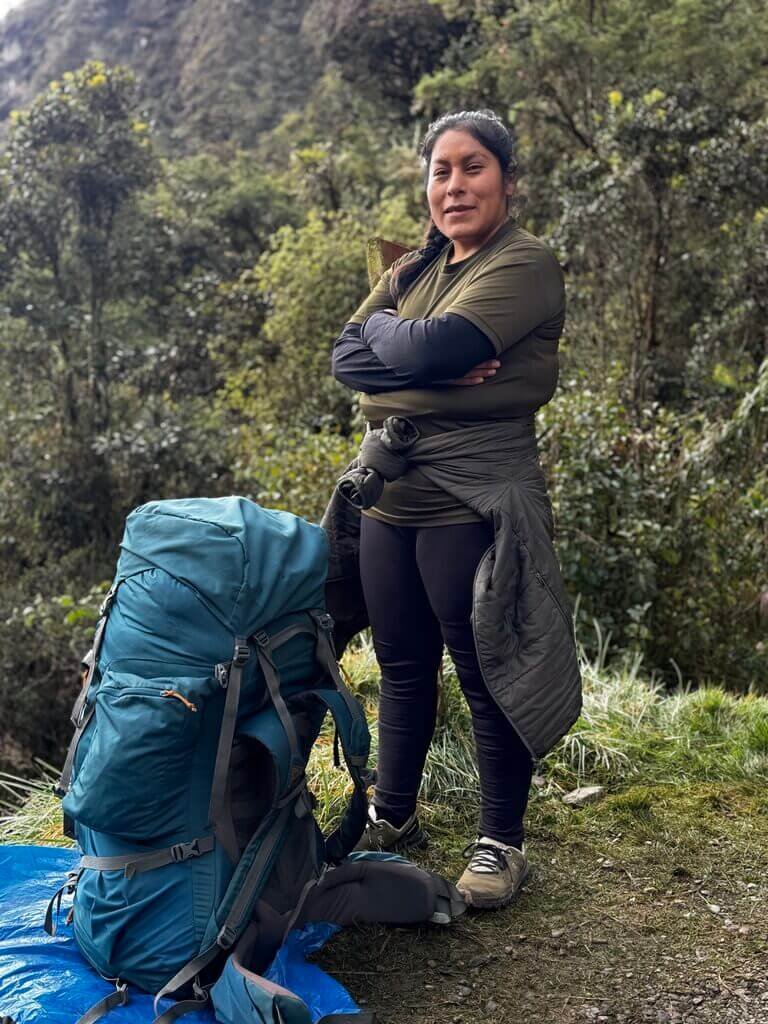
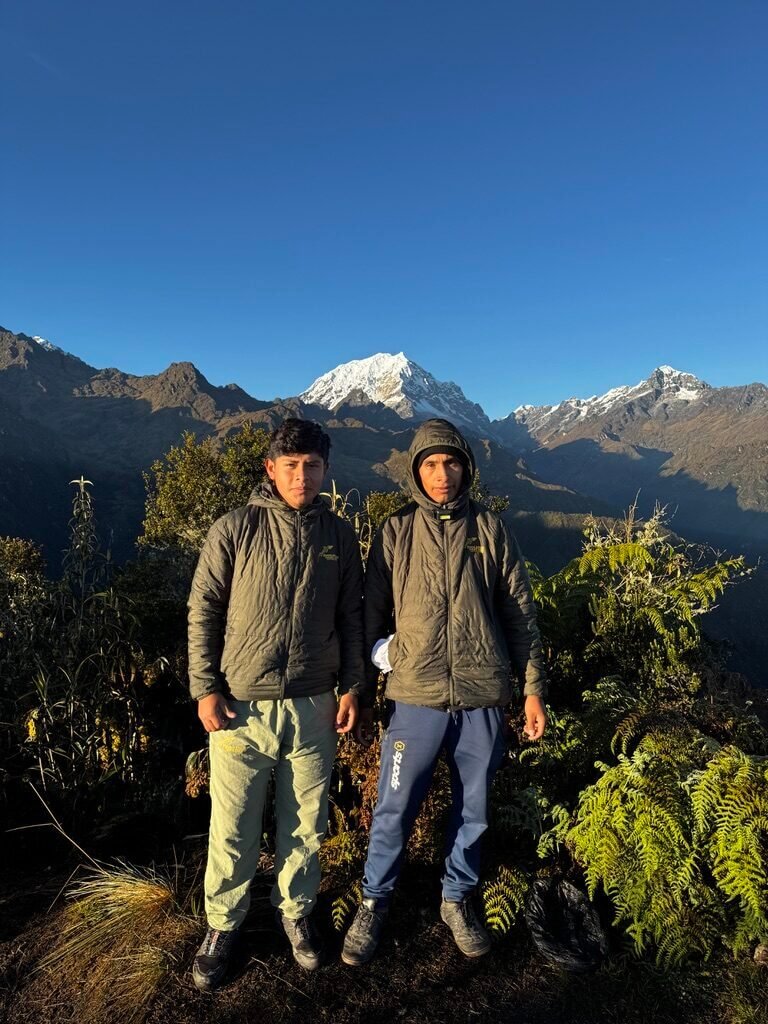
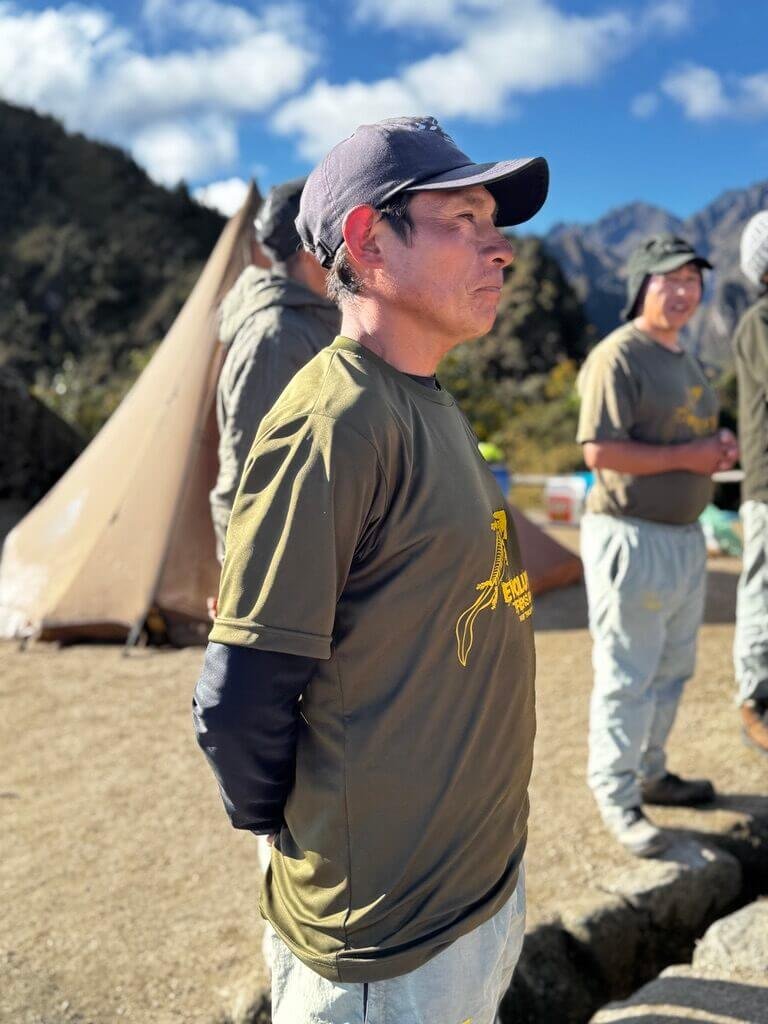
Our guides include Sara Qquehuarucho and Lucía Vela, two of the first women porters on the Inca Trail, and Silvia and Paola, who also started as porters. Daisy is training as a guide this year.
Our 3 guarantees
Fair porters
Equal pay, ethical loads, their own tents and meals. Ask us anything about it.
Small groups
Never more than 8 hikers per guide.
Permit promise
If Classic Inca Trail permits are sold out, we offer the Salkantay trek plus the Short Inca Trail, so you still walk into Machu Picchu.
How do we keep you safe?
Every trek carries oxygen, a pulse oximeter, a Garmin satellite communicator and two-way radios, and we watch for altitude sickness from day 1.
First aid kit
Emergency oxygen bottle
Pulse oximeter checks
Garmin satellite communicator
Two-way radios across the crew
How sustainable is this trek?
Fair pay and light loads come first, and we run single-use-plastic-free treks with sorted waste.
Equal pay for women and men: 450 soles per trip
Lightweight modern gear, ethical loads
Women porters on every trek since 2017
Single-use plastic free
Waste separated into organic and inorganic
98.8% of our 678 Inca Trail hikers finished in 2026, and none turned back because of altitude. See our Inca Trail 2026 data.
Questions about your dates? Ask Miguel
Permits sell out months ahead. Tell us your dates and we reply instantly on WhatsApp.
Get the full 2027 itinerary (PDF)
Day by day, packing list and prices, sent to you on WhatsApp.
Questions about the 4-day group trek
How hard is the 4-day Inca Trail?
It is moderate to challenging: about 42 km over 4 days, with a 1,200 m climb on day 2. Most fit, prepared hikers enjoy it. See our training plan.
How far ahead should I book?
Book 4 to 6 months ahead, and earlier for May to September. Only 500 permits a day are issued, including guides and porters, and they cannot be changed to another name or date.
Do I need to carry my own backpack?
Yes, on the group trek you carry your own pack. Our porters carry the tents, kitchen and food. To have your things carried, hire a half porter (7 kg, $120) or a full porter (14 kg, $220).
Is there phone signal on the Inca Trail?
Barely. Coverage fades after KM 82 and is gone by day 2. Our crew carries a Garmin satellite communicator and two-way radios for emergencies.
How much should I tip the crew?
Tips are optional. As a guide, groups give each porter about 100 soles (about $30) for the 4 days, and around 400 soles to the chef, shared among the hikers. Guides are tipped individually.
What if I am the slowest in the group?
Your guide walks with you, and our guides and porters work as one team so everyone arrives safely.
Can I upgrade to a private trek?
Yes. See the private 4-day Inca Trail.
How much does the 4-day Inca Trail cost in 2027?
Our 2027 group trek costs $990 per person, and a private trek costs from $1,250 per person. That includes the Inca Trail permit and Machu Picchu ticket, guide, cook, porters for the camp, 9 meals, tents, hotel pickup, train and bus. Extras are a sleeping bag ($60), the comfort package ($120), a half porter ($120) or full porter ($220), and tips for the crew.
Can you hike the Inca Trail without a guide?
No. The Classic Inca Trail can only be hiked with a licensed tour operator and guide, and permits are sold only through authorised operators. We hold SERNANP contract No. 165-2017-SERNANP-DGANP-SHM.
Is the Inca Trail closed in February?
Yes. The Classic Inca Trail closes every February for maintenance. In February we run the Lares trek and the Huchuy Qosqo trek instead.
Do you use the Vistadome or the Expedition train?
We book the Vistadome or the Expedition train from Aguas Calientes to Ollantaytambo, depending on availability for your date, then drive you back to your hotel in Cusco.
What if I get altitude sickness?
Our guides are trained in altitude care and wilderness first aid, check everyone with a pulse oximeter and carry emergency oxygen. Arrive in Cusco 3 to 5 days before the trek to acclimatize.
Can I change my trek date after booking?
Inca Trail permits are issued in your name for one date and cannot be changed or transferred, so choose your date carefully. If your date is sold out, we offer the Salkantay trek plus the Short Inca Trail.
Is there a minimum age?
Yes: hikers must be 5 years old or older. Tell us the ages of everyone in your group when you book, so we can plan the pace with you.
What can you do on the Inca Trail besides hiking?
Each day has stops most groups skip: the Salapunku lookout, the Casa del Picaflor hummingbird sanctuary and Pulpituyoq on day 1, the Polylepis forest and birdwatching on day 2, and Sayacmarca, Phuyupatamarca and orchids on day 3. From May to September your guide leads a star talk at camp.
Don't take our word for it
Follow our porters and guides
Plan your trek with Miguel
Planning the 4-day group trek? Message me on WhatsApp with your dates and questions; my team or I reply instantly.
Keep planning
4-Day Group Inca Trail 2027 · from $990 · 2027 fully available