


The Twelve-Angled Stone (Spanish: Piedra de los Doce Ángulos) is a polished diorite block with 12 cut corners. It is set without mortar into an Inca wall on Hatun Rumiyoc Street in Cusco, Peru. The wall belonged to the palace attributed to Inca Roca, the sixth Inca ruler, and Andina estimates the stone at about 6 tonnes. It is one of the best-known examples of Inca polygonal masonry. It lies within the City of Cusco, a UNESCO World Heritage Site since 1983.
| Key fact | Value |
|---|---|
| Location | Hatun Rumiyoc Street, historic centre of Cusco, Peru |
| Distance from the Plaza de Armas | about 200 m (650 ft), a 3–5 minute walk |
| Altitude of Cusco | about 3,400 m (11,150 ft) |
| Rock and size | diorite; about 2 m (6.6 ft) long and about 6 tonnes (Andina) |
| Built into | wall of the palace attributed to Inca Roca, now the base of the Archbishop’s Palace |
| Protection | Cultural Heritage of the Nation; part of the City of Cusco UNESCO World Heritage Site (1983) |
| Entry fee (2026) | free, open-air public street |
| Time needed | 15–30 minutes; about 1 hour with the Museum of Religious Art |
On this page
- What changed at the stone in 2025–2026?
- What is the Twelve-Angled Stone?
- Where is the Twelve-Angled Stone located?
- What is the history of the Twelve-Angled Stone?
- How was the Twelve-Angled Stone made?
- What else can you see on Hatun Rumiyoc Street?
- How do you get there from the Plaza de Armas?
- Self-guided walk: Hatun Rumiyoc to San Blas
- Where to eat near the Twelve-Angled Stone
- San Blas artisans and the Santurantikuy Christmas market
- When is the best time to visit?
- How much does it cost?
- Rules, safety and honest notes
- What are the closest attractions?
- Frequently asked questions
- Plan your visit to Cusco
What changed at the Twelve-Angled Stone in 2025–2026?
The Twelve-Angled Stone was damaged on 18 February 2025, and the authorities then planned a wall cleaning and a protective glass panel. The stone is still on view on the open street. Here is what happened, in order.
- 18 February 2025, the attack. At about 00:41, a man struck the stone with a metal tool. According to Andina, he hit it at up to seven points and chipped off fragments. Police arrested a suspect, who was later held in pre-trial detention.
- February 2025, the legal response. Peru’s Ministry of Culture called the damage very serious and irreversible. It sought more than S/ 5 million in repair costs and compensation. The regional culture directorate said the offence can carry up to six years in prison, although prosecutors argued for a longer term.
- Carnival 2025. Andina reported that up to 165 Inca wall stones in the historic centre were marked with paint and foam during Carnival. They were cleaned afterwards.
- 6 March 2025, the cleaning plan. The Cusco culture directorate (DDC Cusco) proposed a mechanical cleaning of the Hatun Rumiyoc walls. Its survey found dust, splashes, old plaster, dog and pigeon droppings, stains, crusts and salts, plus nine types of internal wear such as flaking and cracks.
- 13 March 2025, the glass panel study. DDC director Jorge Moya told Andina that a glass panel in front of the wall was under study. A public competition for protection designs was to follow a two-month cleaning. Moya said police and municipal guards watch the street permanently.
Status in November 2026: we found no public report that the glass panel has been installed or that the design competition took place. Expect the stone to be in the open, possibly with cleaning works or barriers. Check on arrival.
What is the Twelve-Angled Stone?
The Twelve-Angled Stone is one block in the outer wall of a former Inca palace. Its 12 corners lock against the stones around it. It is not a monument standing on its own.
The stone sits in a wall about the height of a person, on the right as you walk up Hatun Rumiyoc Street. The colonial Archbishop’s Palace stands on top of that Inca base.
The stone is famous for two reasons. Most blocks in the same wall have far fewer cut points; Andina reports 5, 6 or 7 on its neighbours. Every joint is also tight, with no mortar or cement.
The stone is protected as Cultural Heritage of the Nation. Andina adds that it has been a Historic Monument of Peru since 1972.
Where is the Twelve-Angled Stone located?
The Twelve-Angled Stone is on Hatun Rumiyoc Street in the historic centre of Cusco. Andina places it about 200 m (650 ft) from the Plaza de Armas, to the northeast. Its approximate coordinates are 13.5160° S, 71.9763° W.
Hatun Rumiyoc is a narrow, pedestrian-only cobbled street. It runs uphill from Calle Triunfo towards the San Blas neighbourhood. In Quechua, Hatun Rumiyoc means “the one with the great stone”, so the street is named after the stone.
The street is steep in places and paved with uneven cobbles. Wheelchair users and people with limited mobility will need help.
What is the history of the Twelve-Angled Stone?
Inca stonemasons cut the Twelve-Angled Stone for the outer wall of a royal residence in the Inca capital. Andina and most historical guides attribute the palace to Inca Roca, the sixth ruler. He reigned before Pachacuti expanded the Inca state in the 15th century.
The attribution is traditional. The exact construction date of the masonry has not been established, so claims of a precise age are guesses.
After the Spanish conquest in the 1530s, the palace was taken over and rebuilt. The colonial mansion on the Inca walls later became the Archbishop’s Palace of Cusco. Part of it houses the Museum of Religious Art (Museo de Arte Religioso).
The Spanish builders kept the lower Inca walls as a foundation. That is why the Twelve-Angled Stone is still in its original position. In 1983 UNESCO inscribed the City of Cuzco on the World Heritage List, including Hatun Rumiyoc Street.
What does the Twelve-Angled Stone mean?
No Inca record explains why this block has 12 corners. The most common reading is structural: a large, many-sided block locks its neighbours and helps the wall resist earthquakes, which are frequent in Cusco.
A symbolic reading, reported by Andina as a scholars’ proposal, links the stone to 24 royal lineages (panacas). Twelve belonged to the upper (Hanan) half of the city and twelve to the lower (Hurin) half. Treat any single “meaning” as an interpretation, not a fact.
How was the Twelve-Angled Stone made?
The Twelve-Angled Stone was shaped by pounding and grinding, not by sawing. The Incas had no iron or steel tools. Bronze tools were used for finer work.
Jean-Pierre Protzen, a professor of architecture at the University of California, Berkeley, tested Inca methods in the field. His experiments showed that masons could dress hard stone with hammerstones of harder river cobble, then grind the faces smooth.
Each block was fitted by trial. Masons lowered it into place, checked the contact points, lifted it out and pounded away the high spots. They repeated this until the joint closed.
Diorite is a hard, coarse-grained igneous rock, which makes the precision more impressive. Some older guides call the stone andesite, but Peru’s state news agency Andina describes it as diorite, and this guide uses that value.
What type of masonry is the Hatun Rumiyoc wall?
The Hatun Rumiyoc wall is polygonal masonry: large, irregular blocks fitted together without regular rows. Inca builders used this style for strong retaining and enclosure walls, including the outer walls of palaces such as this one.
For temples where appearance mattered most, such as the Qorikancha, they often used coursed masonry. That means rectangular blocks laid in even rows. Walking from Hatun Rumiyoc to the Qorikancha lets you compare the two styles in one morning.

Which popular claims about the stone are wrong or unproven?
- “A sheet of paper cannot fit between the joints.” This is a common way to describe the fit, not a published measurement.
- “The stone is 700 years old.” No construction date has been established for this wall.
- “It is about 500 m from the Plaza.” Andina gives about 200 m (650 ft), and the walk takes 3–5 minutes.
- “The wall would collapse if the stone were removed.” We found no study that tested this.
What else can you see on Hatun Rumiyoc Street?
Hatun Rumiyoc Street has one of the finest stretches of Inca wall in central Cusco. The Twelve-Angled Stone is only one block of it. Walk the full length and look for the following:
- The palace wall. The Inca wall on the right side (walking uphill) is the outer wall of the palace attributed to Inca Roca. Its blocks have slightly convex faces and bevelled edges, so each joint reads as a fine sunken line.
- The Archbishop’s Palace and the Museum of Religious Art. The entrance is at the corner of Hatun Rumiyoc and Calle Herrajes. The museum shows Cusco School paintings, colonial furniture and the building’s courtyards.
- The puma and serpent in the wall. Local guides and vendors point out stones that outline a puma and a serpent on Inca Roca alley. That is the narrow passage that branches off Hatun Rumiyoc. The figures are hard to see without help, and there is no Inca record that they were made on purpose.
- Craft shops and vendors. Shops sell textiles and silver jewellery. Women in traditional dress offer photos, often with a baby alpaca or lamb, for a tip.

How do you get to the Twelve-Angled Stone from the Plaza de Armas?
You get to the Twelve-Angled Stone by walking about 200 m (650 ft) uphill from the Plaza de Armas. It takes 3–5 minutes, and no transport is needed.
- Stand in the Plaza de Armas facing the Cathedral.
- Walk to the right-hand (northeast) corner of the plaza, beside the Church of El Triunfo, and enter Calle Triunfo.
- Walk one block uphill along Calle Triunfo to the crossroads with Calle Palacio and Calle Herrajes.
- Continue straight across. The street becomes Hatun Rumiyoc and is pedestrian-only.
- Look at the Inca wall on your right. The stone is about halfway along this block, where a small crowd and vendors usually gather.
The climb is gentle, but you are at 3,400 m (11,150 ft). Walk slowly if you have just arrived. Our guide to managing altitude sickness explains how to acclimatize during your first days.
Self-guided walk: Hatun Rumiyoc to San Blas
This short walk links the Twelve-Angled Stone with the San Blas artisan quarter, about 300 m (1,000 ft) uphill. It takes about 10 minutes without stops, or 1–1.5 hours with the stops below. Go in the morning, when the street is quieter and the picanterías are about to open for lunch.
- The Twelve-Angled Stone. Start at the stone, halfway up the first block of Hatun Rumiyoc. Count the corners of the neighbouring blocks, then compare their joints.
- Inca Roca alley. Step into the narrow passage that branches off Hatun Rumiyoc. Ask a local guide or vendor to show you the puma and serpent outlines in the palace wall.
- The top of Hatun Rumiyoc. Keep climbing past the shops. At the top, Calle Choquechaca branches off; Quinta Eulalia is along it at number 384.
- Cuesta de San Blas. Continue up the steep Cuesta de San Blas. Galleries and artisan workshops line the slope; most let you browse for free.
- Plazoleta San Blas. Finish at the small square with the Church of San Blas. The church is known for its carved wooden pulpit. San Blas Market and the neighbourhood’s steps and viewpoints are a short walk away.
To return, walk back down the Cuesta de San Blas and Hatun Rumiyoc to the Plaza de Armas.
Where to eat near the Twelve-Angled Stone
The best places to eat near the Twelve-Angled Stone are in San Blas, uphill, and on Calle Triunfo, below. Hatun Rumiyoc itself is lined mostly with craft shops. Opening hours and prices change often, so confirm before you go.
| Place | Where | What to order | Price |
|---|---|---|---|
| Quinta Eulalia | Calle Choquechaca 384, off the top of Hatun Rumiyoc | Traditional Cusco quinta: chairo soup, cuy chactado, lechón. Lunch only; listings show Tue–Sun, 12:30–16:00, closed Monday | Not verified for 2026 |
| Pachapapa | Plazoleta San Blas 120 | Cusco cooking from a wood-fired oven; chiri uchu. Baked cuy and pachamanca must be pre-ordered (pachamanca for groups of 20 or more) | Chiri uchu S/ 25–40 (2026 range) |
| Cicciolina | Calle Triunfo 393, 2nd floor, one block below the stone | Modern Andean cooking; chiri uchu | Chiri uchu S/ 25–40 (2026 range) |
| San Blas Market (Mercado de San Blas) | Near the Plazoleta San Blas | Neighbourhood market stalls with simple, low-cost food | Budget; not verified for 2026 |
The chiri uchu price range comes from Infobae (June 2026), which names Pachapapa and Cicciolina among the restaurants that serve it all year. Chiri uchu is a cold platter of roast cuy, chicken, charqui, sausage, cheese, seaweed, fish roe and rocoto.
El Secreto Sanbleño is a small, unsigned picantería behind San Blas Market, described by the food site Newworlder in 2018. It served montado, breaded udder (ubre apanada) and soups. We could not confirm that it still operates in 2026, so ask locally.
Quintas and picanterías are lunch kitchens. Look for a red flag or red bag on a pole outside, which marks chicha for sale. Order a frutillada (strawberry chicha) and go at midday, as dishes run out.
San Blas artisans and the Santurantikuy Christmas market
San Blas is Cusco’s artisan quarter, and its family workshops still make religious images by hand. Many open their courtyards as shop, workshop and small museum in one.
The best-known family is the Mendívil family, whose saints and Virgins have long, stylised necks. Hilario Mendívil created the style, drawing on the llamas and alpacas once traded in San Blas. In December 2025, El Peruano reported that his daughter, Juana Mendívil, was named a Personalidad Meritoria de la Cultura by the Ministry of Culture.
According to El Peruano, the family tradition goes back more than 90 years. The family also makes the traditional nativity scene in the Plaza de Armas.
When is the Santurantikuy?
The Santurantikuy is held every 24 December in Cusco’s Plaza de Armas, so the next one is on 24 December 2026. The Quechua name means “buy me a little saint”. According to Andina (2019), more than 1,000 artisans sell Niño Manuelito figures, saints, ceramics and silverwork.
The market dates back to the 16th century. The Instituto Americano de Arte revived it in the 1940s, and it was declared Cultural Heritage of the Nation in October 2009. Stalls fill the plaza, so the walk up to Hatun Rumiyoc is slower than usual that day.
When is the best time to visit the Twelve-Angled Stone?
The best time to visit the Twelve-Angled Stone is early morning, before about 9:00, when the street is quiet and the light is soft. From mid-morning to late afternoon, walking tours crowd the narrow street.
Hatun Rumiyoc is a public street, so you can see the stone at any hour. The street is lit at night and quieter after dinner. Flash photos at night flatten the texture of the stone.
The dry season, from May to September, has the most reliable walking weather in Cusco. The rainy season, from about November to March, brings afternoon showers, so plan street visits for the morning.
How much does it cost to visit the Twelve-Angled Stone?
Seeing the Twelve-Angled Stone costs nothing. It is on a public street, and you do not need the Cusco Tourist Ticket (Boleto Turístico) or any other ticket. You only pay for a guide, a tour, the museum or food.
| What (2026) | Cost | Notes |
|---|---|---|
| Twelve-Angled Stone and Hatun Rumiyoc Street | Free | Public street, open at all hours |
| Museum of Religious Art (Archbishop’s Palace) | S/ 10 (foreign adult, museum only) | Reference hours about 8:00 to 19:00, Monday to Saturday; may change for Masses and events |
| Religious circuit ticket (Boleto Religioso) | S/ 50 (foreign adult) | Cathedral, Church of San Cristóbal and the Museum of Religious Art |
| Free walking tour | Tip-based | Several daily departures from the Plaza de Armas |
| Chiri uchu in San Blas or on Calle Triunfo | S/ 25–40 | Range reported by Infobae, June 2026 |
Museum prices are reference prices published by cuscoperu.com in July 2026. Prices and hours change often, so confirm before you go.
Should you visit with a guide?
A guide explains how the stone was fitted and shows you the puma on Inca Roca alley. Most visitors see the stone on a walking tour or a Cusco city tour. The tour also covers the Cathedral, the Qorikancha and the Inca sites above the city.
Rules, safety and honest notes for the Twelve-Angled Stone
The main rule at the Twelve-Angled Stone is do not touch it. Skin oils and repeated contact wear the surface. Peruvian law treats damage to the stone as a crime against cultural heritage.
- Do not touch, lean on, climb or sit on the wall. Keep bags and walking poles away from the stone.
- Photography is allowed and free. Take your photo, then step aside so others can pass.
- Avoid flash at night; it adds glare and hides the joints.
- Ask before photographing people in traditional dress, and agree on the tip first.
- Do not block the doorways of the shops and homes along the street.
- Keep phones and wallets secure in the crowd, as in any busy part of Cusco.
Honest notes. The stone is smaller than many photos suggest, and at midday you may wait several minutes for a clear view.
Unofficial “guides” sometimes give a short talk and then ask for payment; agree on a price first or book a licensed guide. Since 2025 you may also find cleaning works or barriers on the wall.
What are the closest attractions to the Twelve-Angled Stone?
The closest attractions to the Twelve-Angled Stone are in Cusco’s historic centre and can be reached on foot.
| Attraction | Approx. distance | What it is |
|---|---|---|
| Museum of Religious Art | 0 m (same building) | Colonial art in the Archbishop’s Palace |
| Plaza de Armas and Cathedral | 200 m (650 ft) | Main square and Cusco’s cathedral |
| San Blas neighbourhood | about 300 m (1,000 ft) uphill | Artisan quarter with the Church of San Blas |
| Qorikancha | about 800 m (0.5 mi) | Inca Temple of the Sun under the Convent of Santo Domingo |
| Sacsayhuamán | about 2 km (1.2 mi) uphill | Inca complex with some of the largest stones in the Cusco area |
For the giant polygonal walls above the city, see our Sacsayhuamán guide. For a full plan of the city, read 10 things to do in Cusco.
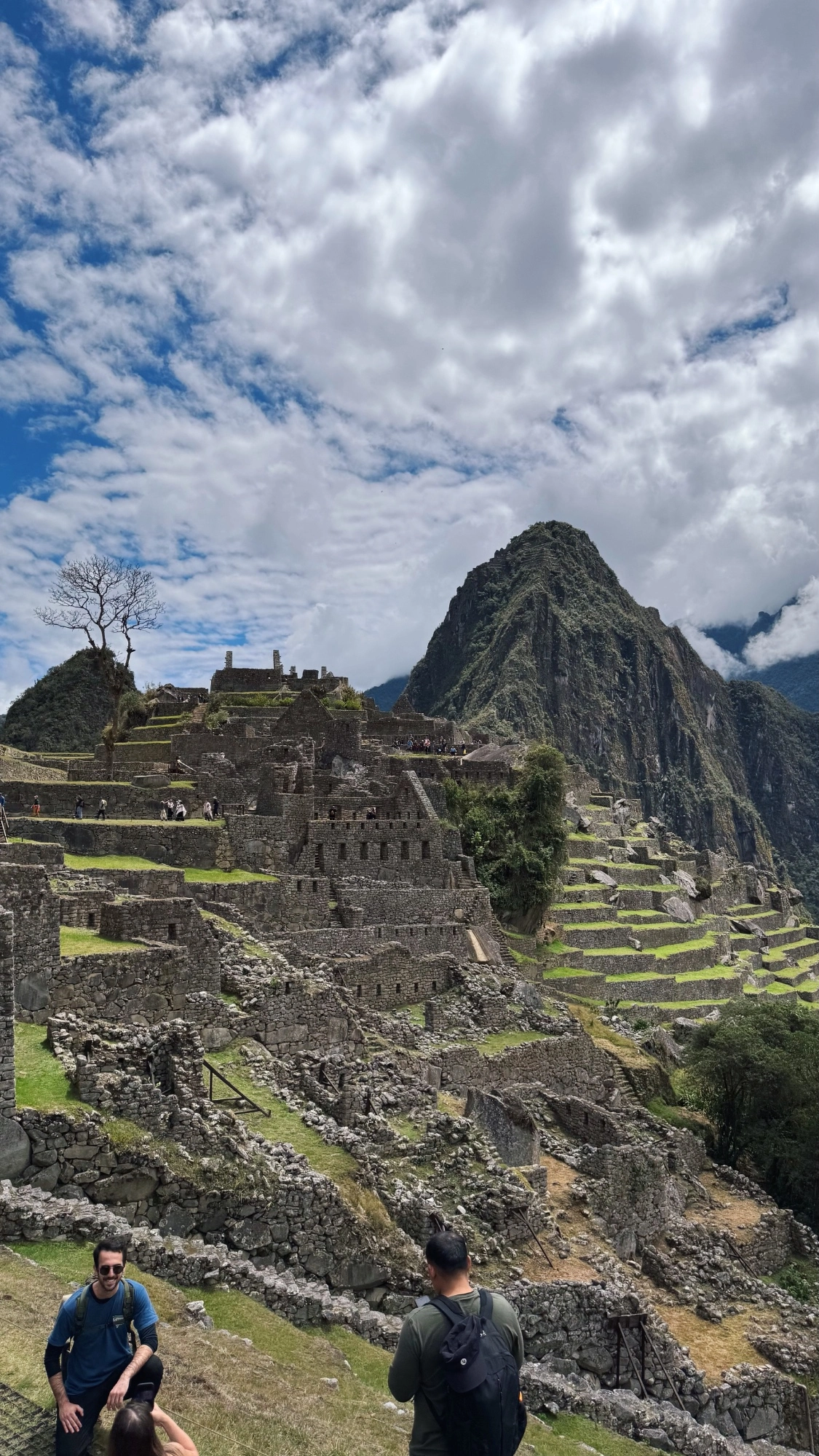
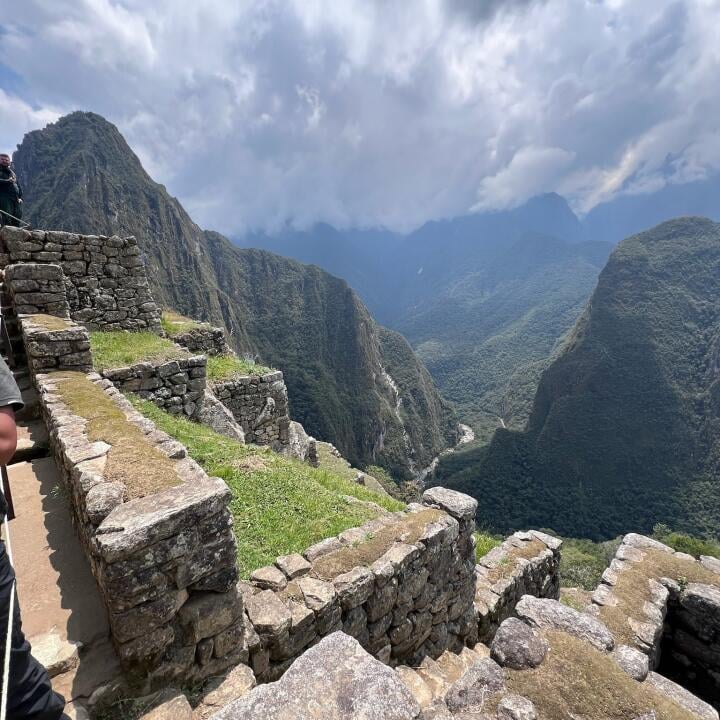
Inca stonework continues in the Sacred Valley and, at its most famous, on Machu Picchu tours.
Frequently asked questions about the Twelve-Angled Stone
Where is the Twelve-Angled Stone?
It is on Hatun Rumiyoc Street in Cusco, Peru, about 200 m (650 ft) northeast of the Plaza de Armas. Walk up Calle Triunfo and straight on into Hatun Rumiyoc; the stone is on your right.
Is the Twelve-Angled Stone free to visit?
Yes. It is on a public street and can be seen at any hour without a ticket (2026).
What is the Twelve-Angled Stone made of, and how heavy is it?
It is made of diorite, a hard igneous rock, according to Peru’s state news agency Andina. Andina estimates it at about 2 m (6.6 ft) long and about 6 tonnes.
Who built the Twelve-Angled Stone, and how old is it?
Inca stonemasons cut it for the outer wall of the palace attributed to Inca Roca, the sixth Inca ruler. The exact construction date is not known.
Why does the stone have 12 angles?
No Inca record explains it. The usual explanation is structural: a many-sided block locks the wall against earthquakes. A symbolic reading links it to Cusco’s royal lineages, but that is a proposal, not a fact.
Can you touch the Twelve-Angled Stone?
No. Please do not touch the stone; oils and friction wear the surface, and damaging it is a crime under Peruvian heritage law.
Was the Twelve-Angled Stone damaged?
Yes. On 18 February 2025 a man struck it with a metal tool. Peru’s Ministry of Culture described the damage as irreversible. In March 2025 the Cusco culture directorate said police and municipal security watch the street permanently.
Is the Twelve-Angled Stone behind glass?
In March 2025 the Cusco culture directorate said a glass panel was under study. As of November 2026 we found no report that it has been installed, so check locally.
Plan your visit to Cusco
Evolution Treks Peru is a trekking company based in Cusco. Its founder, Miguel Ángel Góngora Meza, started as an Inca Trail porter in 1996 and has guided since 1998. If you would like help fitting the Twelve-Angled Stone and San Blas into a Cusco itinerary, contact us.
Updated: November 2026
What our guests say











Questions about your dates? Ask Miguel
Tell us your dates and we reply instantly on WhatsApp.
0 Comments