

By Miguel Ángel Góngora Meza, co-founder of Evolution Treks Peru. Inca Trail porter from 1996, guide from 1998. Updated November 2026.
The best Inca Trail tour operators hold a current government licence, take small groups, pay their porters a wage the porters accept, and keep each porter’s load at 20 kg or less. Reviews and awards show none of this. Four numbers do: the licence number, the group size, the porter pay per trek and the load per porter.
I carried loads on this trail in 1996 and I have guided or run treks on it since 1998. This is how I would judge any company, including my own.
What should you check before you book?
Ask every operator the same six questions and compare the answers. Ours are in the last column.
| Check | Ask the operator | A good answer | Evolution Treks Peru |
|---|---|---|---|
| Licence | What is your Inca Trail contract number? | A contract number, given without delay | SERNANP contract No. 165-2017-SERNANP-DGANP-SHM; municipal licence No. 007148-2019 |
| Group size | How many hikers are in a group? | A fixed maximum, stated in writing | Up to 8 hikers |
| Porter pay | What do you pay a porter for one trek? | A figure in soles | S/ 450 in 2026 and S/ 500 in 2027; committed to S/ 650 by about 2029 |
| Porter load | How much does each porter carry, and who weighs it? | 20 kg or less | 15 kg for women, 20 kg for men |
| Porter equipment | What do your porters carry with and sleep in? | Framed packs, and tents and sleeping pads of their own | Ergonomic packs; the same tents and sleeping pads as our guests |
| Crew and owners | Do you hire women porters? Who owns the company? | Names and a year | Women porters since 2017; six founders, all shareholders |
Don’t all Inca Trail tour operators offer the same trek?
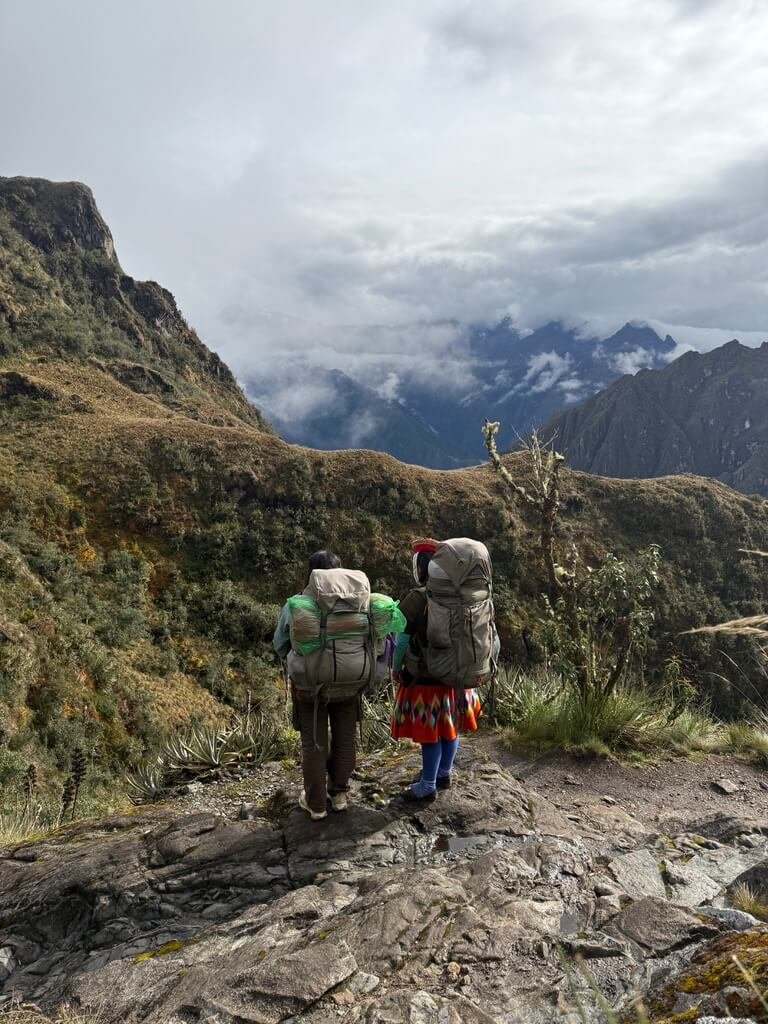
Mostly, yes. Every licensed operator walks the same trail, uses the same official campsites and enters Machu Picchu with the same ticket. What differs is the crew and how the company treats it.
Some companies have nothing else to set them apart, so they compete on a lower price and a longer list of perks. In my experience those are usually the companies that exploit their porters. Every perk is weight. A wash bucket for each guest, thick mattresses and a heavy dining tent all travel on a porter’s back, and a low price leaves less money to pay him. A portable toilet for guests is fine once the porters’ basic needs are met: proper tents, proper backpacks and enough food. Taking that perk for clients while porters go without is unconscionable.
We went the other way. We replaced the old heavy gear with lightweight tents, tables and seats, so each porter carries less.
Why is porter treatment the first thing to check?
Porters carry the tents, the kitchen and the food on every Inca Trail trek. Their pay and their load are where a low price comes from.
The legal load for a porter is 20 kg. A newer porter law, No. 31614, was approved in November 2022, and in August 2026 porters’ groups were still asking the government to issue its regulations (Heather Jasper, Inforegión).
What happened to Gabriel Ríos Mamani?
On 18 August 2026, police found Gabriel Ríos Mamani, a 49-year-old porter, dead at a camp near Warmiwañusca, the highest pass on the Inca Trail. He was working for Alpaca Expeditions with a group of about 20 tourists (Latin Times, Caretas).
His family says he was left on the trail when he fell ill. The company denies that. It says he was not overloaded and that a cook tried to persuade him to keep walking (Infobae, Correo).
Journalist Heather Jasper spoke to Juan Ccama Arias, vice president of the Porters’ Association, the day after. He told her Gabriel was carrying more than the legal 20 kg and was alone. He also said Gabriel was reportedly seen drunk, and Jasper notes that hypothermia can look the same (her report).
On the same day Alipio Ascencio Quiñonez, a 64-year-old muleteer, died on the Salkantay route.
This case is not closed. The police, the prosecutor’s office and the Labour Ministry opened inquiries, and no conclusion has been announced (Turiweb).
Cristóbal Quispe, a porters’ leader in Cusco, said publicly that two earlier cases received far less attention than Gabriel’s. He reported death threats after he spoke (Los Andes). Those earlier cases need an answer too.
There is an earlier death on record. On 23 January 2020 a landslide about 150 m from the Pacaymayo Alto camp killed porter Esteban Huamán Pérez and injured a second porter and a cook. All three worked for the tourism agency the reports call Alpaca, according to Cusco’s culture directorate (Andina, Correo).
That death drew little attention outside Cusco. People did not yet have the tools they have now to make a case like this widely known. As far as I know, no investigation ever named anyone responsible.
What changed after his death?
Nothing fundamental. In the weeks after Gabriel died, tour operators showed their best face. Once the attention moved on, the old practices came back.
Why do the largest operators still not equip their porters?
These companies take thousands of hikers to the trail every year. In my experience they still do not give their porters framed backpacks or tents of their own, and they do not hire women as porters.
We are a small company and we do all three. A makeshift pack made in Cusco costs S/ 50 to S/ 70, depending on how many are ordered. The Kelty Glendale packs we give our porters list at US$299.95. Shipping and import charges bring each one to about US$538 by the time it reaches Cusco, around 30 times as much. We are a far smaller company with far smaller profits, so we buy the packs one at a time, whenever there is money for one, and before we take any profit. Our porters sleep in the same tents and on the same sleeping pads as our guests. We have hired women porters since 2017, at the same pay as men.
What is the Porter Lives Matter campaign?
Porter Lives Matter is the campaign we started for fair pay and ethical loads for trekking porters. Its aim is to make travellers and tour operators aware of how porters are paid and loaded, so that operators change how they work.
Porters face the same conditions in other countries. I walked Kilimanjaro, the K2 base camp trek and the Everest Base Camp trek as a hiker to see how porters work there, and what I saw matched what I have seen in Peru for 30 years.
So the campaign is starting in four countries. Three companies have joined us: Good Karma Trekking in Nepal, Skardu Trekkers in Pakistan and The Northside Adventures in Tanzania. We also plan a website of ethical tour operators around the world, and those three will be on it.
We ask readers to wear the Porter Lives Matter shirt and post a photo of it on social media. Each post encourages influencers and brands to support the cause. Read more on the Porter Lives Matter page.
How do you check an operator before you pay a deposit?
- Email the six questions in the table and ask for numbers. A company that pays well answers the pay question in one line.
- Ask for a photo of the porters’ tents and packs from a recent trek.
- Search the company’s name with the word “porteador” in Spanish-language news.
- Read reviews for what guests say about porters and group size. The star rating tells you about the food and the guide, and little about the crew.
- Compare the price with the porter pay. A very low price has to come out of someone’s wage.
Our longer guide lists 10 questions to ask any Inca Trail tour operator.
Where does Evolution Treks Peru stand?
We are a small operator. We run fewer than 4% of the tours on the Inca Trail, and by 2024 we employed nearly 60% of the women porters working on it.
- Groups have up to 8 hikers.
- Porters earn S/ 450 per trek in 2026 and S/ 500 in 2027. Porters ask for S/ 650, and we have committed to reach it by about 2029. We are not there yet.
- Women porters carry 15 kg and men 20 kg.
- Three of our first women porters are now lead guides, and 80% of our lead guides are women in 2026.
- Six founders own the company, all as shareholders.
- Our 4-day group trek costs $990 per person in 2027.
The full list of facts and licence numbers is on About Evolution Treks Peru.
Questions people ask
Are reviews a reliable way to choose an Inca Trail tour operator?
Only in part. Reviews tell you how guests felt about the guide, the food and the camps. Guests rarely learn what a porter was paid or how much he carried, so reviews cannot tell you that. If anything, tens of thousands of reviews mean tens of thousands of paying guests. That shows how much a company earns compared with the little it invests in the care and safety of its porters.
What is the legal load for an Inca Trail porter?
20 kg. Our women porters carry 15 kg and our men carry 20 kg.
Do the best Inca Trail tour operators cost more?
Usually, yes. Fair porter pay, smaller groups and lighter equipment all raise the cost per hiker. Our 4-day group trek is $990 per person in 2027.
How far ahead should I book the Inca Trail?
Permits for the 4-day Inca Trail sell out months ahead, and May to September goes first. Only licensed operators can buy them, so check the licence before you pay.
What should I ask about safety?
Ask what the guide carries. Ours carry a first aid kit, oxygen, an oximeter, a Garmin satellite device and two-way radios on every trek.
Plan your trek with Miguel
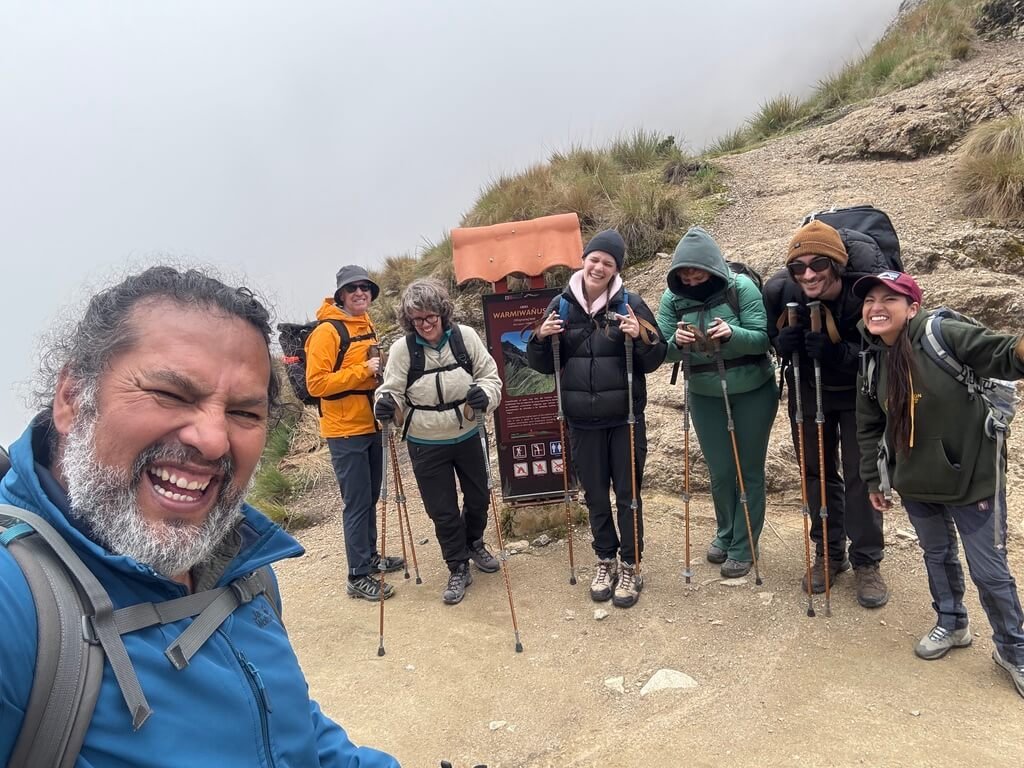
Planning the Inca Trail? Message me on WhatsApp with your dates and questions; my team or I reply instantly.


0 Comments