


Cusco is a city in the Andes of southern Peru, the former Inca capital and the main base for Machu Picchu and the Sacred Valley. It sits at 3,399 m (11,152 ft), and UNESCO inscribed its historic centre as the “City of Cuzco” on the World Heritage List in 1983. Inca walls still support many colonial churches, so few places in Peru show both cultures in a single walk.
| Key fact | Cusco |
|---|---|
| Altitude | 3,399 m (11,152 ft) |
| UNESCO World Heritage | Since 1983 (“City of Cuzco”) |
| Cusco Tourist Ticket (2026) | S/130 integral, S/70 partial circuit (foreign adult) |
| Machu Picchu | About 75 km (47 miles) away; about 4 hours each way by train and bus |
| Best months | May to September (dry season) |
| Time needed | At least 3 days, plus Machu Picchu |
| Biggest festival | Inti Raymi, every 24 June |
- What’s new in Cusco in 2025–2026?
- What is the history of Cusco?
- What are the 10 best things to do in Cusco?
- Where can you eat local food in Cusco?
- When are Cusco’s festivals in 2027?
- How do you get to and around Cusco?
- When is the best time to visit Cusco?
- How much is the Cusco Tourist Ticket?
- How high is Cusco and how do you acclimatize?
- Is Cusco safe? Honest notes before you go
- What else is there to do in and near Cusco?
- FAQs about things to do in Cusco
What’s new in Cusco in 2025–2026?
Four changes from 2025–2026 affect what you can see and book in Cusco. Each one is dated below, so you can judge how current it is.
- Inti Raymi 2026 sold out. All 4,116 paid seats were sold before 24 June 2026, according to Infobae (17 June 2026). In 2025 the organizer, EMUFEC, said Teleticket was the only authorised seller, with no ticket offices and no agency sales.
- San Pedro Market became national heritage. The Ministry of Culture declared it Cultural Heritage of the Nation in November 2024. It marked 100 years as the Mercado Central de San Pedro in 2025, with more than 1,000 traders, according to Diario Correo.
- The Twelve-Angled Stone was attacked. On 18 February 2025 a man struck it at least seven times with a tool, according to Andina. The Ministry of Culture called the damage irreversible. In March 2025 officials began studying a glass cover and announced permanent police surveillance.
- Machu Picchu costs more. Since 1 May 2026, SERNANP adds a conservation fee of S/11 per foreign adult to each Machu Picchu ticket.
Cusco is also busier than before the pandemic. Andina reported 141,452 Tourist Ticket sales in January–February 2026, 12.3% more than in the same months of 2019.
What is the history of Cusco?
Cusco’s history runs from a pre-Inca settlement to the Inca capital and then to a Spanish colonial city. Inca legend says Manco Cápac, the first Inca ruler, founded it after the Sun sent him to find fertile land. Archaeologists trace the earliest settlement to the Killke culture, which occupied the valley from about 900 to 1200 AD.
The city was rebuilt as an imperial capital in the 15th century, a project Inca tradition credits to Pachacuti. The Spanish captured the Inca ruler Atahualpa at Cajamarca in 1532, and Francisco Pizarro entered Cusco on 15 November 1533. The Spanish city was founded on 23 March 1534, with churches built on top of Inca walls and temples.
What are the 10 best things to do in Cusco?
The 10 best things to do in Cusco cover the Inca and colonial centre, the ruins above it, local food and Andes day trips. The table gives a quick overview, and each item is described below.
| # | Thing to do | Time needed | Cost (2026, foreign adult) |
|---|---|---|---|
| 1 | Plaza de Armas and Cusco Cathedral | 1.5–2 hours | Cathedral S/40 in 2023; confirm |
| 2 | Qorikancha (Temple of the Sun) | 1–1.5 hours | S/15 in 2025; confirm |
| 3 | San Blas and the Twelve-Angled Stone | 2 hours | Free |
| 4 | Sacsayhuamán, Q’enqo, Puka Pukara and Tambomachay | Half day | S/70 (Circuit I) or S/130 (integral) |
| 5 | San Pedro Market | 1 hour | Free entry |
| 6 | Picanterías, chiri uchu and a cooking class | 2–4 hours | Varies; ask on arrival |
| 7 | Sacred Valley day trip | Full day | S/70 (Circuit III) or S/130 (integral) |
| 8 | Machu Picchu | 1–2 days | S/163–211 entry (incl. conservation fee), plus train and bus |
| 9 | Rainbow Mountain (Vinicunca) | Full day (12–14 hours) | Tour price plus community fee |
| 10 | Inti Raymi and Cusco’s festivals | 1 day | Free to S/1,030 (combined seat package) |
1. Plaza de Armas and Cusco Cathedral
The Plaza de Armas is Cusco’s main square, built over the Inca ceremonial plaza known as Huacaypata. Cusco Cathedral stands on its north-east side, on the site of an Inca palace. The Jesuit church of La Compañía faces the square from the south-east side. The Cathedral holds one of the largest collections of Cusco School paintings, including a Last Supper in which the Apostles share a roasted guinea pig.
Why go: the square is the easiest place to orient yourself, and the Cathedral shows how Andean artists reworked European religious art.
- Time needed: 30 minutes for the square, 1–1.5 hours inside the Cathedral.
- Cost: the square is free. The most recent published prices we found are from 2023: S/40 for the Cathedral alone, or S/50 for the Archbishopric’s Religious Circuit ticket, which adds the Church of San Cristóbal and the Museum of Religious Art. Confirm current prices at the door. The Cathedral is not in the Cusco Tourist Ticket.
- Tip: photography is not allowed inside. Arrive near opening time (10:00–10:30) to avoid tour groups, and confirm hours before you go, as they change on religious holidays.
2. Qorikancha (Temple of the Sun)
Qorikancha was the most important temple of the Inca Empire, dedicated to Inti, the Sun. The Dominican Convent of Santo Domingo was built on its foundations after the conquest. The 1950 earthquake damaged the convent and exposed long sections of fitted Inca masonry that you can walk through today.
Why go: few sites in Cusco show the meeting of Inca and Spanish architecture as clearly, with a colonial cloister wrapped around Inca chambers.
- Time needed: 1–1.5 hours, longer with a guide.
- Cost: entry to the convent was reported as S/15 for foreign visitors in 2025, paid at the door. Some operators quote more, so confirm the current price. The separate underground Qorikancha Site Museum on Avenida El Sol is part of the Cusco Tourist Ticket.
- Tip: hire a licensed guide at the entrance or join the Cusco city tour, because the site has limited signage for the Inca rooms.
3. San Blas and the Twelve-Angled Stone
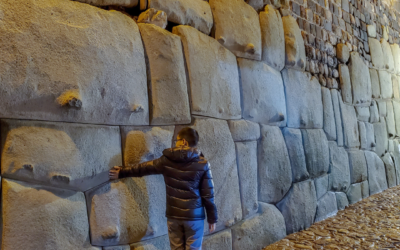
San Blas is the hillside artisans’ neighbourhood a few minutes’ walk uphill from the Plaza de Armas. The Twelve-Angled Stone sits on Hatun Rumiyoc street on the way there. It is a single block cut with twelve corners. It sits in the wall of a palace attributed to the Inca Roca, now the Archbishop’s Palace.
Why go: Hatun Rumiyoc is the best street in the city for close-range Inca stonework. San Blas adds workshops, galleries and viewpoints over the rooftops.
- Time needed: about 2 hours, walking slowly.
- Cost: free to walk; shops and workshops charge for what you buy.
- Tip: look but do not touch, as the stone has been under police watch since the 2025 attack. The streets above San Blas are steep stairs, so save this walk for your second or third day at altitude.
4. Sacsayhuamán and the nearby ruins (Q’enqo, Puka Pukara, Tambomachay)
Sacsayhuamán is an Inca ceremonial and military complex on the hill above Cusco, at about 3,700 m (12,140 ft). It is known for three zigzag terraces of enormous fitted stones. Q’enqo is a carved limestone outcrop with an underground chamber. Puka Pukara is a small complex that controlled the road, and Tambomachay has terraces and spring-fed fountains.
Why go: these four sites show Inca engineering on a larger scale than anything in the city. Read our Sacsayhuamán guide for the history and layout.
- Time needed: half a day for all four sites.
- Cost: all four are covered by Partial Circuit I of the Cusco Tourist Ticket (S/70, valid one day) or by the integral ticket (S/130). Single-site tickets are not sold.
- Tip: take a taxi to Tambomachay, the highest site, and walk downhill through Puka Pukara, Q’enqo and Sacsayhuamán. The white Christ statue, Cristo Blanco, is a short walk from Sacsayhuamán and has one of the best views over the city.
5. San Pedro Market
San Pedro Market (Mercado Central de San Pedro) is Cusco’s central food market, a few blocks south-west of the Plaza de Armas. Locals buy produce, meat, bread, cheese and herbs here, and food stalls serve juices, soups and set lunches. It has been national cultural heritage since November 2024 and turned 100 in 2025.
Why go: the market shows how Cusco eats every day. Look for dozens of potato and maize varieties, Andean fruits such as lúcuma and chirimoya, and medicinal plants.
- Time needed: about 1 hour.
- Cost: free entry; stalls charge local prices in cash.
- Tip: go early for caldo de gallina (hen soup) in the soup section, a local breakfast that Plaza de Armas restaurants rarely serve. Carry small notes and coins, and keep your bag in front of you.
The market runs on its caseras, the women who keep the same stall for years. Regular customers are often called “casero” or “casera”, and stallholders sometimes add a free top-up, the yapa, of juice or soup.
6. Picanterías, chiri uchu and a cooking class
A picantería is a traditional Cusco lunch house serving heavy local dishes with chicha (fermented maize beer). It is the best way to eat what Cusco families eat, rather than the Lima dishes on most tourist menus. Our food section below names places to try.
Why go: try chiri uchu, a cold platter of roast cuy, chicken, charqui, cheese, seaweed and rocoto. Other local dishes are cuy al horno, chicharrón, adobo cusqueño and frutillada, a strawberry chicha.
- Time needed: 2 hours for a picantería lunch; 3–4 hours for a cooking class with a market visit.
- Cost: chiri uchu prices vary by place and season, so ask before you order. Cooking-class prices vary by school, so check whether the market visit and drinks are included.
- Tip: many cooking classes teach ceviche, lomo saltado and pisco sour. Ask for one that teaches Cusco dishes instead. Pisco comes from Peru’s southern coast, not from Cusco, so go easy on it at altitude.
7. Sacred Valley day trip
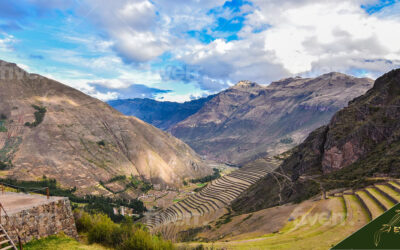
The Sacred Valley is the Urubamba River valley north of Cusco, lined with Inca terraces, towns and the sites of Pisac and Ollantaytambo. A full-day trip usually also includes Chinchero, the circular terraces of Moray and the salt pans of Maras.
Why go: the valley is lower and warmer than Cusco, and it combines large Inca sites with Andean villages and weaving centres. Our Sacred Valley guide describes each site.
- Time needed: a full day (8–10 hours); Ollantaytambo is about 1.5–2 hours from Cusco by road.
- Cost: Pisac, Ollantaytambo, Chinchero and Moray are covered by Partial Circuit III (S/70, valid two days) or the integral ticket (S/130). The Maras salt pans charge a separate fee.
- Tip: if you are going on to Machu Picchu, sleep in Ollantaytambo and take the train from there the next morning.
8. Machu Picchu
Machu Picchu is a 15th-century Inca estate on a ridge above the Urubamba River, at 2,430 m (7,970 ft). It lies about 75 km (47 miles) north-west of Cusco in a straight line. There is no road from Cusco. Visitors take the train to Aguas Calientes, then a 30-minute bus, or arrive on foot along the Inca Trail.
Why go: Machu Picchu is one of the best-preserved Inca sites and the main reason most travellers come to Cusco.
- Time needed: a long day trip is possible, but one night in Aguas Calientes makes the visit far less rushed. The train takes about 3.5 hours from the Cusco area or about 1.5 hours from Ollantaytambo.
- Cost: in 2026, foreign adults pay S/152 for the circuit routes. Routes with Huayna Picchu, Machu Picchu Mountain or the Great Cavern cost S/200. Students pay less; check current student rates on the official site. Since 1 May 2026 a SERNANP conservation fee of S/11 per foreign adult is added, bringing the totals to S/163 and S/211. Train and bus are extra. Buy tickets only on the Ministry of Culture site, tuboleto.cultura.pe.
- Tip: in 2026 daily entry was capped at 5,600 visitors on peak dates (including 19 June–2 November) and 4,500 on other days. Book tickets and trains weeks ahead, and compare options in our Machu Picchu tours.
9. Rainbow Mountain (Vinicunca)
Rainbow Mountain (Vinicunca) is a ridge in the Pitumarca district south-east of Cusco, striped red, yellow, green and purple by mineral-rich sediments. The viewpoint stands at about 5,000 m (16,400 ft), far higher than Cusco.
Why go: it is one of the most popular high-Andes day hikes from Cusco, with views towards the glaciers of Ausangate on clear days.
- Time needed: a full day: about 3 hours’ drive each way, plus 1.5–2 hours uphill on foot and a shorter descent.
- Cost: the tour price plus a local community entrance fee paid in cash; horses can be hired for most of the ascent.
- Tip: go only after two or three nights in Cusco, and pack warm layers, sun protection and rain gear. See our Rainbow Mountain tour.
10. Inti Raymi and Cusco’s festivals
Inti Raymi (Festival of the Sun) is a staging of the Inca winter-solstice ceremony, held in Cusco every 24 June. The municipal festival company EMUFEC organizes it. In 2026 it began at Qorikancha at 08:00, moved to the Plaza de Armas at 11:00 and ended at Sacsayhuamán from 13:00.
Why go: Inti Raymi is Cusco’s largest festival, with more than 800 performers in 2026. Corpus Christi, Señor de los Temblores and the Santurantikuy Christmas fair are the other big dates; see the 2027 calendar below.
- Time needed: one full day for Inti Raymi; Corpus Christi runs over several days.
- Cost: the Plaza de Armas act is free. In 2026, Sacsayhuamán seats cost S/490–850, Qorikancha seats S/235 and combined packages S/690–1,030, according to Infobae.
- Tip: book seats and hotels months ahead, and buy only through the official channel EMUFEC names for that year. Fake tickets are sold every year. The free hillside around Sacsayhuamán fills from early morning.
Where can you eat local food in Cusco?
The best local food in Cusco is in San Pedro Market and in picanterías, family lunch houses that serve Cusco dishes with chicha. Most picanterías open for lunch only, many have no sign, and some mark the door with a red plastic bag tied to a pole. Bring cash and small notes.
| Place | Where | What to order | Price |
|---|---|---|---|
| San Pedro Market | Calle Túpac Amaru, south-west of the Plaza de Armas | Caldo de gallina in the soup section, fresh juice, chiri uchu | A few soles for soup |
| La Chomba | Picantería about a 10-minute walk from the Plaza de Armas (sources give two different addresses, so confirm locally) | Chicharrón, malaya frita, cuy, frutillada | Low; most plates feed two |
| Quinta Eulalia | Calle Choquechaca 384, San Blas | Cuy chactado, chairo soup, chicharrón | Ask on arrival |
| Picantería Las Manuelitas | Urbanización Tawantinsuyo, near La Recoleta church | Malaya, breaded udder, oxtail stew, frutillada | Ask on arrival |
Chiri uchu all year: chiri uchu is the dish of Corpus Christi, but you do not always have to wait for June. Some restaurants in the historic centre also serve it outside June; ask before you go.
The picanteras: the women who run these kitchens keep the tradition alive. In July 2024 Peru’s Congress honoured ten Cusco picanteras, including Leonarda Quispe Zárate of the picantería Chanita and Julia Cerrillo of the picantería Julieta.
Prices and opening days change, and small family places close without notice. Confirm before you go.
When are Cusco’s festivals in 2027?
Cusco’s four biggest festivals in 2027 fall on 22 March, 27 May, 24 June and 24 December. Two are fixed dates and two move with Easter, as the table shows.
| Festival | 2027 date | Date rule | What happens |
|---|---|---|---|
| Señor de los Temblores | Monday 22 March | Holy Monday (Lunes Santo), the Monday before Easter | Procession of Cusco’s patron Christ from the Cathedral from about 14:00, with blessings along the route; free |
| Corpus Christi | Thursday 27 May (saints arrive Wednesday 26 May; octave Thursday 3 June) | 60 days after Easter | Statues of saints and virgins from Cusco’s parishes are carried to the Cathedral; chiri uchu fair in Plaza San Francisco; free |
| Inti Raymi | Thursday 24 June | Fixed: every 24 June | Qorikancha, Plaza de Armas (free), then Sacsayhuamán (paid seats) |
| Santurantikuy | Friday 24 December | Fixed: every 24 December | Christmas craft fair in the Plaza de Armas with more than 1,000 artisans; free |
The Corpus images are carried by parish brotherhoods (cofradías), and Santurantikuy has been national cultural heritage since October 2009, according to Andina. Times for 2027 are not yet published, so check the official programme in spring.
How do you get to and around Cusco?
Most visitors reach Cusco by plane from Lima, landing at Alejandro Velasco Astete airport. The centre, San Blas, San Pedro Market and Sacsayhuamán are all walkable from the Plaza de Armas. The hills and altitude slow you down.
For Tambomachay and the upper ruins, use a registered taxi or a ride-hailing app. For Machu Picchu, take the train from a station near Cusco, such as Poroy, or from Ollantaytambo.
When is the best time to visit Cusco?
The best time to visit Cusco is the dry season, from May to September, when days are sunny and nights are cold. The rainy season runs from about November to March, with afternoon showers and some trail closures. The Inca Trail closes every February for maintenance.
June brings Inti Raymi and Corpus Christi, which makes it the busiest and most expensive month. For fewer crowds and good weather, aim for May or September. For the Lunes Santo procession without the June crowds, come in Holy Week.
How much is the Cusco Tourist Ticket (Boleto Turístico)?
The Cusco Tourist Ticket costs foreign adults S/130 for the integral ticket (16 sites) or S/70 for a partial circuit. COSITUC, the body that sells it, sets these 2026 prices. The Cathedral, Qorikancha temple, Machu Picchu and the Maras salt pans are not included.
| Ticket | Sites | Validity | Price (foreign adult) |
|---|---|---|---|
| Integral (BTC) | All 16 sites | 10 days | S/130 |
| Partial Circuit I (Sacsayhuamán) | Sacsayhuamán, Q’enqo, Puka Pukara, Tambomachay | 1 day | S/70 |
| Partial Circuit II (City) | Qorikancha Site Museum, Regional History Museum, Contemporary Art Museum, Popular Art Museum, Centro Qosqo de Arte Nativo (dance show), Pachacuteq Monument, Tipón, Pikillaqta | 2 days | S/70 |
| Partial Circuit III (Sacred Valley) | Pisac, Ollantaytambo, Chinchero, Moray | 2 days | S/70 |
Foreign students with a valid card pay S/70 for the integral ticket. Buy tickets at the COSITUC office (Av. El Sol 103) or at the ticket offices of the sites. These are the published 2026 rates; confirm them before you travel.
How high is Cusco and how do you acclimatize?
Cusco is 3,399 m (11,152 ft) high, so most visitors feel the altitude on arrival. Common signs are breathlessness on stairs, headache, poor sleep and loss of appetite, which usually ease after one to three days.
- Take the first day easy. Walk slowly, skip the climb to Sacsayhuamán on day one and avoid alcohol the first night.
- Consider sleeping lower first. The Sacred Valley floor lies around 2,800–3,000 m (9,200–9,800 ft), and many itineraries start there.
- Drink water and eat light meals. Coca tea (mate de coca) is served in most hotels and is a traditional local remedy.
- Plan high-altitude day trips last. Leave Rainbow Mountain and long treks until after two or three nights at altitude, and avoid 3 a.m. tour starts on back-to-back days.
- See a doctor if symptoms get worse, especially a severe headache, confusion or breathlessness at rest. Descending is the most effective treatment.
Our guide to managing altitude sickness covers symptoms, medication and acclimatization schedules.
Is Cusco safe? Honest notes before you go
Cusco is generally safe for tourists, but pickpocketing happens in markets and crowds. Use registered taxis at night and keep valuables out of sight. These are the other things we tell our own travellers.
Fake festival tickets: in 2025, fake websites and agencies sold Inti Raymi packages for more than US$300, and Cusco prosecutors opened an investigation, according to Infobae. Buy only through the channel EMUFEC names.
Crowds: Tourist Ticket sales in early 2026 were above 2019 levels. Visit the Cathedral and Sacsayhuamán near opening time, and expect Rainbow Mountain to be busy at the top.
The Twelve-Angled Stone: it is a single stone in a wall, so you will see it in a minute. Pair it with the rest of San Blas rather than making a special trip.
June prices: hotels and flights cost more around Inti Raymi. If festivals are not your goal, come in May or September.
What else is there to do in and near Cusco?
If you have more than three days, Cusco has museums, viewpoints and a less-visited valley south of the city.
- Museo Inka: the national university’s museum of Inca objects, mummies and trepanned skulls, on Cuesta del Almirante a block from the Plaza.
- Museo de Arte Precolombino (MAP): a small museum on Plaza de las Nazarenas with pieces lent by Lima’s Museo Larco. It is not in the Tourist Ticket.
- San Cristóbal viewpoint: a church terrace above the Plaza de Armas, popular at sunset.
- Planetarium Cusco: an evening talk on Inca constellations, followed by telescopes when skies are clear.
- The South Valley: Tipón’s Inca water channels, the pre-Inca Wari city of Pikillaqta (both in Circuit II), and Oropesa. Oropesa has been Peru’s “National Capital of Bread” since Law 31389 of January 2022. About 85% of its people work in baking, according to Andina. Buy a round chuta loaf from its bakers.
More things to do in and around Cusco
Tipón: the Inca water gardens
Tipón is an Inca archaeological park of terraces, canals and fountains in the Huatanay valley, south-east of Cusco. It lies near the town of Oropesa, in Quispicanchi province.
The site is known for its water engineering. Stone channels carry spring water across 13 main terraces, and several fountains still flow. The American Society of Civil Engineers lists Tipón as a Historic Civil Engineering Landmark.
Above the terraces you can also see an aqueduct, storehouses and a long outer wall. Bring sun protection and water. Reaching the upper sectors means an uphill walk.
| Fact | Detail (2026, confirm before you go) |
|---|---|
| Distance from Cusco | About 21 km (13 miles) down the Huatanay valley |
| Park area | About 200 ha (500 acres) |
| Entry | Included in the Boleto Turístico del Cusco |
| Built | Inca period, roughly 1200–1534 |
Museo Inka
The Museo Inka is an archaeology museum in Cusco’s historic centre, a short walk uphill from the Plaza de Armas. It sits in the Casa del Almirante, a 17th-century colonial mansion on Cuesta del Almirante.
The museum is run by Cusco’s public university, the Universidad Nacional de San Antonio Abad (UNSAAC). It began in 1920 as the university’s archaeological museum.
Collections include painted wooden keros, textiles, ceramics, metalwork, tools and mummies. They trace the region from early cultures through the Inca period and beyond. It is a good first stop before visiting the ruins.
| Fact | Detail (2026, confirm before you go) |
|---|---|
| Address | Cuesta del Almirante 103, Cusco |
| Run by | UNSAAC (national university of Cusco) |
| Founded | 1920 |
| Ticket | Not among the Boleto Turístico sites listed in 2023; pay entry separately |
Our Classic City Tour covers the main Inca sites in town, and the museum fits well before or after it.
White-water rafting near Cusco
White-water rafting near Cusco takes place mainly on the Vilcanota (Urubamba) River, south-east of the city and in the Sacred Valley. Day trips are the usual format and normally include transport and safety gear.
Common day sections include Cusipata, Chuquicahuana and Quiquijana in the upper valley. Rapids there range from about class II to IV, depending on section and water level. Multi-day trips are also reported on the Apurímac River, in a deep canyon west of Cusco.
Seasons matter. In January 2026 Cusco’s regional tourism authority closed most river sections to rafting until 31 March because of heavy rain, as reported by Andina. Only some lower-grade Vilcanota sections stayed open.
- Choose an operator that supplies helmets, life jackets and wetsuits.
- Ask about the guide’s training and the safety kayak.
- Check river conditions with the operator before you book (2026, confirm before you go).
Learning Spanish in Cusco
Cusco has many Spanish language schools, most of them in or near the historic centre. They teach travellers, volunteers and long-stay visitors at all levels.
Most schools offer group classes and private one-to-one lessons. Many add homestays with local families, cultural activities and short excursions. Some combine lessons with volunteer placements.
When you choose a school, compare these points:
- Class size and hours of teaching per week.
- Teacher training and experience with your level.
- Whether you can start on any Monday or need fixed dates.
- What a homestay includes, such as meals and a private room.
- Whether the school prepares students for official exams such as the DELE.
A week or two of classes in Cusco also helps you acclimatise before a high-altitude trek.
Cooking classes in Cusco
Cooking classes in Cusco are hands-on sessions where you prepare and eat Peruvian dishes. Most run for a few hours in the historic centre.
A typical class starts with a guided visit to the Mercado Central de San Pedro. The market has traded under that name since 1925. Peru’s Ministry of Culture declared it national cultural heritage in November 2024.
At the market you see Andean potatoes, corn, quinoa, fruits and herbs. Back in the kitchen, classes often cover ceviche, lomo saltado, causa and a pisco sour.
Classes usually end with a shared meal of the dishes you cooked. Menus and prices vary, so compare what each class includes before you book.
- Ask whether the market visit is included.
- Check group size and whether vegetarian options are available.
FAQs about things to do in Cusco
How many days do you need in Cusco?
Plan at least three days in Cusco and the Sacred Valley before Machu Picchu. Use one to acclimatize and see the centre, one for the ruins above the city and one for the Sacred Valley. Add a day for Rainbow Mountain.
Is Cusco worth visiting apart from Machu Picchu?
Yes. Qorikancha, Sacsayhuamán, San Pedro Market and the Sacred Valley are all close by. Cusco is also the base for treks such as the Inca Trail and Salkantay.
What is free to do in Cusco?
The Plaza de Armas, San Blas, the Twelve-Angled Stone, San Pedro Market and the San Cristóbal viewpoint are free. The Inti Raymi act in the Plaza de Armas, the Corpus Christi processions and the Santurantikuy fair are also free.
Do you need the Cusco Tourist Ticket?
You need it for Sacsayhuamán, Pisac, Ollantaytambo, Moray and the other included sites, because single-site tickets are not sold. Buy the integral ticket (S/130 in 2026) if you plan to visit sites from more than one circuit.
How far is Machu Picchu from Cusco?
Machu Picchu is about 75 km (47 miles) from Cusco in a straight line. The journey takes about 4 hours each way by train and bus, as there is no direct road.
When is Inti Raymi in 2027?
Inti Raymi is on Thursday 24 June 2027, as it is every 24 June. The main ceremony at Sacsayhuamán takes place in the afternoon, and paid seats sold out in 2026.
Can you eat chiri uchu outside Corpus Christi?
Often, yes. Chiri uchu is the Corpus Christi dish, but some restaurants in the historic centre also serve it outside June. Ask before you go, as availability and prices vary.
Is Cusco safe for tourists?
Cusco is generally safe for tourists, but pickpocketing happens in markets and crowds. Use registered taxis at night and keep valuables out of sight.
Evolution Treks Peru is based in Cusco. Our founder, Miguel Ángel Góngora Meza, started as an Inca Trail porter in 1996 and has guided since 1998. Contact our Cusco team to plan your days in the city with time to acclimatize.
Updated: November 2026
0 Comments