
Group or private · 5 days / 4 nights
Salkantay and Inca Trail Combo: 5-Day Trek via the Frozen Inca Pass
By Miguel Angel Gongora Meza, co-founder and former Inca Trail porter · Updated November 2026
The Salkantay and Inca Trail combo is a 5-day, 50 km trek that crosses the Frozen Inca Pass (about 5,100 m) beside the glaciers of Salkantay, follows Inca roads down to the Classic Inca Trail, and ends on the Short Inca Trail into Machu Picchu through the Sun Gate. It is our quiet alternative to both the busy Salkantay trek and the sold-out Classic Inca Trail.
Most Salkantay groups cross the main Salkantay Pass and finish by road. We leave them below the mountain at Pampa Japonesa, take the old Inca side path over Incachiriasca, camp where almost nobody else does, and still walk into Machu Picchu on foot, the way the Incas did.
Quick facts
Group trek, per person
From $1,100
2027 price. Short Inca Trail permit, Machu Picchu ticket, guide, cook, horsemen, meals, train, bus and hotel included.
2027 dates are open. Short Inca Trail permits are limited, so book early.
Check availability on WhatsAppAsk Miguel about your dates
Book now with a $300 deposit
A $300 deposit buys your permit; pay the balance by card at least 30 days before, or in cash in Cusco at least 2 days before.
Group or private?

Salkantay, 6,271 m: the Frozen Inca Pass crosses right beside its glaciers on day 2

Travel & Hospitality Award Winner 2024
As featured on





What our guests say





Which Salkantay trek is right for you?
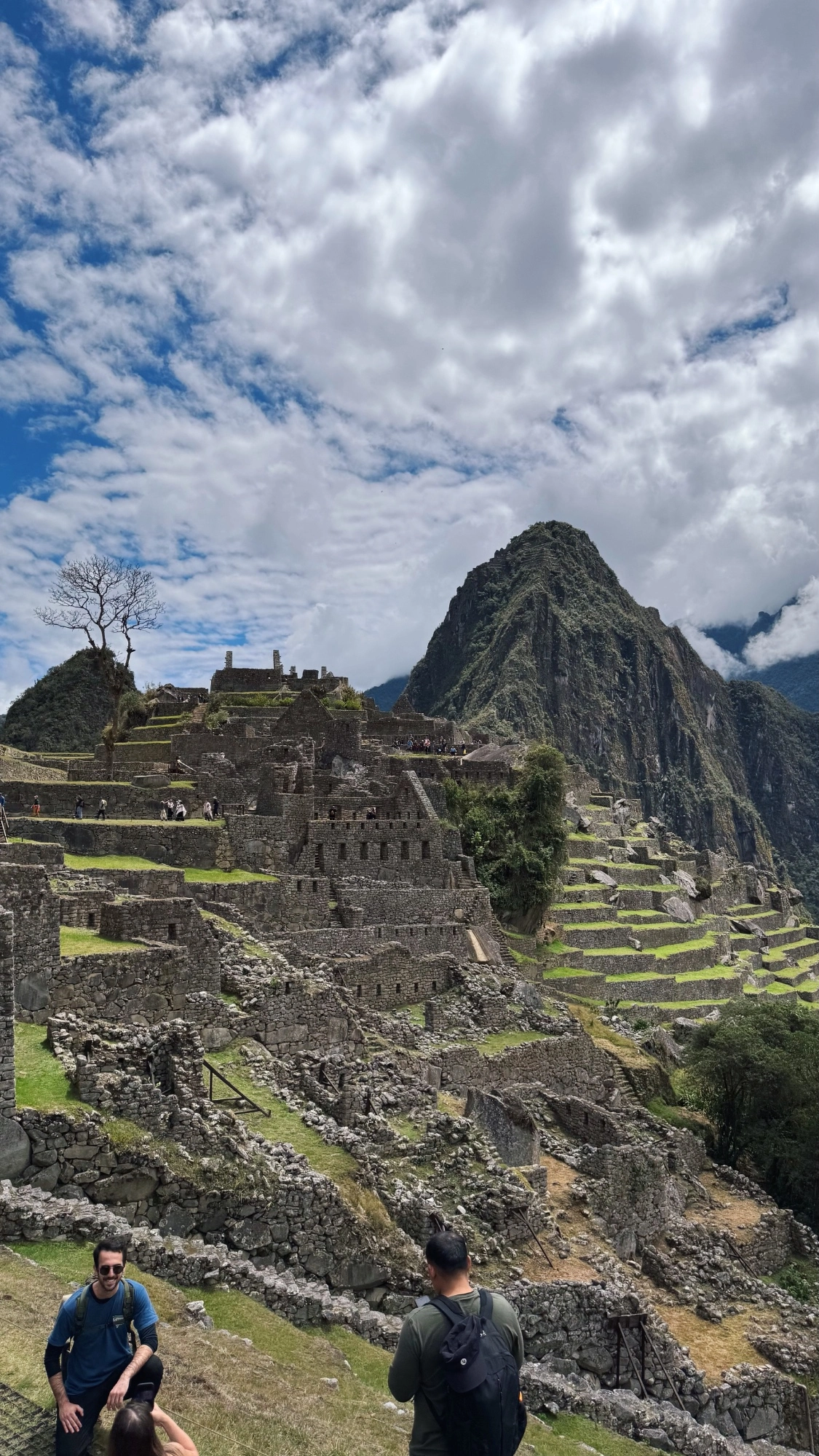
Choose this 5-day combo for the high Frozen Inca Pass and a Sun Gate finish without needing a Classic Inca Trail permit; choose the 6-day trek if you want the full Classic Inca Trail.
| Salkantay + Inca Trail combo (this page) | 6-day Salkantay + Classic Inca Trail | Salkantay trek to Machu Picchu | |
|---|---|---|---|
| Days | 5 | 6 | 5 |
| Pass | Frozen Inca Pass, ~5,100 m | Frozen Inca Pass + Dead Woman's Pass | Salkantay Pass, 4,600 m |
| Inca Trail | First stretch of the Classic trail + Short Inca Trail | The full Classic Inca Trail | None |
| Arrive at Machu Picchu | On foot, through the Sun Gate | On foot, through the Sun Gate | By train from the jungle side |
| Crowds | Very few | Few, then the Classic trail | Busy |
| Permit needed | Short Inca Trail | Classic Inca Trail (sells out first) | None |
| Best for | Fit hikers who want glaciers, quiet camps and the Sun Gate | Hikers who want the complete Inca Trail | Hikers without Inca Trail permits |
Should you join a group or go private?
Join the group for the best price and good company; go private for your own guide, your own pace and your own dates, for $300 more per person.
| Group | Private | |
|---|---|---|
| Who you hike with | A small group of up to 8 travellers | Only your party |
| Price per person | From $1,100 | From $1,400 |
| Pace | Set for the group, with a guide at the back | Yours, every day |
| Dates | Set departures | Any date with permits available |
| Best for | Solo travellers, couples, friends | Families, slower hikers, special occasions |
What happens on each day of the Salkantay and Inca Trail combo?
Day 1 is a short climb to camp below Salkantay, day 2 is the hard climb over the Frozen Inca Pass, day 3 is a long walk down Inca roads, day 4 is the Short Inca Trail to the Sun Gate, and day 5 is your guided tour of Machu Picchu.
| Day | Route | Distance | Altitude | Overnight |
|---|---|---|---|---|
| 1 | Cusco to Soraypampa and Pampa Japonesa | About 7 km, 3 to 4 hours | 3,900 m to about 4,400 m | Camp at Pampa Japonesa, about 4,400 m |
| 2 | Frozen Inca Pass (Incachiriasca) and down to Paucarcancha | About 18 km, 9 to 10 hours | Up to about 5,100 m, down to about 3,300 m | Camp at Paucarcancha, about 3,300 m |
| 3 | Paucarcancha, Wayllabamba and Patallacta to KM 82, then Ollantaytambo | About 12 km, 4 to 5 hours | 3,300 m down to 2,720 m | Camp in Ollantaytambo, 2,800 m |
| 4 | Train to KM 104, Short Inca Trail, Wiñay Wayna and the Sun Gate | About 12 km, 6 hours | 2,150 m up to 2,720 m, down to 2,430 m | Hotel in Aguas Calientes |
| 5 | Guided tour of Machu Picchu, train and transfer to Cusco | Walking tour, 2 to 3 hours | 2,430 m | Back in Cusco about 7:30 pm |
Day 1 · Soraypampa and Pampa Japonesa
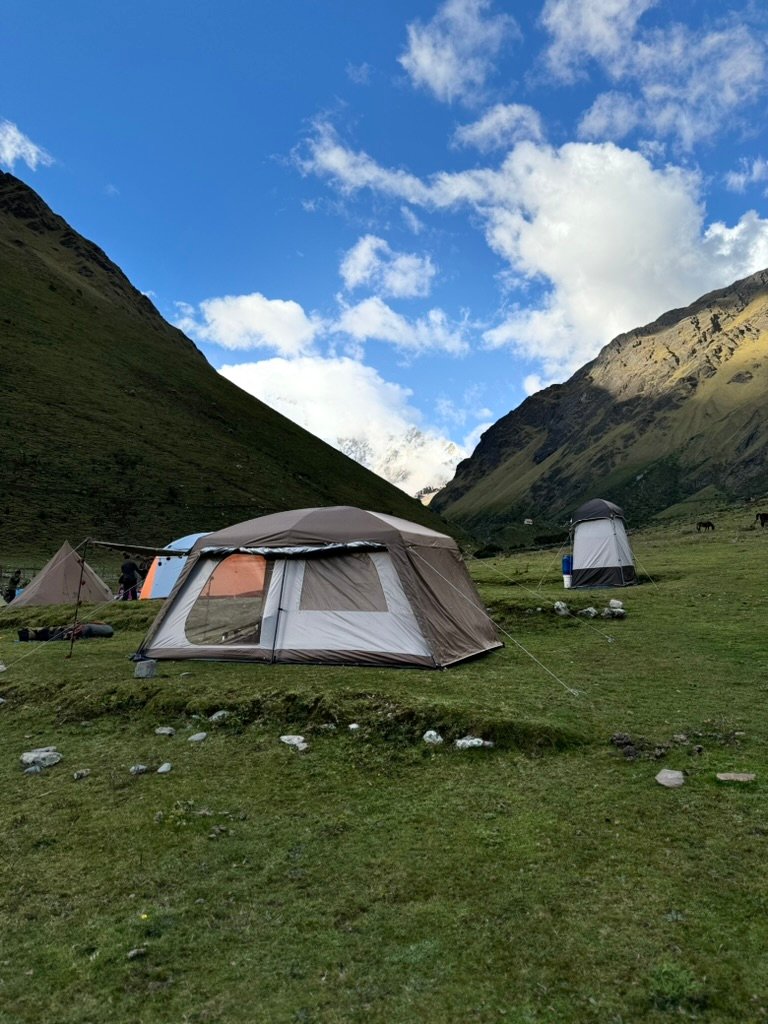
Pickup at 4:30 to 5:00 am from Cusco (7:00 to 8:00 am from the Sacred Valley) and about 4 hours by road to Soraypampa (3,900 m). After lunch, a steady 3 to 4-hour climb up the valley to camp at Pampa Japonesa (about 4,400 m), right under the south face of Salkantay (6,271 m). A short first day helps you adjust to the altitude.
Day 2 · The Frozen Inca Pass
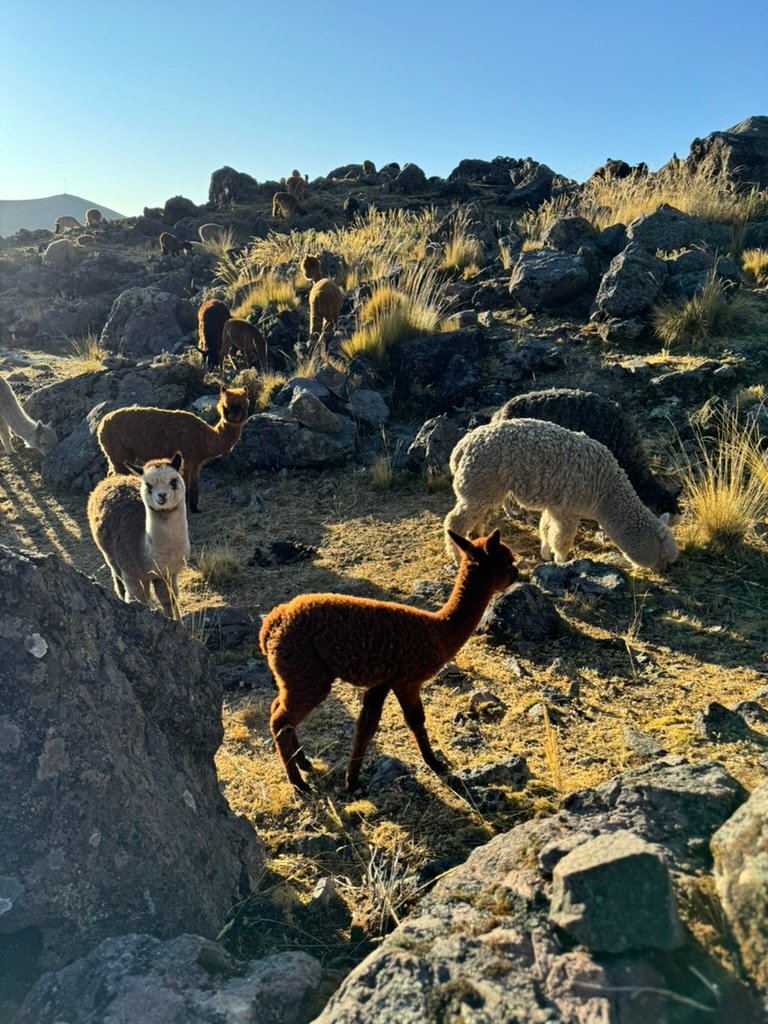
The hardest day. While the crowds turn towards the regular Salkantay Pass, we take the old side path up to Incachiriasca, the Frozen Inca Pass, at about 5,100 m: higher, quieter and right beside the glaciers. Look for vizcachas, white-tailed deer and condors, then a long walk down past small lakes and the Pampacahuana valley to camp at Paucarcancha (about 3,300 m), beside its Inca ruins.
Day 3 · Inca roads to Ollantaytambo
An easier day on Inca paths from Paucarcancha to Wayllabamba and the terraces of Patallacta (Llaqtapata), on the first stretch of the Classic Inca Trail, down to KM 82. A short drive takes us to our camp in Ollantaytambo, with time to walk around the Inca town.
Day 4 · Short Inca Trail and the Sun Gate
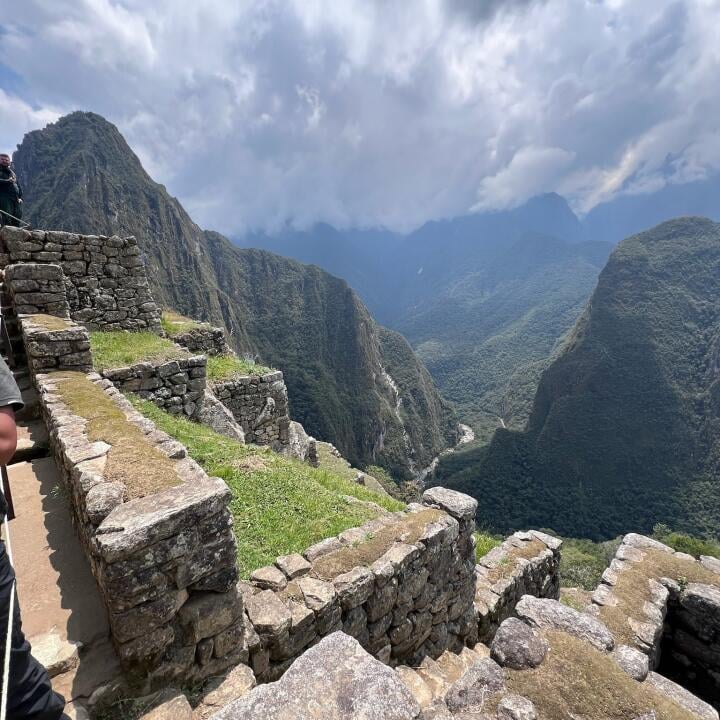
A 1.5-hour train to KM 104, then about 12 km on the Short Inca Trail past Chachabamba and the terraces of Wiñay Wayna, up to the Sun Gate (Inti Punku). Your first view of Machu Picchu is from above, the way the Incas arrived. Bus down to your hotel in Aguas Calientes.
Day 5 · Machu Picchu
An early bus back up for your guided tour inside the citadel. With tickets booked in advance, you can add Huayna Picchu or Machu Picchu Mountain. The train back usually leaves around 2:55 pm, then our transfer takes you to your hotel in Cusco, arriving about 7:30 pm.
How high does the Salkantay and Inca Trail combo go?
The trek starts at 3,900 m, peaks at about 5,100 m on the Frozen Inca Pass on day 2, and drops to 2,430 m at Machu Picchu, so most of your altitude is in the first two days.
Approximate profile. Day 3 ends with a short drive from KM 82 to Ollantaytambo; day 4 starts by train at KM 104.
Walk the trek before you go
Swipe through each day.


When can you do the Salkantay and Inca Trail combo in 2027?
The trek runs from March to January. It does not run in February, when the Inca Trail closes for maintenance. May to September is the dry season, with the clearest views of Salkantay and nights below freezing at the high camps; November to March is greener, wetter and cloudier.
Day 4 needs a Short Inca Trail permit, which we buy with your deposit. These permits are limited, so book 2 to 3 months ahead, and earlier for May to September.
Classic Inca Trail sold out? This is our answer
Classic Inca Trail permits sell out months ahead. When they do, we recommend this trek: you still walk on the Inca Trail, cross a higher pass than Dead Woman's Pass and arrive at Machu Picchu through the Sun Gate. It is the promise behind our 4-day Inca Trail permit guarantee.
What is included?
Included
- Hotel pickup in Cusco and transport to Soraypampa
- Bilingual guide (English and Spanish)
- Cook and kitchen crew
- Horsemen and mules to carry the camping and cooking equipment on the mountain days
- 4 breakfasts, 4 lunches, 3 dinners and afternoon snacks
- Boiled drinking water from day 1 lunch to the end of the trek
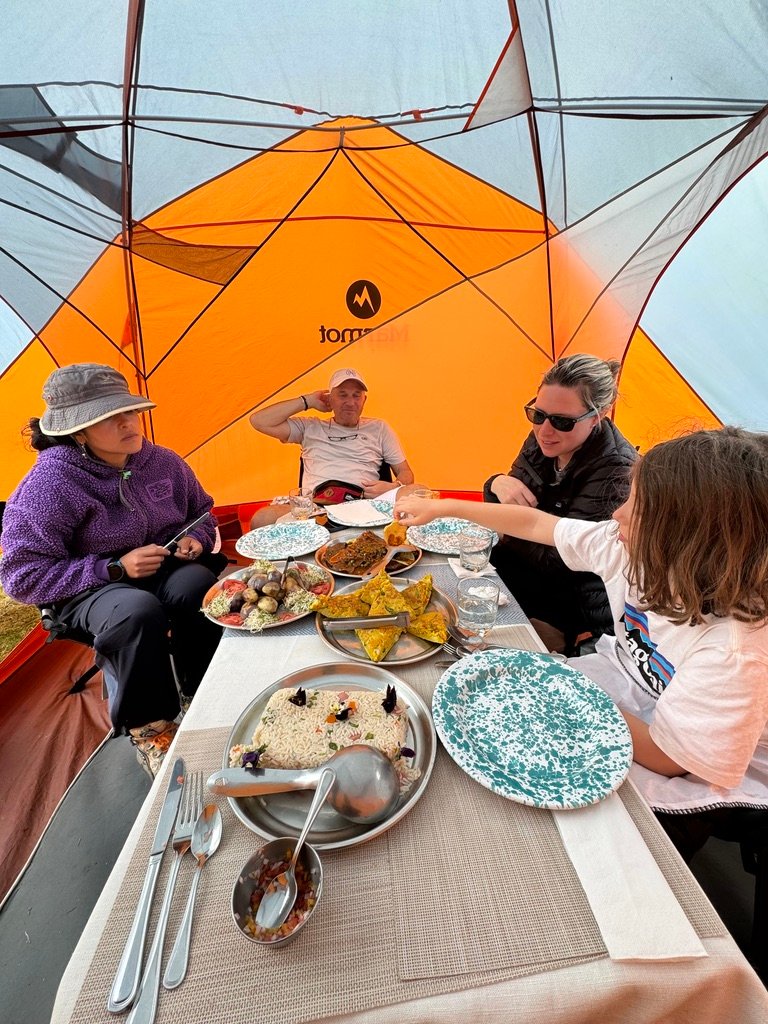
- 2-person tents, sleeping mats, dining tent with tables and chairs
- Our camp in Ollantaytambo on night 3
- 1 night in a hotel in Aguas Calientes
- Short Inca Trail permit and Machu Picchu entrance ticket
- Train from Ollantaytambo to KM 104, and from Aguas Calientes back to Ollantaytambo, then transfer to your hotel in Cusco
- 3 one-way bus tickets between Aguas Calientes and Machu Picchu
- Oxygen bottle, first aid kit and a crew trained in wilderness first aid
- Pre-trek safety briefing and free luggage storage while you hike
- Vegetarian and special diets on request, at no extra cost
Not included
- Breakfast on day 1
- Dinner on day 4 and lunch on day 5 in Aguas Calientes
- Sleeping bag
- Tips for the crew
- Travel insurance (highly recommended)
Optional: rentals and extras
- Sleeping bag (Kelty synthetic, comfort 20°F / -7°C): $60
- Walking sticks (Kelty), per pair: $25
- Inflatable sleeping pad (Therm-a-Rest Pro Lite Plus): $50
- Camping pillow (Therm-a-Rest): $25
- Trekking Comfort Package, all 4 items above: $120
- Extra porter or horse for your own things: ask us when you book
- Single tent supplement: $65
- Huayna Picchu or Machu Picchu Mountain ticket: $90 (subject to availability)
Our crew carries the camp and kitchen only. You carry your daypack; rented gear is yours to carry unless you hire an extra porter or horse.
What should you pack?
Pack for two climates: nights at Pampa Japonesa and Paucarcancha drop below 0 °C and the Frozen Inca Pass can have snow and wind, while days 3 and 4 are warm and humid. You carry your daypack; your other things go with the mules only if you hire an extra horse or porter.
Daypack (you carry it every day)
- Original passport, valid 6 months or more (checked at the Inca Trail checkpoint)
- Water bottle or bladder, at least 2 litres
- Rain jacket and a warm layer you can reach quickly on the pass
- Sun hat, warm beanie, gloves, sunglasses, SPF 50+ sunscreen and lip balm
- Headlamp, snacks, toilet paper and hand sanitiser
- Small Peruvian soles for tips, toilets and snacks; personal medication
Clothing and footwear
- Down jacket and thermal base layers for the two high nights
- Fleece, 2 to 3 quick-dry T-shirts, 1 to 2 long-sleeve shirts
- 2 to 3 pairs of trekking pants and 4 to 5 pairs of hiking socks
- Broken-in waterproof hiking boots, plus camp sandals
Sleeping
- A sleeping bag rated to -7 °C (20 °F) or lower; we rent one for $60
- Earplugs and an eye mask
Toiletries and first aid
- Toothbrush, quick-dry towel, wet wipes, biodegradable soap
- Blister kit, pain relief, anti-diarrhoea tablets, rehydration salts
- Altitude medication only if your doctor prescribes it
Why do we cost more than other Salkantay operators?
Our price pays for fair, safe work for every porter and horseman, and a small group for you; here is exactly where the difference goes.
Equal, fair pay
Every porter, woman or man, earns the same, and horsemen are paid for every animal and every day.
Ethical loads
Lightweight modern gear and ergonomic framed packs, so no load goes over an ethical 20 kg.
A real night's rest for the crew
Our crew gets their own tents, sleeping bags and meals, not a tarp on the ground.
Small groups
Never more than 8 hikers per guide, so the pace and attention fit you.
Safety on every trek
Emergency oxygen, a pulse oximeter, a satellite communicator and a crew trained in wilderness first aid.
Quiet camps
We camp at Pampa Japonesa and Paucarcancha, away from the crowded Salkantay campsites.
How booking and the trek logistics work
A $300 deposit secures your Short Inca Trail permit, the balance is due by card 30 days before the trek (or in cash in Cusco 2 days before), and we handle pickups, the briefing, trains and buses.
| Step | How it works |
|---|---|
| When to book | 2 to 3 months ahead, and earlier for May to September |
| Before you arrive | Spend at least 2 to 3 nights in Cusco or the Sacred Valley to acclimatise; the pass on day 2 is at about 5,100 m. See our training plan. |
| Deposit | $300 per person, non-refundable (it buys your permit) |
| Balance | By card at least 30 days before the trek, or in cash at our Cusco office at least 2 days before |
| Cancellation | See our Terms and Conditions. Travel insurance is highly recommended. |
| Pre-trek briefing | At your hotel when you arrive, or at 5:00 pm the day before in Cusco |
| Pickup on day 1 | 4:30 to 5:00 am from your hotel in Cusco, or 7:00 to 8:00 am from the Sacred Valley |
| Luggage storage | Free storage of your luggage while you hike |
| Return to Cusco | Train to Ollantaytambo (usually around 2:55 pm, based on availability), then transfer to your hotel; back about 7:30 pm |
Who carries the camp, and how are they treated?
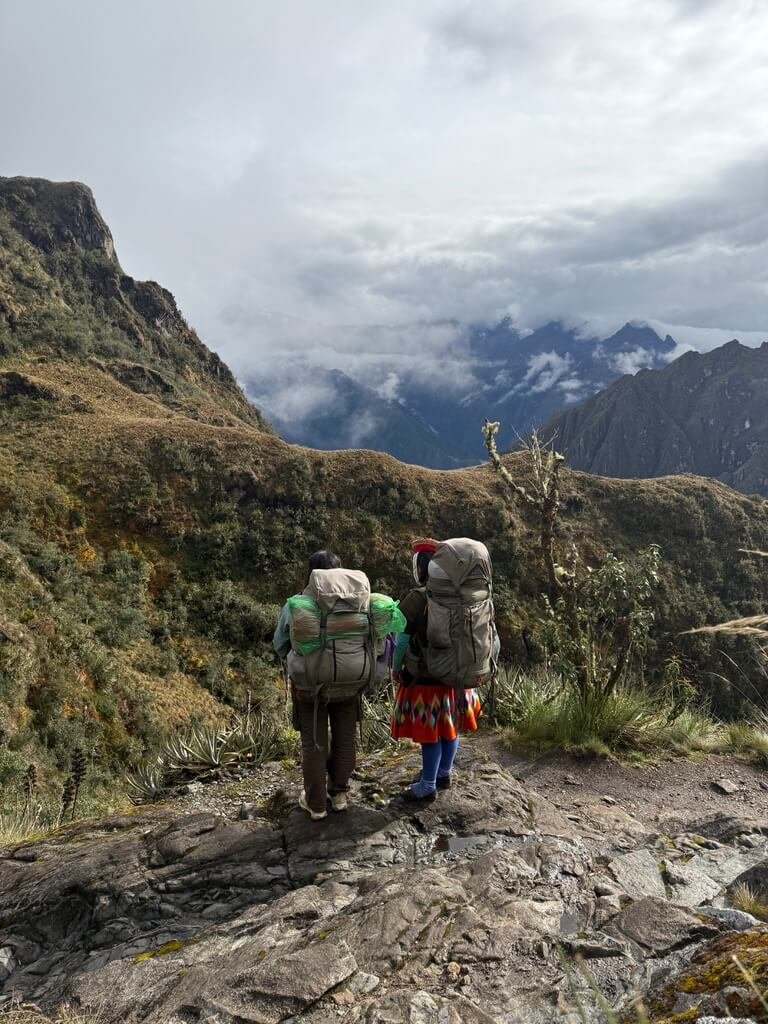
Horsemen and mules carry the camp on the mountain days, and our porters and cooks work at ethical loads, with their own tents, sleeping bags and meals, and equal pay for women and men.
I started on these trails as a porter in 1996. In 2017 we became the first company to hire women porters on the Inca Trail, and the same rules apply on every trek we run: fair pay, light loads, a real night's rest.
Read about our Porter Lives Matter campaignOur 3 guarantees
Fair crew
Equal pay, ethical loads, their own tents and meals. Ask us anything about it.
Small groups
Never more than 8 hikers per guide.
Honest altitude advice
If the Frozen Inca Pass is not right for you, we will tell you before you book and suggest a better trek.
How do we keep you safe?
Every trek carries oxygen, a pulse oximeter and a satellite communicator, and we check you for altitude sickness every day, especially before the pass.
First aid kit
Emergency oxygen bottle
Pulse oximeter checks morning and evening
Garmin satellite device and two-way radios
Emergency horse on the mountain days
How sustainable is this trek?
Fair pay comes first, and we run single-use-plastic-free treks with sorted waste.
Equal pay for women and men
Local horsemen from the Salkantay communities
Single-use plastic free
Waste separated and carried out
Questions about your dates? Ask Miguel
Tell us your dates and whether you want a group or private trek, and we reply on WhatsApp or email.
Get the full 2027 itinerary (PDF)
Day by day, packing list and prices, sent to you on WhatsApp.
Questions about the Salkantay and Inca Trail combo
What is the Salkantay and Inca Trail combo?
It is a 5-day trek that starts on the Salkantay route, crosses the Frozen Inca Pass (about 5,100 m), follows Inca roads down to the Classic Inca Trail at Patallacta, and ends on the Short Inca Trail into Machu Picchu through the Sun Gate. You walk about 50 km and visit Machu Picchu twice.
How is it different from the Classic Inca Trail?
You walk the first stretch of the Classic Inca Trail to KM 82 and the Short Inca Trail from KM 104, but not the middle section over Dead Woman's Pass. In return you get the glaciers of Salkantay, the quiet Pampacahuana valley and a pass higher than anything on the Classic trail. For the full Classic Inca Trail, see our 6-day Salkantay + Classic Inca Trail.
Do I need an Inca Trail permit?
Yes, a Short Inca Trail permit for day 4, which we buy for you with your deposit. It is easier to get than a Classic Inca Trail permit, so this trek is our first choice when Classic permits are sold out.
How hard is the Frozen Inca Pass?
It is the hardest part of the trek: a slow climb to about 5,100 m on day 2, at an altitude where every step takes effort. The path is not technical. Spend at least 2 to 3 nights in Cusco or the Sacred Valley first, walk at your own pace and tell your guide how you feel. A horse can be arranged for emergencies.
Do you see Machu Picchu twice?
Yes: first from the Sun Gate on the afternoon of day 4, then on a guided tour inside the citadel on day 5. The circuit on day 5 depends on the tickets available for your date.
Is it better than the regular Salkantay trek?
It is quieter and ends better. The regular Salkantay trek goes over the busy Salkantay Pass (4,600 m) and down to the jungle, then reaches Machu Picchu by road and train. Our route crosses the higher Frozen Inca Pass, where few groups go, and you arrive on foot through the Sun Gate.
Where do we sleep?
Two nights in tents in the mountains, one night at our camp in Ollantaytambo and one night in a hotel in Aguas Calientes. Nights at Pampa Japonesa can drop well below 0 °C, so bring or rent a warm sleeping bag.
When is the best time to go?
May to September is the dry season, with the clearest views of Salkantay and the coldest nights. The trek runs from March to January; it does not run in February, when the Inca Trail closes.
Is it a group or private trek?
Both. Join a small group (from $1,100 per person) or book it private for your own party (from $1,400 per person) with your own guide, pace and dates.
Who carries my things?
Horsemen and mules carry the camp and food on the mountain days; you carry your daypack. To have your own things carried, hire an extra porter or horse when you book.
Other ways to walk to Machu Picchu
The classic route over Dead Woman's Pass. Group from $990.
6-day Salkantay + Classic Inca Trail
The Frozen Inca Pass plus the complete Classic Inca Trail.
Ancascocha trek + Short Inca Trail
Remote passes, turquoise lakes and a Sun Gate finish.
2 days, the easiest way to walk into Machu Picchu.