
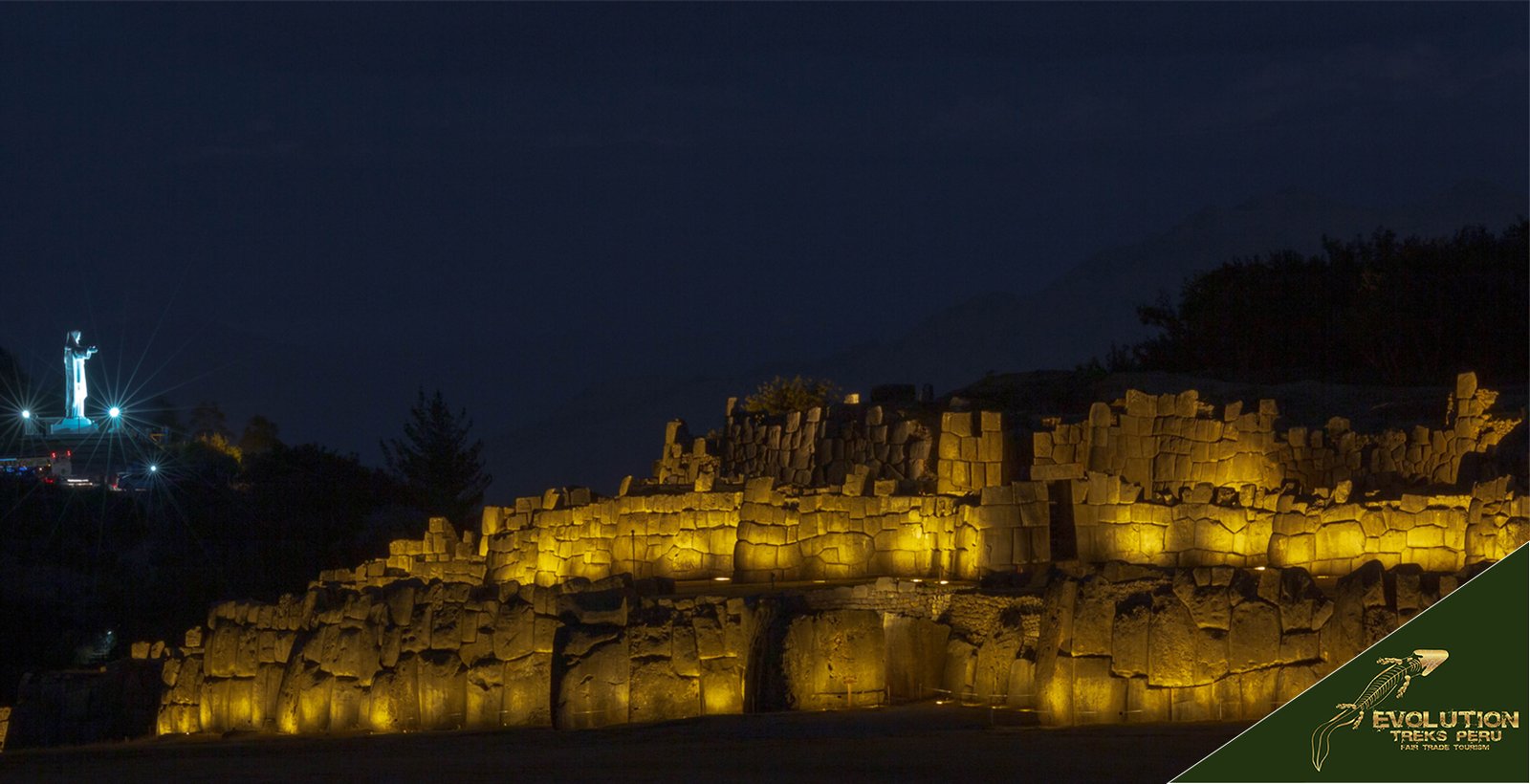

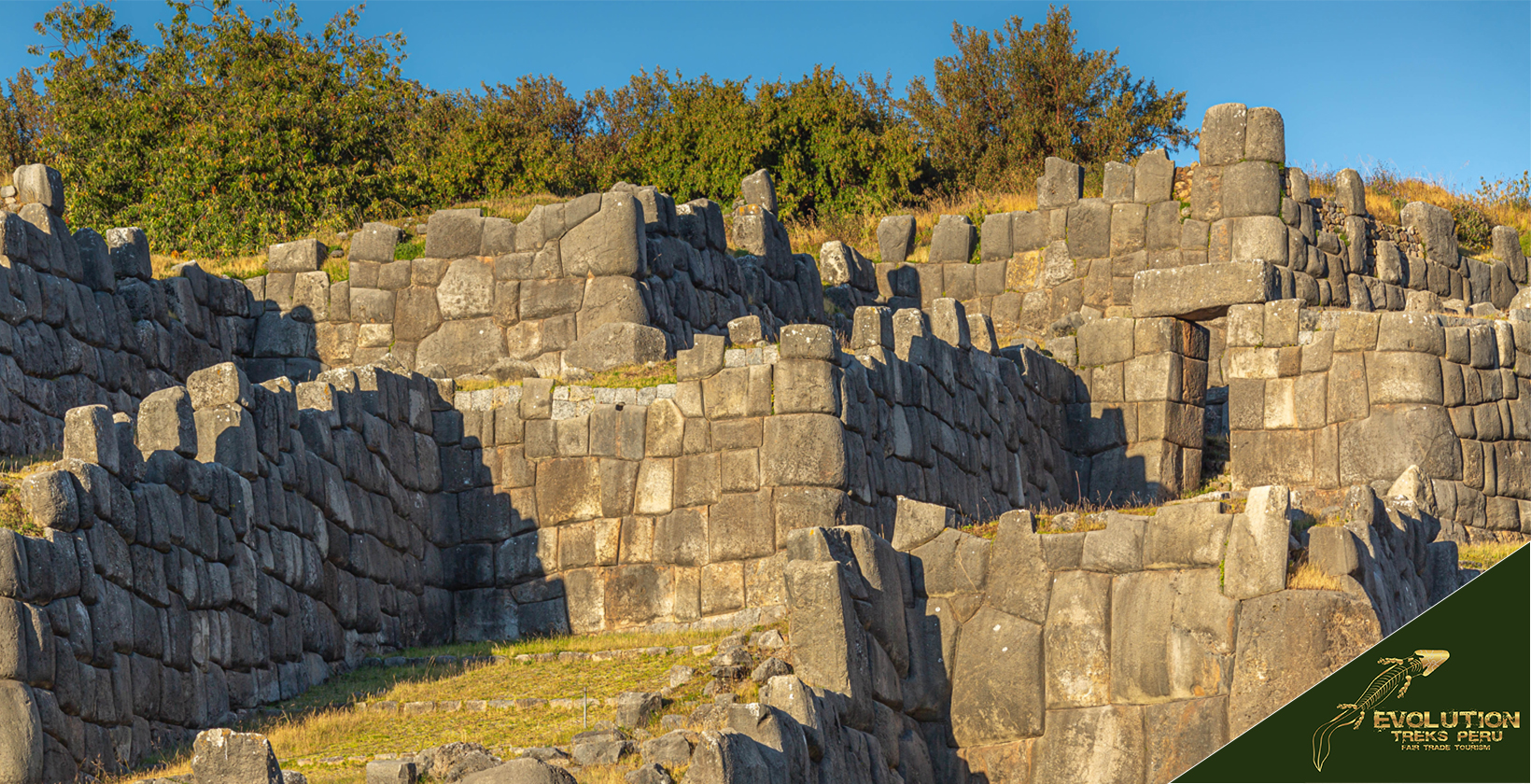
Sacsayhuamán (also spelled Saqsaywaman) is an Inca ceremonial and military complex on the hill directly above Cusco, Peru, at about 3,701 m (12,142 ft). It is known for three zigzag terrace walls of huge fitted limestone blocks, the largest estimated at well over 100 tonnes. It is part of the City of Cuzco UNESCO World Heritage Site (1983).
Sacsayhuamán is also the stage for the Inti Raymi festival every 24 June. Entry is by the Cusco Tourist Ticket, and a 2025 tunnel dig has made it news again.

| Key fact | Value |
|---|---|
| Location | Hill above the north side of Cusco, 20–40 minutes’ walk from the Plaza de Armas |
| Altitude | about 3,701 m (12,142 ft) |
| Ticket (2026) | Cusco Tourist Ticket (BTC) Circuit I: S/70 foreign adult, valid 1 day; or the integral BTC at S/130, valid 10 days |
| Single-site ticket | not sold |
| Opening hours | daily, 7:00–17:30 (Andina, 2024; confirm before you go) |
| Archaeological park | about 3,000 ha with 96 archaeological sites |
| Time needed | 1.5–2 hours for Sacsayhuamán; 4–6 hours for the downhill walk from Tambomachay |
| Best months | May to September (dry season) |
| Main festival | Inti Raymi, every 24 June (next: Thursday 24 June 2027) |
On this page
- Which ticket do you need for Sacsayhuamán?
- What are Sacsayhuamán’s opening hours?
- The 2025 tunnel dig: myth versus evidence
- Inti Raymi at Sacsayhuamán: seats, prices and free viewing
- What is Sacsayhuamán and what can you see there?
- Self-guided downhill route from Tambomachay
- Cristo Blanco and the Temple of the Moon
- Where to eat: the entrance, San Cristóbal and San Blas
- How do you get to Sacsayhuamán?
- When is the best time to visit Sacsayhuamán?
- How much does a visit to Sacsayhuamán cost in 2026?
- Safety, rules and honest notes
- Frequently asked questions about Sacsayhuamán
- Plan your visit
Which ticket do you need for Sacsayhuamán?
You need the Cusco Tourist Ticket (Boleto Turístico del Cusco, BTC), either the partial Circuit I ticket or the integral ticket. Sacsayhuamán does not sell a separate single-site ticket. The ticket is run by COSITUC, the committee that manages the BTC.
- Circuit I (partial ticket): S/70 for foreign adults and S/40 for Peruvians in 2026. It is valid for one day and covers four sites: Sacsayhuamán, Q’enqo, Puka Pukara and Tambomachay.
- Integral ticket: S/130 for foreign adults and S/70 for Peruvians in 2026. It is valid for 10 days and covers 16 sites, including the Sacred Valley ruins of Pisac, Ollantaytambo, Chinchero and Moray, plus Tipón and Pikillaqta.
- Students: the integral ticket costs S/70 for foreign students aged 18–25 with a valid ISIC card. Children aged 9 and under enter free.
Many blogs call the four city ruins “Circuit 3”. That is wrong: Circuit III is Pisac, Ollantaytambo, Chinchero and Moray. Circuit II covers city museums, Tipón and Pikillaqta, and Circuits II and III are each valid for two days.
Which one to buy: choose Circuit I if Sacsayhuamán and its three neighbours are the only ruins you will see. Choose the integral ticket if you will also visit the Sacred Valley, because two partial tickets already cost more (S/140).
Where to buy: at the entrance of any of the four Circuit I sites, or at the COSITUC office at Av. El Sol 103, office 101 (open daily 7:30–18:00). The BTC cannot be bought online. Carry cash in soles and your passport.
What are Sacsayhuamán’s opening hours?
Sacsayhuamán opens daily from 7:00 to 17:30, according to Andina (January 2024). We found no newer official timetable for 2026. Ask at the COSITUC office or the site gate before you plan a late visit.
- The site closes or changes access around 24 June for Inti Raymi. Do not plan a normal visit that day.
- Arrive at opening time for the quietest visit and the clearest light on the walls.
- Late afternoon is popular for sunset over the city. After dark it gets cold fast, so bring a warm layer.
The 2025 tunnel dig: myth versus evidence
In 2025 a research team excavated what it says is the sealed entrance to an Inca tunnel at Sacsayhuamán. The team claims the tunnel runs to the Qorikancha (Temple of the Sun) in central Cusco. These are the team’s claims, and the main passage had still not been entered in January 2026.
The team is Proyecto Chinkana, led by Cusco archaeologists Jorge Calero Flores and Mildred Fernández Palomino. According to Andina (18 July 2025), digging began on 27 May 2025. The Colegio de Arqueólogos del Perú issued a resolution supporting the work. The team first announced its radar survey in January 2025.
| Claim you will hear | What the evidence shows (Nov 2026) |
|---|---|
| “A tunnel from Sacsayhuamán to the Qorikancha has been found.” | The team reports a main passage of about 1,750 m (5,740 ft), found with acoustic survey and ground-penetrating radar. In July 2025 the team said it had entered only a short passage between the Sayaqmarka and Muyuqmarka towers. In January 2026 Infobae reported that entry to the main passage was planned for a later stage. |
| “There is an 8 km tunnel network under Cusco.” | The team estimates close to 8 km of branches in total, three of them under the Plaza de Armas. This is an estimate from radar and old chronicles, not a mapped network. |
| “The entrance was blown up to stop people getting lost.” | The team, citing the chroniclers Martín de Murúa and George Squier, says the entrance was sealed with dynamite in 1841–42. It was ordered by the then subprefect of Cusco, Miguel de San Román. |
| “The tunnel is officially confirmed.” | The 2025 and January 2026 reports quote no statement from Peru’s Ministry of Culture. We found no peer-reviewed publication of the results. |
| “Visitors can enter the tunnels.” | No. The excavation units are closed to visitors. The Chincana Grande, a natural rock passage at the site, is a different place. |
Infobae (25 July 2025) added the details of the dig. The team worked five excavation units over 45 days, a few metres from Suchuna (the Rodadero), with another unit near the Muyuqmarka, Sayaqmarka and Paucarmarka towers. Radar suggested cavities up to 2 m (6.5 ft) high.
Calero told Andina the research would take about 18 months, and he asked sceptics to “be patient”. According to Infobae (5 January 2026), the team plans controlled entry with safety protocols in a later phase. As of November 2026, we found no public report that it has entered the main passage. Treat any tour that promises to “show you the tunnel” with caution.
Inti Raymi at Sacsayhuamán: seats, prices and free viewing
Inti Raymi, the Festival of the Sun, is a staging of the Inca winter-solstice ceremony held in Cusco every 24 June. Its main act takes place at Sacsayhuamán from 13:00. The municipal festival company EMUFEC organises it.
In 2026 the day ran in three parts, according to Infobae (17 June 2026). It started at the Qorikancha at 8:00, moved to the Plaza de Armas at 11:00 (free) and ended at Sacsayhuamán from 13:00. More than 800 performers took part.
| Seating (2026) | Seats | Price |
|---|---|---|
| Sacsayhuamán: Inti Súper VIP | 1,320 | within S/490–850 |
| Sacsayhuamán: Chaska | 1,188 | within S/490–850 |
| Sacsayhuamán: Killa VIP | 448 | within S/490–850 |
| Sacsayhuamán: Illapa | 810 | within S/490–850 |
| Qorikancha stand | 350 | S/235 |
| Qorikancha + Sacsayhuamán package | combined | S/690–1,030 |
Infobae gives one price range for the four zones, not a price per zone. All 4,116 paid seats for 2026 sold out.
For 24 June 2027, book seats and a hotel months ahead. Expect prices to change, and confirm them before you go.
- Official sales only: in 2025, Infobae reported Teleticket as the authorised seller. Resellers asked S/900 for a Tribuna Verde seat with an official price of S/455. Fake tickets were also sold through WhatsApp numbers and unauthorised websites for more than US$300. Buy only through the channel EMUFEC announces for the year.
- Free viewing: in 2025, DDC Cusco, which manages the park, let the public watch from the Suchuna and Cruz del Papa sectors, according to Panamericana (21 June 2025). These slopes fill from early morning, and you will see the ceremony from far away.
- Closed areas on the day: in 2025 the Chincana Grande, Chincana Chica, the Baluartes esplanade, Calispuquio and other sectors were fenced off. Climbing the Inca walls is banned. Archaeologist Francisco Solís, head of the Saqsaywaman Archaeological Park, asked visitors to help protect the site.
The modern Inti Raymi was first staged at Sacsayhuamán on 24 June 1944, after a proposal by a group led by historian Humberto Vidal Unda, according to Andina. The Quechua scholar Faustino Espinoza Navarro wrote the first script and played the Inca. Cusco expects close to half a million visitors in its June festival month, so trek and hotel prices rise.
What is Sacsayhuamán and what can you see there?
Sacsayhuamán is an Inca hilltop complex built mainly in the 15th century, with three tiers of zigzag walls facing a wide esplanade. The Spanish called it a fortress, but it also had religious and ceremonial uses. Inca tradition credits the work to Pachacuti and his successors. The chronicler Cieza de León put the workforce at about 20,000 people.
A popular theory holds that Inca Cusco was laid out in the shape of a puma, with Sacsayhuamán as its head. Andina reported in January 2024 that the park drew about 995,000 visitors from January to August, roughly twice Machu Picchu’s count for those months.
What should you look for?
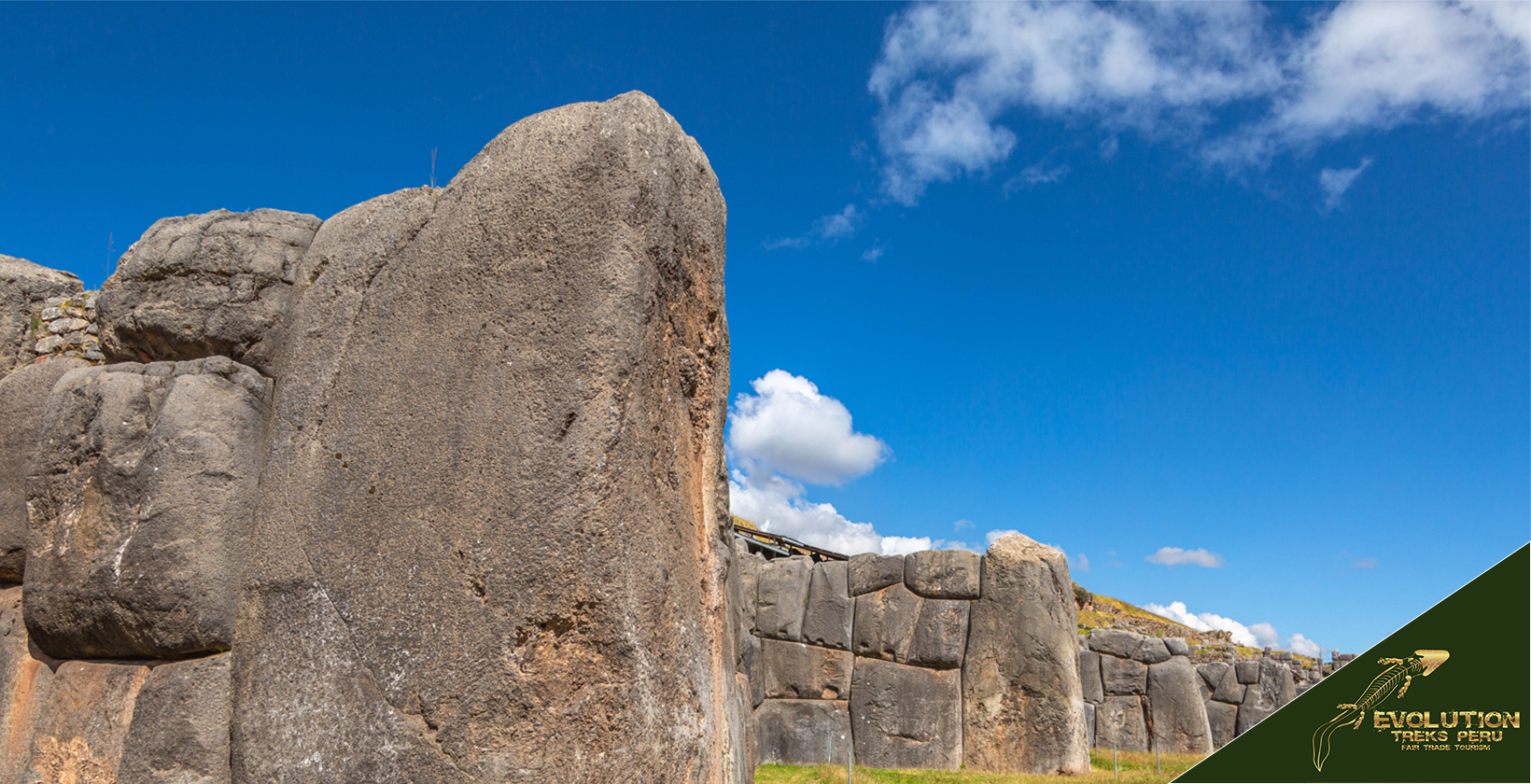
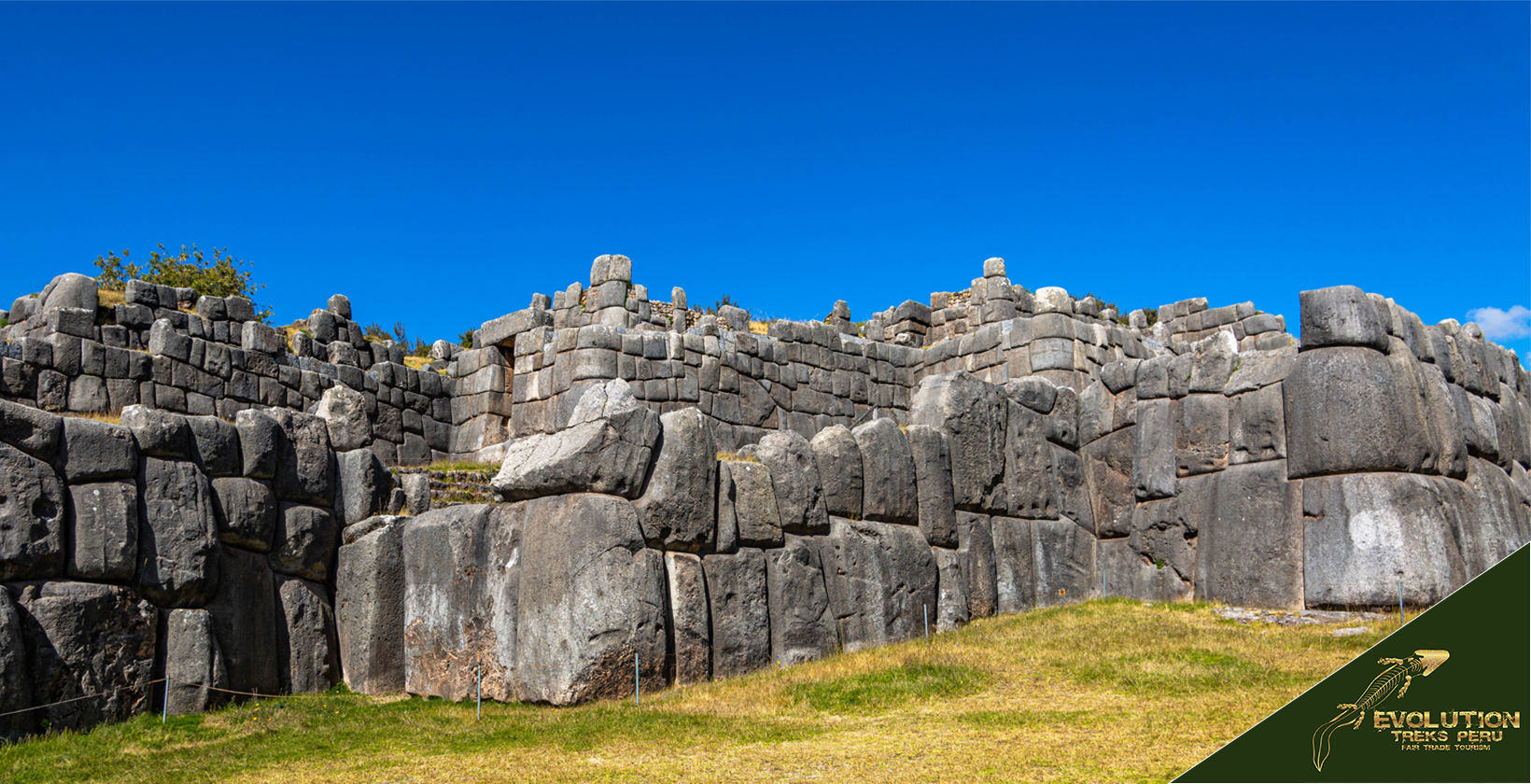
- The zigzag walls: three terraced walls, the longest about 400 m (1,310 ft) long and about 6 m (20 ft) high. The stones fit without mortar.
- The largest blocks: estimates for the heaviest limestone block range from about 128 to almost 200 tonnes. Look for the giant stones in the lowest tier.
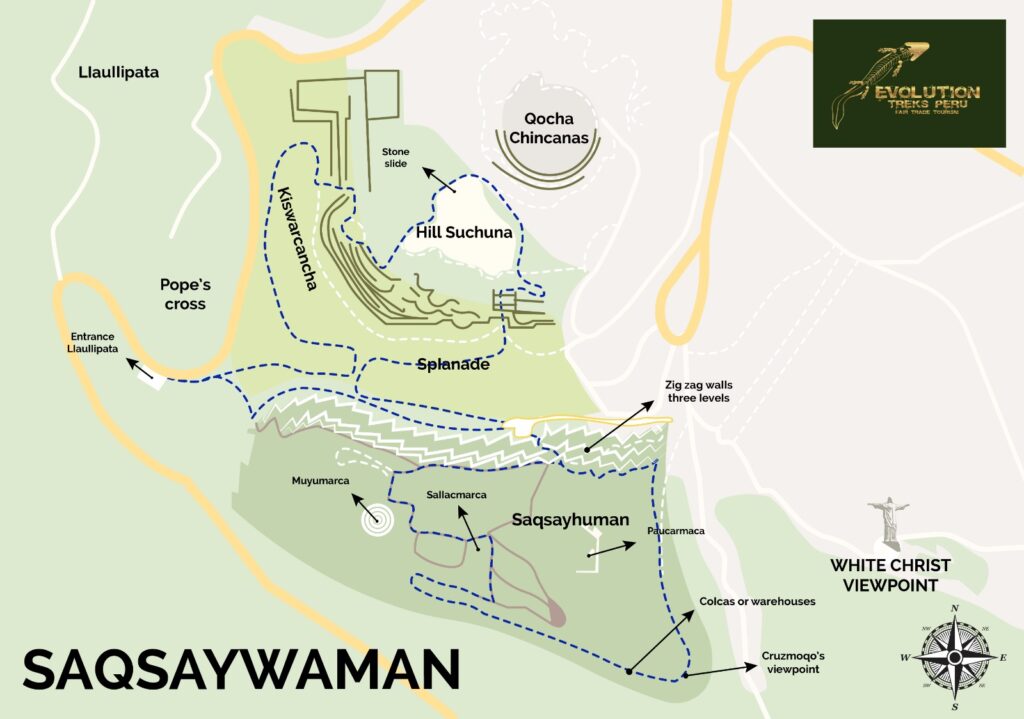
- The tower foundations: on the top of the hill are the bases of Muyuqmarka (a round tower) and Sayaqmarka. Chroniclers described tall towers here before the Spanish pulled them down.
- The Rodadero and Suchuna: the rock outcrop opposite the walls has natural grooves polished smooth, plus Inca-carved seats sometimes called the Throne of the Inca.
- The Chincana Grande: a natural fissure in the rock near the Rodadero. It is not the tunnel the 2025 team excavated.
- Calispuquio: a spring sector of the park, traditionally linked to Inca coming-of-age rites. It is fenced off at Inti Raymi.
- The view: from the upper terraces you look straight down onto the Plaza de Armas and the cathedral.
What happened at Sacsayhuamán in history?
In 1536, during the siege of Cusco, Manco Inca’s forces held Sacsayhuamán against the Spanish. Juan Pizarro, a brother of Francisco Pizarro, was killed in the assault on the walls. The Spanish then took the hill.
After the conquest, colonial builders used Sacsayhuamán as a quarry for houses and churches in Cusco. That is why mostly the largest stones remain; they were too heavy to move. Pottery finds suggest the hilltop was occupied long before the Incas, by about 900 CE.
What does Sacsayhuamán mean?
The name comes from Quechua and is usually translated as “satisfied falcon” or “royal falcon”. Linguists still debate the exact meaning. Common spellings are Sacsayhuamán, Saqsaywaman and Sacsahuaman. Many visitors remember the pronunciation as “sexy woman”, which is close.
Self-guided downhill route from Tambomachay
The easiest way to see Sacsayhuamán and the other Circuit I sites without a tour is to start at the top and walk downhill. Take a taxi or ride-hailing car to Tambomachay, the highest of the four sites, and walk back to Cusco. Allow 4–6 hours with visits.
- Cusco to Tambomachay: about 30 minutes by car. A travel blog reported about S/10 by Uber; confirm the current fare. Buy your Circuit I ticket at the Tambomachay gate.
- Tambomachay: spring-fed Inca water channels and fountains, often called the Baths of the Inca. Spend 20–30 minutes.
- Tambomachay to Puka Pukara: about 5 minutes on foot along the road. Puka Pukara is a small reddish complex that controlled the road.
- Puka Pukara to Q’enqo: about 45 minutes downhill along the road, or a colectivo minibus for S/1–2. You pass Huayllarcocha, which has shops and small restaurants.
- Q’enqo: a carved limestone outcrop with a zigzag channel and an underground chamber with a carved altar.
- Q’enqo to Cristo Blanco: about 15 minutes. Optional detour first: the Temple of the Moon (see below).
- Cristo Blanco to Sacsayhuamán: 5–10 minutes. Enter, explore for 1.5–2 hours, then leave by the lower gate.
- Sacsayhuamán to the centre: about 20 minutes downhill, via the San Cristóbal church and its viewpoint.
One walker logged about 16 km (10 mi) for the whole day, including walking inside the sites. Most of the road stretch has traffic and no pavement, so walk facing oncoming cars.
Cristo Blanco and the Temple of the Moon
What is Cristo Blanco?
Cristo Blanco is a white statue of Christ on Pukamoqo hill, next to Sacsayhuamán, looking over the whole city. The 8 m (26 ft) statue was made in 1945 by the Cusco sculptor Ernesto Olazo Allende, a gift from Cusco’s Palestinian Arab community. It stands in an open area, with no ticket needed.
From Sacsayhuamán it is a 5–10 minute walk. Go in late afternoon for sunset, then walk down through San Cristóbal before it gets dark.
What is the Temple of the Moon?
The Temple of the Moon (Templo de la Luna) in Cusco is the Inca site of Amaru Marka Wasi, also called Salonpunku. It is a rock outcrop with carved chambers, east of Sacsayhuamán and near Q’enqo. Do not confuse it with the Temple of the Moon on Huayna Picchu, at Machu Picchu.
The Temple of the Moon is not on the BTC list of sites. Access has been informal and free, but confirm locally before you go. Local operators run horse rides and guided walks there, often combined with the Inca site of Inkilltambo.
Where to eat: the entrance, San Cristóbal and San Blas
There are no restaurants inside Sacsayhuamán, so eat before you go or on the way down into the city. Carry water and a snack for the site itself. Prices change often, so confirm before you go.
| Place | Where | What to order | Price |
|---|---|---|---|
| Choclo con queso sellers | Sacsayhuamán entrance | Boiled giant Andean corn with fresh cheese | a few soles; 2026 price not verified |
| Huayllarcocha stalls and shops | Road between Puka Pukara and Q’enqo | Snacks, drinks and small set meals on the downhill route | not verified for 2026 |
| Pachapapa | Plazoleta San Blas 120 | Cusco cooking from a wood-fired oven; chiri uchu. Pachamanca must be pre-ordered (groups of 20 or more) | chiri uchu S/25–40 (2026 range) |
| Quinta Eulalia | Calle Choquechaca 384, San Blas | Traditional quinta: chairo soup, cuy chactado, lechón; lunch only, listed Tue–Sun | not verified for 2026 |
| San Blas Market | Near the Plazoleta San Blas | Simple, low-cost market food | budget; not verified for 2026 |
San Cristóbal: the San Cristóbal church square is a viewpoint more than a food stop. You may find a few snack and drink sellers, but we have not verified any named place for 2026. For a sit-down meal, walk on down Cuesta Suecia to the Plaza de Armas, or cross east to San Blas.
Chiri uchu is a cold platter of roast cuy, chicken, charqui, sausage, cheese, seaweed, fish roe and rocoto. Infobae reported in June 2026 that Pachapapa and other Cusco restaurants serve it all year, not only at Corpus Christi.
Quintas and picanterías are lunch kitchens. A red flag or red bag on a pole outside means chicha is sold. Go at midday, as dishes run out.
How do you get to Sacsayhuamán?
You can walk to Sacsayhuamán from the Plaza de Armas in 30–40 minutes uphill. Take Cuesta Suecia to the San Cristóbal church, then follow the signed stone path up to the lower gate. The way back down takes about 20 minutes.
- Taxi or ride-hailing: the road reaches the site in about 10–15 minutes. Use an app or a registered taxi.
- Colectivo: minibuses on the road to Pisac pass Q’enqo, Puka Pukara and Tambomachay. They are cheap, but ask locally where to board.
- Tour: half-day city tours include Sacsayhuamán with the other Circuit I sites. Our Cusco city tour is one option.
The walk climbs about 300 m (1,000 ft) at altitude. If you arrived in Cusco today, take a taxi up and walk down. Read our altitude sickness guide first.
When is the best time to visit Sacsayhuamán?
The best time to visit Sacsayhuamán is the dry season, May to September, early in the morning. Skies are clearest and the paths are dry. June is the busiest month because of Inti Raymi.
- Time of day: go at opening for fewer people, or in late afternoon for sunset from Cristo Blanco.
- Rainy season (November to March): the grass and the Rodadero rocks get slippery, and afternoon storms are common. Mornings are usually drier.
- Crowds: Andina reported that Tourist Ticket sales in January–February 2026 were 12.3% above 2019 levels. Tour groups tend to arrive mid-morning, so opening time is quieter.

How much does a visit to Sacsayhuamán cost in 2026?
A self-guided visit to Sacsayhuamán costs S/70 for a foreign adult in 2026, the price of BTC Circuit I. Add transport and food. All prices below are for 2026; confirm before you go.
| Item (2026) | Foreign | Peruvian | Notes |
|---|---|---|---|
| BTC Circuit I | S/70 | S/40 | 1 day; 4 sites |
| BTC integral | S/130 | S/70 | 10 days; 16 sites |
| BTC integral, student 18–25 | S/70 | S/40 | valid student ID or ISIC |
| Children up to 9 | free | free | BTC rules |
| Inti Raymi seat, Sacsayhuamán | S/490–850 | S/490–850 | sold out in 2026 |
| Colectivo, Puka Pukara to Q’enqo | S/1–2 | S/1–2 | reported fare |
| Cristo Blanco | free | free | open-air |
Safety, rules and honest notes
Honest notes: Sacsayhuamán is the most impressive of the four Circuit I sites. Some visitors find Puka Pukara and Tambomachay small, so the downhill walk suits people who enjoy the walk itself. If you only have two hours, see Sacsayhuamán alone, but you still pay the full Circuit I price.
- Do not climb the walls. It is banned, and guards will stop you.
- Altitude: the site is higher than the Plaza de Armas. Walk slowly and drink water.
- Sun and cold: UV is strong at midday, and it gets cold fast after sunset. Bring sunscreen, a hat and a warm layer.
- After dark: walk down to San Cristóbal while there is still light, and stay with other people.
- Photos with children and animals: people in traditional dress near the site expect a tip for photos. Agree before you take one.
- Unofficial guides: guides offer tours at the gate. Ask to see an official guide card and agree on a price first.
Qenqo and Puka Pukara: the next stops on the same ticket route
Sacsayhuamán is the first of four Inca sites on the road north of Cusco. Qenqo, Puka Pukara and Tambomachay follow it along the same road. Entry to all four is by the Cusco Tourist Ticket (Boleto Turístico), Circuit I.
In 2026, the Circuit I ticket was reported at S/70, valid for one day. The full ticket was reported at S/130, valid 10 days for 16 sites. Student and national rates differ, so confirm before you go.
Qenqo (Q’enqo)
Qenqo is an Inca ceremonial site carved into a large natural rock, about 3 km (1.9 mi) northeast of Cusco. It sits roughly 1 km (0.6 mi) up the road from Sacsayhuamán. The name is usually translated as “labyrinth” or “zigzag”.
Peru’s tourism board describes it as a place where the Sun, Moon and stars were worshipped. Its carvings include felines, birds and serpents.
- The carved rock: channels, steps and zigzag grooves cut into the outcrop.
- The underground chamber: a semicircular cave cut from the rock, linked to farming rituals.
- The amphitheatre: a semicircular wall with niches, facing a standing stone about 6 m (20 ft) high.
| Fact | Detail (2026, confirm before you go) |
|---|---|
| Distance | About 3 km (1.9 mi) from Cusco; about 20 minutes by car |
| Hours | Daily, about 7:00 to 17:30 |
| Entry | Cusco Tourist Ticket, Circuit I (reported S/70) or full ticket (reported S/130) |
Puka Pukara
Puka Pukara is a small Inca complex of walls, plazas and enclosures, about 7 km (4.3 mi) northeast of Cusco. It lies roughly 5 km (3.1 mi) beyond Sacsayhuamán, beside the road to Pisac. Tambomachay is a short walk across the road.
The name means “red fortress” in Quechua. It refers to the colour the stone takes at sunset. Despite the name, it probably served as a tambo, a rest stop for the Inca and his court.
- Rooms and plazas: enclosures built around small open spaces.
- Aqueducts: water channels, often linked to water worship at nearby Tambomachay.
- Lookouts: raised points with views over the surrounding valley.
| Fact | Detail (2026, confirm before you go) |
|---|---|
| Distance | About 7 km (4.3 mi) from Cusco; about 30 minutes by car |
| Hours | Daily, about 7:00 to 17:30 |
| Entry | Cusco Tourist Ticket, Circuit I (reported S/70) or full ticket (reported S/130) |
The PromPerú Cusco traveller guide lists both sites and their hours. For a guided visit, see our Cusco city tour.
Frequently asked questions about Sacsayhuamán
How much is the entrance to Sacsayhuamán?
In 2026 entry costs S/70 for a foreign adult with BTC Circuit I, valid one day for four sites. The integral BTC costs S/130 and is valid 10 days. No single-site ticket is sold.
Is Sacsayhuamán in Circuit 1 or Circuit 3?
Sacsayhuamán is in Circuit I, with Q’enqo, Puka Pukara and Tambomachay. Circuit III covers Pisac, Ollantaytambo, Chinchero and Moray.
Can you walk to Sacsayhuamán from Cusco?
Yes. It takes 30–40 minutes uphill from the Plaza de Armas via Cuesta Suecia and San Cristóbal, and about 20 minutes back down.
How long do you need at Sacsayhuamán?
Allow 1.5–2 hours for Sacsayhuamán. Allow 4–6 hours to walk all four Circuit I sites downhill from Tambomachay.
Is there really a tunnel from Sacsayhuamán to the Qorikancha?
A research team, Proyecto Chinkana, says radar shows a passage of about 1,750 m. In January 2026 it had still not entered the main passage, and we found no peer-reviewed results.
Can you see Inti Raymi at Sacsayhuamán for free?
Yes, from a distance. In 2025 the public could watch from the Suchuna and Cruz del Papa sectors. Paid seats cost S/490–850 in 2026 and sold out.
Is the Temple of the Moon included in the Tourist Ticket?
No. The Temple of the Moon (Amaru Marka Wasi) is not a BTC site. Access has been informal and free; confirm locally.
Plan your visit
Sacsayhuamán pairs well with a day in the city. See our 10 things to do in Cusco and the Twelve-Angled Stone, on the walk to San Blas. If you buy the integral ticket, use it in the Sacred Valley.
A visit to Sacsayhuamán is also good acclimatisation before the Inca Trail. Evolution Treks Peru is based in Cusco, and founder Miguel Ángel Góngora Meza has guided here since 1998. Contact us to plan your days in Cusco.
Updated: November 2026
0 Comments