


The Sacred Valley of the Incas (Valle Sagrado de los Incas) is the Urubamba River valley between Pisac and Ollantaytambo, in Peru’s Cusco Region. Its valley floor runs for about 60 km (37 mi) at 2,790–2,975 m (9,150–9,760 ft), about 500 m (1,640 ft) lower than Cusco. It was the main maize-growing area of the Inca heartland, holds several Inca royal estates and is the rail gateway to Machu Picchu.
Sacred Valley key facts
| Attribute | Value |
|---|---|
| Location | Cusco Region, Peru (provinces of Calca and Urubamba) |
| Valley floor altitude | 2,790–2,975 m (9,150–9,760 ft) |
| Cusco to Pisac | About 33 km (20 mi), 45–60 minutes by road |
| Cusco to Ollantaytambo | About 72 km (45 mi) via Chinchero, 1 h 30 min–2 h by road |
| Entry ticket | Boleto Turístico Parcial Circuit III: S/70, foreign adult, 2 days (2026) |
| Maras salt pans fee | About S/20, foreign adult, cash (2026) |
| Best months | May to September (dry season) |
| Time needed | 1 day minimum; 2 days to see the main sites |
Contents
- What is new in the Sacred Valley in 2025–2026?
- Where is the Sacred Valley?
- What is the history of the Sacred Valley?
- How high is the Sacred Valley?
- What are the main sites to see?
- What are the hiking routes?
- What and where to eat in the Sacred Valley
- Weavers and communities of the Sacred Valley
- Which festivals are held in the Sacred Valley?
- How do you get to the Sacred Valley from Cusco?
- When is the best time to visit?
- How much does it cost to visit?
- How many days do you need?
- Is the Sacred Valley good for acclimatization?
- What should you know before you go?
- Where can you stay?
- What is near the Sacred Valley?
- Frequently asked questions
What is new in the Sacred Valley in 2025–2026?
The main changes in the Sacred Valley in 2025–2026 are a delayed airport, a new road to Pumamarca and an updated Maras fee.
- Chinchero airport, finish now expected in 2028: a new international airport is under construction near Chinchero. In June 2026 the Ministry of Transport said it expects to finish construction in the second half of 2028, according to Diario Correo. A trial period follows before commercial flights begin.
- Ollantaytambo on the 2025 New York Times list: Ollantaytambo was 46th on The New York Times’ “52 Places to Go in 2025” list, according to Forbes Perú. The paper presented it as an alternative to crowded Machu Picchu.
- Maras salt pans fee, about S/20 (2026): foreign adults paid about S/20 in 2026, in cash at the gate. Check the current fee locally.
- New road to Pumamarca: the Gobierno Regional del Cusco has announced a new road to Pumamarca, an Inca site above Ollantaytambo. The investment is more than S/18.8 million. Confirm road conditions locally before you go.
- Rail disruption: two trains collided on the Ollantaytambo–Machu Picchu line on 30 December 2025, killing one person. According to Andina, service was fully restored on 1 January 2026.
- Inca Trail closures: the Inca Trail closed for its usual February maintenance in 2026. Heavy rain closed it again in August 2026, and Routes 1–3 reopened on 5 September 2026.
Where is the Sacred Valley?
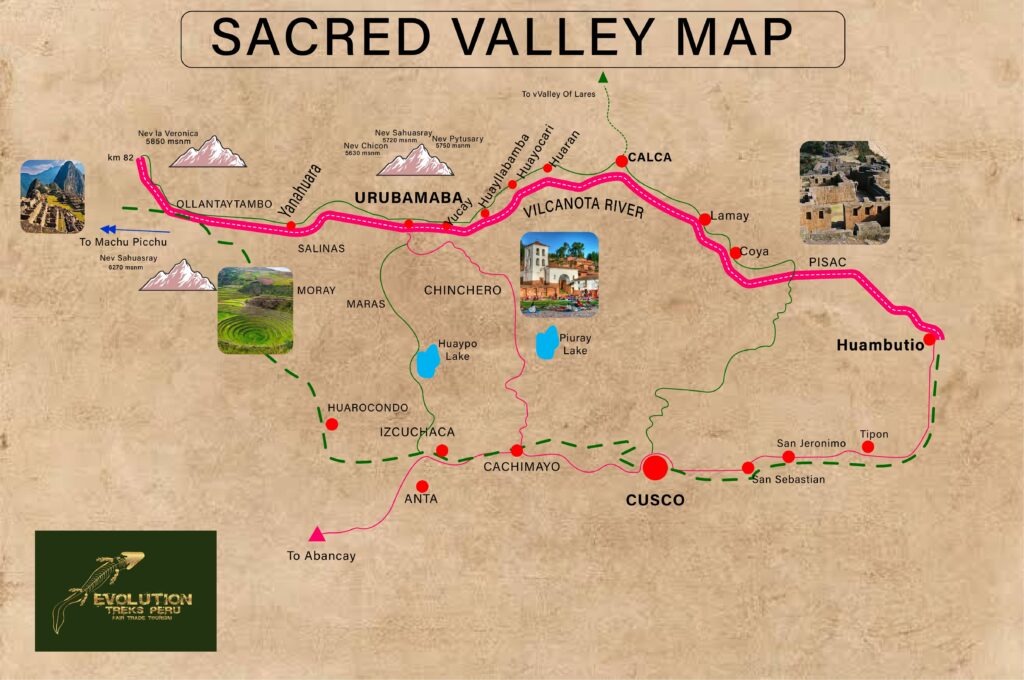
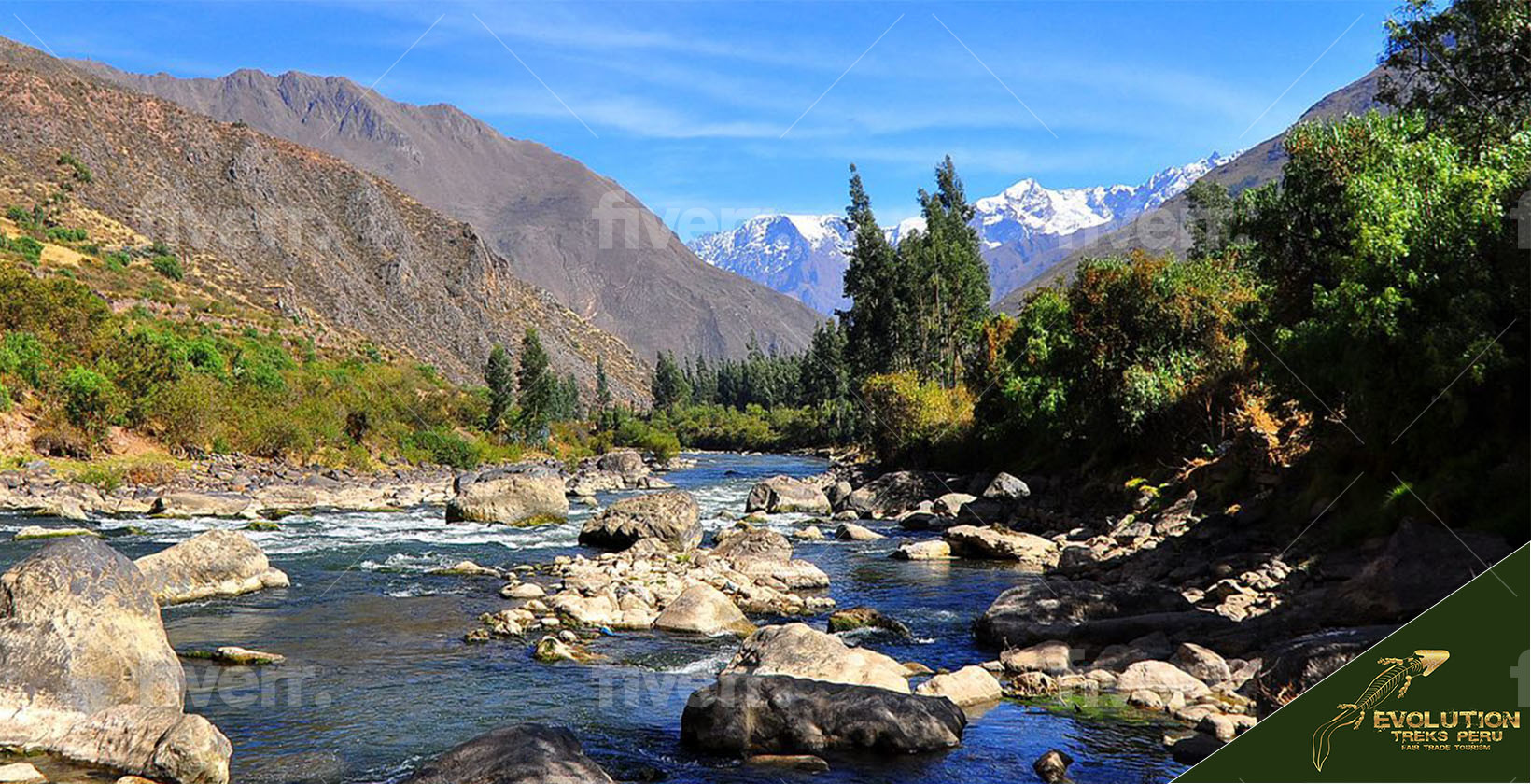
The Sacred Valley is in the Cusco Region of southern Peru, north of the city of Cusco, in the provinces of Calca and Urubamba. It follows the Urubamba River, called the Vilcanota upstream. Its Quechua name, Willkamayu, means “sacred river”.
The main towns, from east to west, are Pisac, Lamay, Calca, Yucay, Urubamba and Ollantaytambo. Urubamba is the largest town and the capital of Urubamba Province. Colonial documents call the area the “Valley of Yucay”.
Some geographers extend the name downstream to Machu Picchu, about 100 km (62 mi) from Pisac. In travel use, the Sacred Valley ends at Ollantaytambo, where the valley narrows into a gorge. Machu Picchu is a separate destination.
Is the Sacred Valley a UNESCO World Heritage Site?
The Sacred Valley is not a UNESCO World Heritage Site. The nearby Historic Sanctuary of Machu Picchu and the City of Cusco were both inscribed by UNESCO in 1983.
What is the history of the Sacred Valley?
The history of the Sacred Valley is the history of the Inca heartland. Farming peoples settled it long before the Incas, and in the 15th century Inca rulers filled it with terraces, royal estates and storehouses. Before the Inca expansion, the Cusco area was home to the Killke culture (about 900–1200 CE).
The emperor Pachacuti, who ruled from about 1438, built royal estates at Pisac and Ollantaytambo. His father Viracocha built Huchuy Qosqo above Lamay. His son Túpac Inca Yupanqui built Chinchero, and Huayna Cápac built the estate of Quispiguanca at Urubamba.
The valley’s main product was maize. The Incas grew it on irrigated terraces (andenes) and used it for food and for chicha, the maize beer served at state ceremonies.
In January 1537 Manco Inca defeated a Spanish force led by Hernando Pizarro at Ollantaytambo. He used the terraces as defences and flooded the plain below them. Manco Inca then withdrew to Vitcos and later Vilcabamba, and the valley was divided into Spanish haciendas.
Colonial churches were built in the valley’s towns. At Chinchero, the church stands directly on the walls of an Inca palace.
How high is the Sacred Valley?
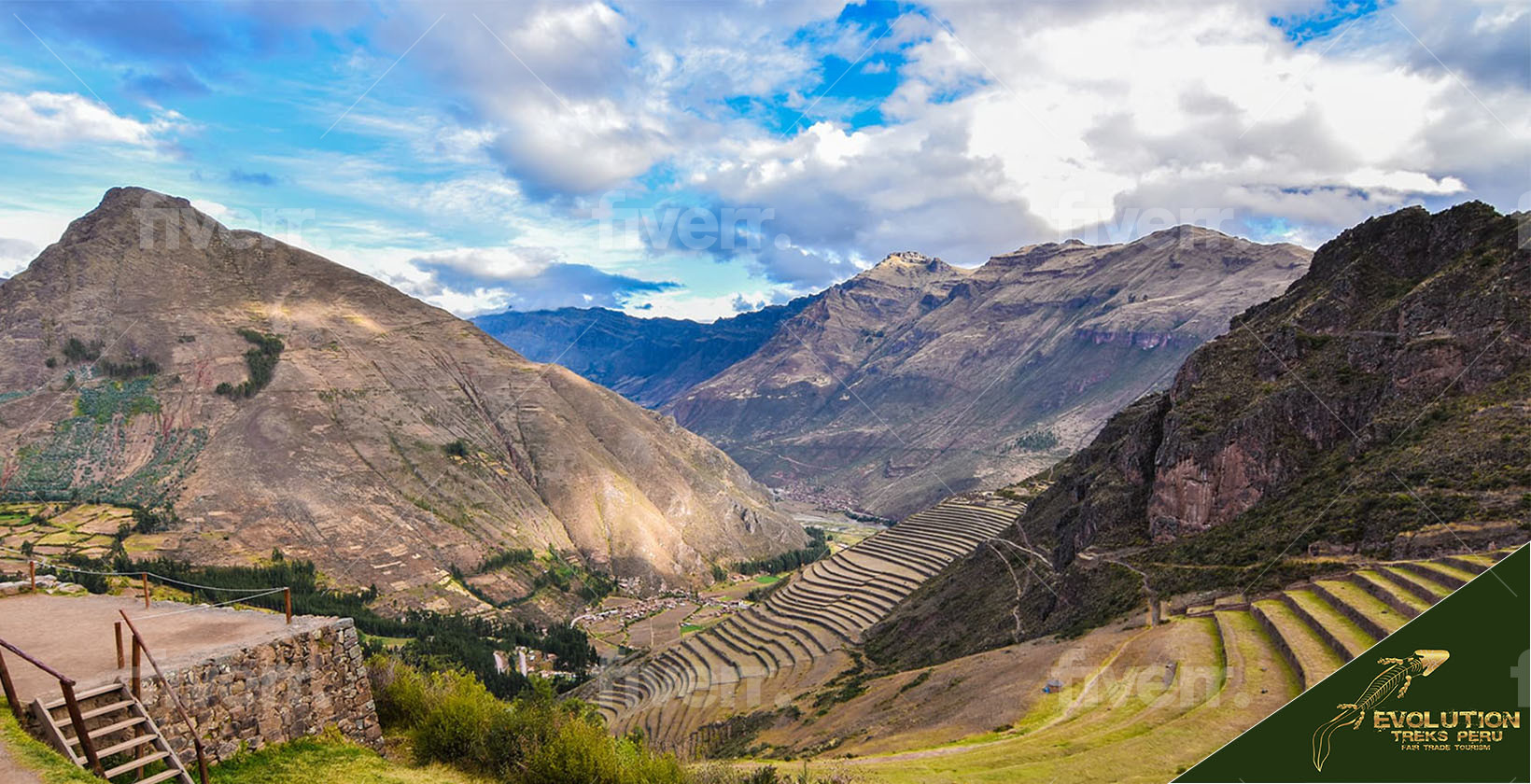
The Sacred Valley floor is 2,790–2,975 m (9,150–9,760 ft) high, about 500 m (1,640 ft) lower than Cusco at 3,399 m (11,152 ft). The floor is about 1 km (0.6 mi) wide. To the north rise the snow peaks of the Urubamba range, including Sahuasiray (5,818 m / 19,088 ft) and Verónica (about 5,700–5,900 m / 18,700–19,400 ft).
The plateau to the south, where Chinchero, Maras and Moray stand, is higher, at 3,300–3,760 m (10,800–12,340 ft). Maize grows on the valley floor and potatoes on the plateau.
| Place | Altitude |
|---|---|
| Cusco (city) | 3,399 m (11,152 ft) |
| Chinchero | 3,762 m (12,343 ft) |
| Huchuy Qosqo | 3,650 m (11,975 ft) |
| Moray | About 3,500 m (11,480 ft) |
| Pisac ruins | About 3,450–3,510 m (11,320–11,520 ft) |
| Maras salt pans | About 3,200 m (10,500 ft) |
| Pisac (town) | 2,972 m (9,751 ft) |
| Urubamba | 2,871 m (9,419 ft) |
| Ollantaytambo | 2,792 m (9,160 ft) |
| Machu Picchu (for comparison) | 2,430 m (7,970 ft) |
What are the main sites to see in the Sacred Valley?
The main sites to see in the Sacred Valley are the Inca complexes of Pisac and Ollantaytambo on the valley floor. On the plateau above are Chinchero, Moray and the Maras salt pans. Huchuy Qosqo is reached on foot.
Pisac
Pisac is the eastern entrance to the Sacred Valley, a town at 2,972 m (9,751 ft) about 33 km (20 mi) from Cusco. Archaeologists consider the Inca complex on the ridge above it a royal estate of Pachacuti. It has terraces, residential sectors, walls and gates, a tunnel, storehouses (qollqas) and the Intihuatana ceremonial sector.
The Intihuatana has a carved stone aligned with the June solstice sunrise, but the sector is closed to visitors after vandalism. Across the Kitamayu ravine, the Tankanamarka cliff holds hundreds of looted tombs. It is considered one of the largest pre-Columbian cemeteries.
The terraces climb from about 3,000 m (9,840 ft) to the ruins at about 3,450–3,510 m (11,320–11,520 ft). Plan 2–3 hours. Many visitors drive to the upper entrance and walk down through the terraces to the town.
Pisac’s handicraft stalls open every day. The main market days are Tuesday, Thursday and Sunday, and Sunday is the largest.
Urubamba and Yucay
Urubamba is the largest town and the transport hub of the Sacred Valley, at 2,871 m (9,419 ft), roughly halfway between Pisac and Ollantaytambo. Most of the valley’s hotels are in and around Urubamba and neighbouring Yucay. The remains of Huayna Cápac’s estate of Quispiguanca stand in the northern part of Urubamba town.
Urubamba is also the road junction for Chinchero, Maras and Moray.
Ollantaytambo
Ollantaytambo is an Inca town and archaeological complex at the western end of the Sacred Valley. It stands at 2,792 m (9,160 ft), about 72 km (45 mi) from Cusco. Pachacuti made it a royal estate in the 15th century.
The town keeps much of its Inca street grid and stone water channels, and some Inca houses are still lived in.
The Temple Hill rises above the town on steep terraces. At its top is the unfinished Sun Temple. Its Wall of the Six Monoliths is made of pink rhyolite from the Kachiqhata quarry, about 4–5 km (2.5–3 mi) away across the Urubamba River.
On Pinkuylluna hill opposite stand Inca storehouses, built where cool winds helped preserve grain. The trail up to them is free. Plan 2 hours for the Temple Hill and 1–2 hours for Pinkuylluna.
Ollantaytambo is the main railway station for Machu Picchu. The classic Inca Trail starts at Km 82 (Piscacucho), a short drive downstream.

Chinchero
Chinchero is an Andean town on the plateau between Cusco and Urubamba, at 3,762 m (12,343 ft) and about 28 km (17 mi) from Cusco. It was the royal estate of Túpac Inca Yupanqui. Inca terraces and palace walls surround a colonial church, completed around 1607 on Inca foundations.
Chinchero is known for its weaving, and its Sunday market is held in the main square. It is higher than Cusco, so it does not help with acclimatization. The new airport is being built near the town.
Moray
Moray is an Inca site of concentric circular terraces built into natural depressions near the village of Maras, at about 3,500 m (11,480 ft). The largest depression is about 30 m (98 ft) deep. The depth and orientation create a temperature difference between the top and bottom levels.
The most common interpretation is that the Incas used Moray to grow crops in different microclimates. Its exact purpose has not been established. Plan about 1 hour.
Maras salt pans
The Maras salt pans (Salineras de Maras) are several thousand small evaporation pools below the village of Maras. They lie at about 3,200 m (10,500 ft). A salty spring feeds the pools, the water evaporates, and families scrape out the salt by hand.
Since June 2019, according to Andina, visitors may no longer walk among the pools. You view them from a marked path. Plan about 1 hour.
Moray and the Maras salt pans are about 30–40 minutes apart by road and are usually visited together.

Huchuy Qosqo
Huchuy Qosqo (“Little Cusco” in Quechua) is an Inca royal estate high above the town of Lamay, at about 3,650 m (11,975 ft). It is attributed to the Inca Viracocha (early 15th century). It includes a large hall (kallanka), terraces and storehouses.
Huchuy Qosqo has no paved road, and hikers reach it on a steep 3-hour climb from Lamay. A full-day trail from the Chinchero side crosses a pass of about 4,400 m (14,400 ft). A small entrance fee is paid at the site.
Pumamarca
Pumamarca is a smaller Inca site in the hills above Ollantaytambo, and a quieter alternative to the Temple Hill. The new regional road (see What is new) is meant to improve access.
What are the hiking routes in and from the Sacred Valley?
The hiking routes in and from the Sacred Valley range from short walks above Ollantaytambo to multi-day treks ending at Machu Picchu. Ollantaytambo, Urubamba and Lamay are the usual starting points. Distances vary by route, so the figures below are typical ranges.
| Route | Start | Duration and distance | Highest point |
|---|---|---|---|
| Pinkuylluna storehouses | Ollantaytambo | 1–2 hours, about 2 km return | Short, steep climb above town |
| Huchuy Qosqo | Chinchero side (full day) or Lamay (about 3 h climb) | 1 day | About 4,400 m (14,400 ft) on the Chinchero route |
| Short Inca Trail | Km 104, near Aguas Calientes | 1–2 days, about 12 km | About 2,720 m (8,920 ft) |
| Classic Inca Trail | Km 82, near Ollantaytambo | 4 days, about 42 km | 4,215 m (13,829 ft), Warmiwañusca pass |
| Lares Trek | Lares or Huaran | 3–4 days, 30–50 km | 4,400–4,700 m (14,400–15,400 ft), by route |
| Salkantay Trek | Near Mollepata or Soraypampa | 4–5 days, about 60–75 km | About 4,600 m (15,090 ft), Salkantay pass |
The Lares Trek crosses the Urubamba range through Quechua farming and weaving communities, and needs no trail permit. The Salkantay Trek starts west of the valley. Our Salkantay route does not include Humantay Lake.
The Short Inca Trail and the classic Inca Trail need permits from the Ministerio de Cultura. Permits are limited and must be booked through a licensed operator. Our treks have a maximum of 8 people.
What and where to eat in the Sacred Valley
The Sacred Valley’s food is built on maize, potatoes, cuy (guinea pig), trout and bread from clay ovens. Each stop on the road has its own speciality. Prices are given only where a source publishes them, with the year, so confirm before you go.
| Place | What to eat | Where | Price (year) |
|---|---|---|---|
| Oropesa (South Valley) | Pan chuta bread from clay ovens | Bakeries in the town, about 22 km south-east of Cusco | Not published |
| Tipón (South Valley) | Roast cuy | Restaurants by the road in Tipón, next to Oropesa | Not published |
| Pisac | Empanadas from a clay oven dating to 1830 | Horno Colonial San Francisco, Mariscal Castilla s/n | Not published |
| Pisac | Seco de cordero, ají de gallina | Cuchara de Palo, Plaza Constitución 333 | About US$5–15 per main (restaurant’s website, 2026) |
| Pisac | Grilled trout, alpaca steak, cuy | La Ruta, Plaza Constitución (main square) | Not published |
| Lamay | Cuy al palo (cuy roasted on a stick) | Ovens along the highway through Lamay | Not published |
| Sacred Valley | Dishes made with produce from local farmers | Parwa Community Restaurant (Huchuy Qosqo Association) | Not published |
| Urubamba | Alpaca carpaccio, trout tartare | Huacatay, Jr. Arica 620 | Mid-range (not published) |
| Ollantaytambo | Cuy, anticuchos, ancestral tasting menu | Chuncho, Plaza de Armas | Mid-range (not published) |
| Ollantaytambo | Meats cooked on hot stone, menú del día | Apu Veronica, Calle Ventiderio | Budget (not published) |
Oropesa and Tipón: bread and cuy on the South Valley road
Oropesa is not in the Sacred Valley but in the South Valley, about 22 km (14 mi) south-east of Cusco. According to Andina, Law 31389 named it Peru’s “Capital Nacional del Pan” on 6 January 2022. About 85% of its people make bread, and pan chuta is its best-known loaf.
Neighbouring Tipón is known for roast cuy, and its Inca water terraces are on the Boleto Turístico. Combine both on a half day from Cusco, or on the way to or from the valley.
Pisac: the 1830 clay oven
Horno Colonial San Francisco, on Mariscal Castilla, is a clay oven dating to 1830, according to Lonely Planet. It bakes empanadas and bread, and other ovens line the same street. Cuchara de Palo and La Ruta are sit-down restaurants on Pisac’s main square.
Lamay: cuy al palo
Lamay, between Pisac and Calca, is the valley’s cuy al palo stop. Wood- and charcoal-fired ovens line the highway. The cuy comes with potatoes and uchucuta, a hot pepper sauce.
Parwa Community Restaurant
Parwa is a community restaurant run by the Huchuy Qosqo Association with support from Planeterra. It serves dishes made with produce from local farmers.
Chicha houses and a tasting menu
A pole with a red flag or bag over a doorway marks a chichería, a house selling maize chicha. Frutillada, a strawberry chicha, is common across the Cusco region in the warmer months.
At the other end of the scale, MIL, near Moray, serves a high-end tasting menu. Book ahead.
Weavers and communities of the Sacred Valley
The Sacred Valley’s living culture is kept by Quechua weaving and farming communities, several of which now run their own tourism.
Nilda Callañaupa and the Center for Traditional Textiles of Cusco
Weavers led by Nilda Callañaupa founded the Center for Traditional Textiles of Cusco (CTTC) in 1996. Its roots are a women’s weaving group that began meeting in Chinchero in the 1970s. The CTTC works with 10 communities, including Chinchero, Accha Alta, Chahuaytire, Patabamba and Pitumarca.
The CTTC gives Avenida El Sol 603-A in Cusco as its contact address. Its store and museum are commonly reported to be there.
The Chinchero weavers
Chinchero’s weaving centres demonstrate spinning, natural dyeing and weaving. Most Sacred Valley tours stop at one. The weavers sell their textiles on site.
Asociación Huchuy Qosqo
The Asociación Huchuy Qosqo is a community tourism group that runs the Parwa restaurant with support from Planeterra.
The salt families of Maras and Pichingoto
The Maras salt pans are owned and worked by families from Maras and the nearby community of Pichingoto. Salt-making here dates from before the Spanish conquest.
Which festivals are held in the Sacred Valley?
The biggest festivals in the Sacred Valley are the Virgen del Carmen in Pisac in July and the Pisac carnival before Lent.
- Virgen del Carmen, Pisac (July): held around 16 July, the feast of the Virgen del Carmen, and lasting about four days. It brings folk dance groups, music, riders and processions. The next one is in July 2027; check the programme with Pisac’s municipality.
- Pisac carnival (February or March): held on the last Sunday before Lent in Pisac’s main square. Dance troupes compete, and water balloons and foam fly. The date moves with Easter: in 2027 Ash Wednesday is 10 February, so carnival Sunday is 7 February 2027.
- Inti Raymi, Cusco (24 June): the Inca sun festival is held in Cusco, not in the valley, but it fills valley hotels too.
How do you get to the Sacred Valley from Cusco?
You get to the Sacred Valley from Cusco by road. There are two routes. The eastern route reaches Pisac in 45–60 minutes and follows the river west through Calca to Urubamba and Ollantaytambo.
The western route crosses the plateau through Chinchero to Urubamba and Ollantaytambo, about 72 km (45 mi) and 1 h 30 min–2 h. Side roads lead to Maras and Moray. Machu Picchu trains from Cusco (Poroy) stop at Ollantaytambo, but there is no local train between Cusco and the other valley towns.
- Colectivo (shared minivan): the cheapest option, about S/5–15 per ride in 2026, depending on the destination. Vans for Pisac leave from the Puputi area of Cusco. Vans for Urubamba and Ollantaytambo via Chinchero leave from Calle Pavitos and the Puente Grau area, when full.
- Taxi or private driver: the most flexible option for several sites in one day. A full-day driver cost roughly US$50–100 in 2026, depending on the route.
- Organised tour: a full-day Sacred Valley tour from Cusco usually visits Pisac and Ollantaytambo, and often Chinchero, Moray or Maras.
How do you get from the Sacred Valley to Machu Picchu?
You get from the Sacred Valley to Machu Picchu by train from Ollantaytambo to Aguas Calientes. The ride takes about 1 h 30 min–2 h, with several daily departures by PeruRail and Inca Rail. From Aguas Calientes, buses climb to the site in about 25–30 minutes.
Most Machu Picchu tours pass through Ollantaytambo for this reason.
When is the best time to visit the Sacred Valley?
The best time to visit the Sacred Valley is the dry season, May to September, when days are mostly sunny. Nights in June, July and August are cold and often near freezing on the plateau. These are also the busiest months, especially around Inti Raymi on 24 June.
The rainy season runs from November to March, with the heaviest rain in January and February. Rain usually falls as afternoon showers. Sites are quieter, but trails turn muddy and landslides can delay road and rail travel.
| Months | Season | What to expect |
|---|---|---|
| May–September | Dry | Clear skies, cold nights, most visitors (peak June–August) |
| April and October | Transition | Occasional showers, fewer visitors |
| November–March | Rainy | Afternoon rain, green landscape, muddy trails; Inca Trail closed in February |
For trekking seasons in detail, see our guide to the best time to hike to Machu Picchu.
How much does it cost to visit the Sacred Valley?
Visiting the Sacred Valley’s main sites costs S/70 for a foreign adult on the Boleto Turístico Parcial Circuit III (2026). Maras and Huchuy Qosqo charge separate fees. No single-site tickets are sold for Pisac, Ollantaytambo, Chinchero or Moray, and Machu Picchu is not on any version of the Boleto Turístico.
| Ticket | Sites covered | Validity | Price, foreign adult (2026) |
|---|---|---|---|
| Boleto Turístico Integral | Pisac, Ollantaytambo, Chinchero, Moray, Sacsayhuamán, Tipón, Pikillaqta and other sites, plus Cusco museums | 10 days | S/130 |
| Boleto Parcial Circuit III (Sacred Valley) | Pisac, Ollantaytambo, Chinchero, Moray | 2 days | S/70 |
| Maras salt pans | Salineras de Maras only | Single visit | About S/20, cash |
| Huchuy Qosqo | Huchuy Qosqo only | Single visit | Small fee at the site |
Reduced rates apply to Peruvians, students and children.
The Boleto Turístico is sold by COSITUC at Av. El Sol 103 in Cusco and at site entrances; confirm current prices before you go.
The Integral ticket is better value if you also visit Sacsayhuamán and the other Cusco sites.
How many days do you need in the Sacred Valley?
You need at least one full day in the Sacred Valley, and two days to see its main sites without rushing. As a Cusco-based trekking company, we suggest these plans:
- 1 day: Pisac and Ollantaytambo, with lunch in Urubamba. This is the standard full-day tour from Cusco, about 10–11 hours.
- 2 days: day 1 for Pisac and its market, with a night in Urubamba or Ollantaytambo. Day 2 for Chinchero, Moray and the Maras salt pans.
- 3–4 days: add the Huchuy Qosqo hike, Pinkuylluna or Pumamarca, and a slow day in Ollantaytambo before the train to Machu Picchu.
Is the Sacred Valley good for acclimatization?
The Sacred Valley is good for acclimatization because its towns lie at 2,790–2,975 m (9,150–9,760 ft), about 500 m (1,640 ft) lower than Cusco. Sleeping lower reduces the risk of altitude sickness. Many travellers who fly into Cusco go straight to Urubamba or Ollantaytambo for their first nights.
From our experience guiding in the Cusco region since 1998, these steps help most visitors adjust:
- Spend the first one or two nights in the valley before staying in Cusco or starting a high trek.
- Keep the first day easy: a walk in Pisac or Ollantaytambo, not a hike to 4,000 m (13,100 ft).
- Drink water regularly and limit alcohol in the first days.
- Chinchero, Moray and the Huchuy Qosqo trail are at or above Cusco’s altitude. The Maras salt pans are only a little lower, at about 3,200 m (10,500 ft).
For symptoms and prevention, see our guide to managing altitude sickness.
What should you know before visiting the Sacred Valley?
Before visiting the Sacred Valley, you should know that the sun is strong, the weather changes fast, and the sites have steep stairs.
Honest notes for 2026
- Crowds: the main sites fill up after about 10:00, when day tours from Cusco arrive. Arrive early or late in the day.
- Closed areas: Pisac’s Intihuatana sector is closed to visitors, and you cannot walk among the Maras pools.
- Tickets: you cannot buy a single ticket for Pisac or Ollantaytambo; the S/70 partial ticket is the minimum.
- Rail: rail service was suspended for about two days after the December 2025 collision, and landslides can interrupt it in the rainy season. Leave a buffer day before your Machu Picchu date.
- Chinchero airport: it is not open. All flights still land at Cusco.
- Clothing: wear layers, sunscreen and a hat, and bring a rain jacket from November to March.
- Footwear: wear walking shoes with good grip for the stairs at Pisac and Ollantaytambo.
- Cash: carry soles in small notes for the Maras gate, markets, colectivos and toilets.
- Guides: the sites have little signage, so a licensed guide explains far more. Guides can be hired at the entrances of Pisac and Ollantaytambo.
- Safety: the Sacred Valley is generally safe. Watch your belongings in markets and stations.
Where can you stay in the Sacred Valley?
You can stay in all the main towns of the Sacred Valley, and Urubamba and Yucay have the most hotels. Ollantaytambo is the most practical base for the morning train to Machu Picchu, and Pisac is quieter. Camping inside archaeological sites is not permitted.
One unusual option is Skylodge Adventure Suites, between Urubamba and Ollantaytambo. It has transparent capsules on a cliff about 400 m (1,300 ft) above the valley floor, according to the operator. Guests reach them by a via ferrata climb.
What destinations are near the Sacred Valley?
The main destinations near the Sacred Valley are Cusco, Machu Picchu and the South Valley.
- Cusco: the former Inca capital, 33–72 km (20–45 mi) from the valley towns, with Sacsayhuamán and the Qorikancha.
- Machu Picchu: the Inca citadel at 2,430 m (7,970 ft), reached by train from Ollantaytambo or on foot by the Inca Trail.
- South Valley: Tipón, Oropesa and the Wari site of Pikillaqta, south-east of Cusco.
Frequently asked questions about the Sacred Valley
How far is the Sacred Valley from Cusco?
Pisac, at the eastern end, is about 33 km (20 mi) from Cusco, 45–60 minutes by road. Ollantaytambo, at the western end, is about 72 km (45 mi), 1 h 30 min–2 h by road.
Is Machu Picchu in the Sacred Valley?
No. In travel use, Machu Picchu is a separate destination about 1 h 30 min–2 h downstream from Ollantaytambo by train, in its own protected area.
Should I stay in Cusco or the Sacred Valley first?
Stay in the Sacred Valley first if you can. Its towns are about 500 m (1,640 ft) lower than Cusco, which makes the first nights easier.
Can you visit the Sacred Valley in one day?
Yes. A 10–11-hour day covers Pisac and Ollantaytambo. Adding Chinchero, Moray and Maras is more comfortable over two days.
Does the Boleto Turístico cover the Maras salt pans?
No. The Boleto Turístico covers Pisac, Ollantaytambo, Chinchero and Moray. The Maras salt pans charged foreign adults about S/20 in 2026, in cash; check the current fee locally.
Which town is the best base in the Sacred Valley?
Ollantaytambo is best for the early train to Machu Picchu, Urubamba has the most hotels and restaurants, and Pisac is the quietest. All three are lower than Cusco.
Is the Chinchero airport open?
No. In June 2026 the Ministry of Transport said it expects to finish construction in the second half of 2028, followed by a trial period.
What food should I try in the Sacred Valley?
Try cuy al palo in Lamay, empanadas from Pisac’s clay ovens and alpaca carpaccio in Urubamba. On the South Valley road, Oropesa’s pan chuta and Tipón’s roast cuy are worth the detour.
Evolution Treks Peru is a Cusco-based trekking company founded by Miguel Ángel Góngora Meza, who began as an Inca Trail porter in 1996. Our treks have a maximum of 8 people. To plan your Sacred Valley visit, contact us.
Updated: November 2026


0 Comments