
Where Does Your Machu Picchu Hike Investment Really Go?
In 2020, when the world came to a standstill and the Inca Trail fell silent for the first time in decades, something revealing happened behind the scenes.
The Peruvian government released emergency funds to keep Inca Trail operators afloat. Some companies desperately needed that support to survive. Others, already sitting on years of comfortable profits, quietly bent the system to claim more—money they still haven’t truly “paid back,” not in the form of fair treatment for the people who carry their trips on their backs.
What shocked us wasn’t just the size of the checks.
It was what those numbers exposed.
We saw operators receiving millions of dollars in aid—numbers that reflected not only what they had earned before the pandemic, but what they continue to earn now. And yet, many of these same brands, celebrated in glossy brochures and travel magazines, still send porters up the mountains with flimsy, improvised packs, overcrowded loads, and nowhere decent to sleep.
They call themselves “sustainable.”
They print “fair” and “responsible” in big letters across their websites.
But on the trail, the truth looks very different.
The Hidden Cost of a “Cheap” Inca Trail
Most travelers never see what happens once they turn off the headlamp and zip up their tent.
They don’t see porters sleeping on the dirt in the dining tent after guests have finished their meals.
They don’t see broken straps tearing into shoulders because backpacks were never designed for 30+ kg loads.
They don’t see men and women, often from Indigenous communities, carrying more than what is legal, moral, or remotely humane—just so a company can squeeze a few more dollars out of each departure.
The revenue is measured in millions.
The willingness to change, in many cases, is still zero.
And yet, most tourists will never know. They see a smiling guide, a great view, a polished website, and assume “ethical” means what the brochure says it does. Some will never look past the marketing.
You are not “most tourists.”
You’re reading this. You’re asking where your money goes. And that already sets you apart.
How Much Do We Actually Invest in Porters?
At Evolution Treks Peru, our sustainability model is not a slogan. It’s a cost. A choice. And a line in the sand.
We made a decision:
- To hire women porters on every single departure, and to pay them exactly the same as men.
- To accept that equality is not cheap—and to build our business around that truth instead of avoiding it.
Where other operators hire one man to carry 30+ kg, we often hire two women to share that load. That means more salaries to pay, more gear to buy, more logistics to manage—and more dignity on the trail.
The average male porter on the Inca Trail earns about 380 soles for a trek.
At Evolution Treks Peru, we pay 430 soles—to men and women alike—on top of transportation, taxes, and all food expenses.
That difference might look small on paper. On the ground, it’s the difference between scraping by and slowly building a better life.
What Does Real Gear and Real Safety Cost?
Here’s another place your money goes: the backpack on a porter’s shoulders.
Most operators see this as an expense to minimize. We see it as non‑negotiable.
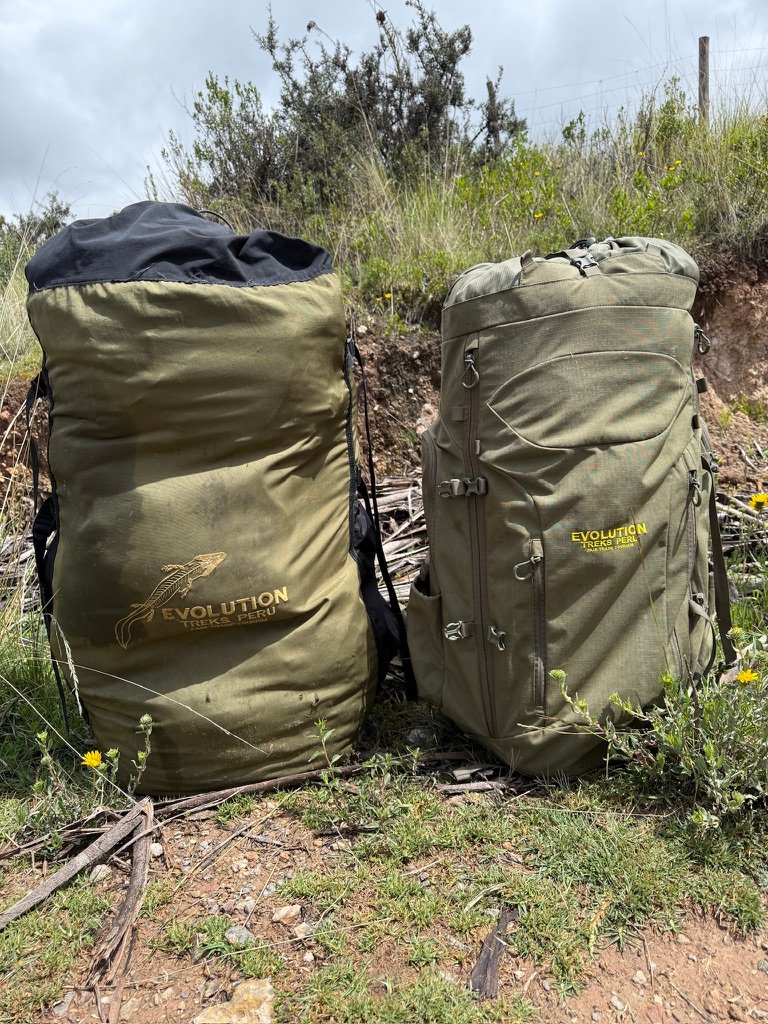
We invest in Kelty Glendale backpacks, bought abroad and shipped to Peru. On paper, they cost about 332 USD each. After shipping, customs, and taxes, each pack averages close to 490 USD by the time it reaches our porters’ hands.
Why do we do it?
Because human beings are not pack animals. Because a 30 kg load on a narrow mountain trail demands more than a cheap, makeshift sack. Because the long‑term health of a porter’s back, shoulders, and knees matters more than an extra point of profit on our balance sheet.
We could get away with less. Many companies do.
We choose not to.
The Numbers No One Advertises
There’s another invisible figure that says everything about values: the porter‑to‑traveler ratio.
For a group of 5 to 6 travelers, many operators will hire 11–12 porters—the bare minimum to get the job done on paper.
For the same group size, Evolution Treks Peru hires 13–15 porters.
That means:
- More salaries paid.
- More food purchased.
- More transport covered.
- More quality gear to buy and maintain.
It also means loads are lighter, shifts are fairer, and your presence on the trail translates directly into more jobs and better working conditions for more families.
When you choose us, you’re choosing a company that willingly increases its own costs to decrease the burden on its porters.
What Your Money Actually Does
This is what your Inca Trail investment becomes in real life:
- Equal pay and real opportunities for women. In 2025, our porter team was about 60–80 people. By 2026, that number had doubled, which means more women and men working under fairer conditions, with better equipment and more support.
- Decent rest, not just “somewhere to lie down.” Our porters sleep in real tents, with proper shelter—never in a dining tent without a floor once the guests are done eating. For an entire generation of porters with us, that old reality simply no longer exists.
- Backpacks designed for humans, not for saving money. Today, more than 70% of our porters use ergonomic packs and sleep in proper tents, and that number continues to grow.
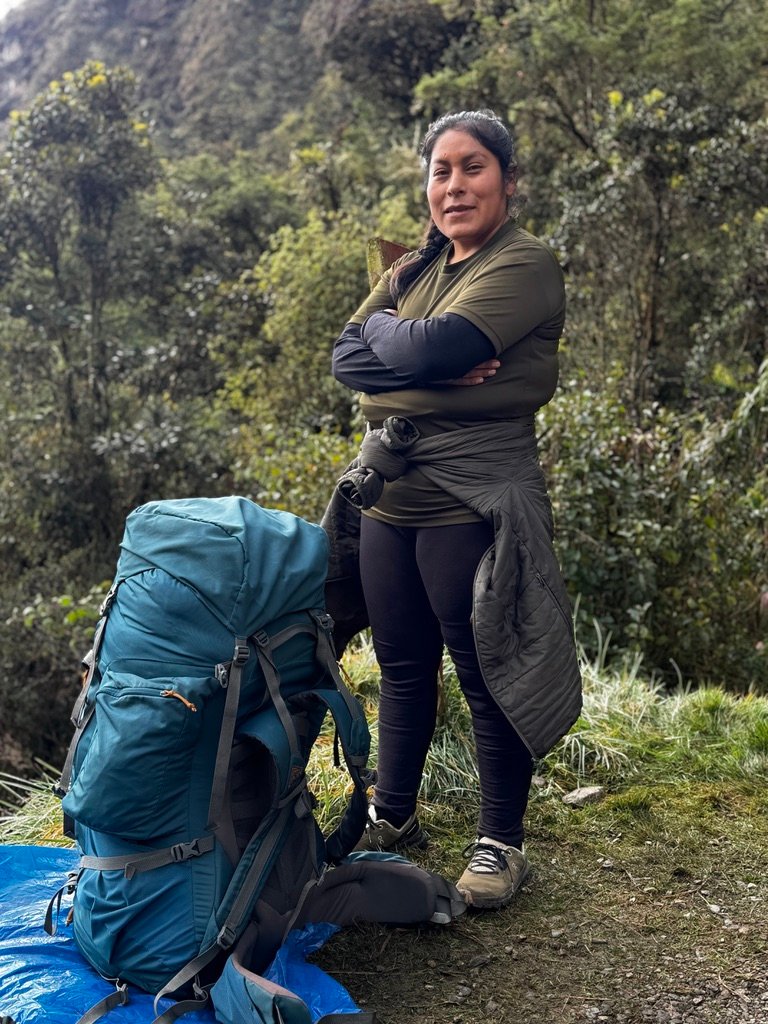
- Careers, not dead‑end jobs. For the first time in the history of the Inca Trail, four former women porters have become tour guides. That is not a line on a brochure. That is a life trajectory completely changed.
None of this would be possible without you.
Not “you” in the abstract—you, the traveler who decides that a fair wage, a real tent, and a safe backpack matter as much as a stunning sunrise at the Sun Gate.
What You Will See on the Trail
When you hike with us, you will see things most people never do:
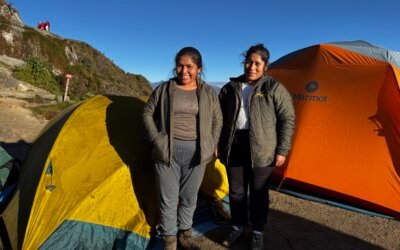
You will see women porters, not just read about them in a marketing paragraph.
You will see them shoulder‑to‑shoulder with their male colleagues, earning the same pay, sleeping in the same quality tents, protected from the cold after a long day’s work.
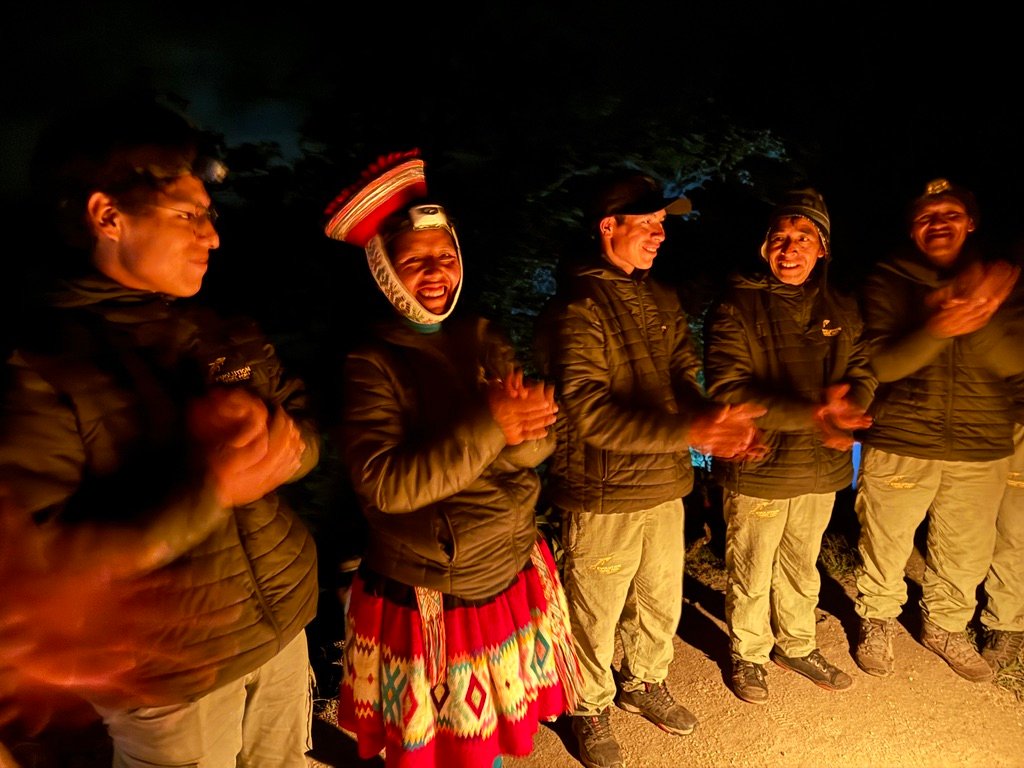
You will see a team that smiles not just because they are “expected to,” but because they know they are part of something different.
And you will know—viscerally, not theoretically—that your choice of operator is not neutral.
Your trust in us is visible in the gear they wear, the way they sleep, the weight they carry, and the paths now open to their daughters and sons.
No Talk. Just Walk.
For the first time in the history of the Inca Trail:
- A generation of porters has never had to sleep on a bare dining‑tent floor.
- Women who once carried loads now carry guidebooks and radios, leading groups as certified guides.
- A majority of porters for a single company use ergonomic backpacks and real tents as a standard, not a luxury.
In an industry where “ethical” is often just a tagline, your investment is doing something radical: it is changing the baseline of what is considered acceptable.
You don’t need to make a speech or wave a banner.
You just need to decide who carries your dream trip—and how you want them to be treated.
On the Inca Trail, your money always travels further than you do.
The only question is: what kind of footprint do you want it to leave?

0 Comments