

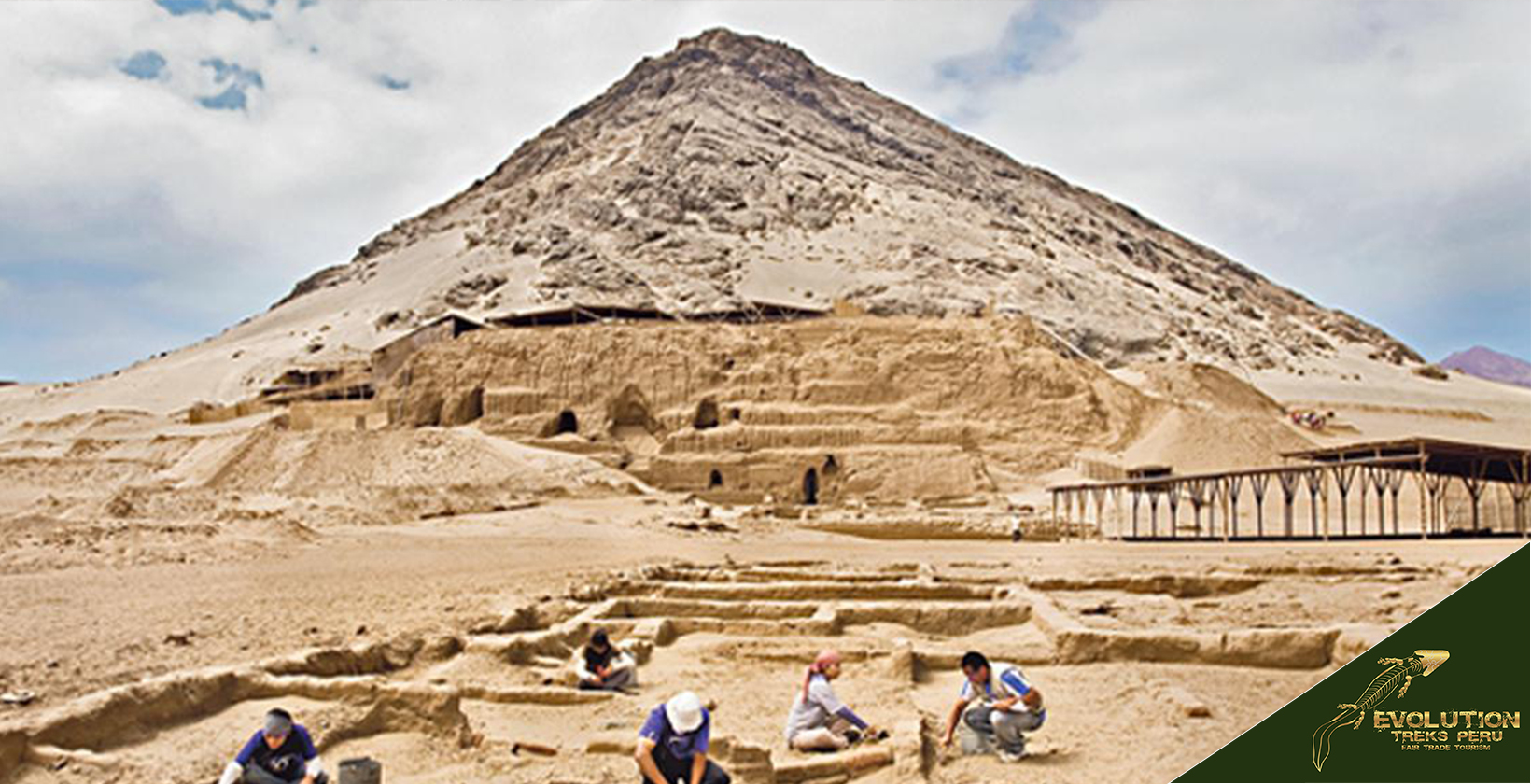
The ancient adobe brick pyramid known as La Huaca del Sol is located on the northern coast of what is now Peru. It was built by the Moche civilization, which flourished from 100 AD to 800 AD. This pyramid was constructed in multiple stages, situated near the volcanic peak of Cerro Blanco in the Moche Valley, near the city of Trujillo.
By 450 AD, eight different stages of construction had been completed. The technique involved adding new layers of bricks directly on top of the old ones. Creating a massive structure.
Archaeologists estimate that over 130 million adobe bricks were used, making it the largest pre-Columbian adobe structure in the Americas.
The primary purpose of La Huaca del Sol and the surrounding city was religious and ceremonial. It served as a center for ritual activities, including burials and royal residences. The pyramid stood at approximately 50 meters, with a base measuring about 340 meters by 160 meters.
Its central location within the Moche capital city added to its significance.
Throughout history, rulers carried out expansion and reconstruction projects on La Huaca del Sol. Unfortunately, during the Spanish occupation in the early 17th century, significant damage occurred due to looting. The colonists altered the course of the Moche River to facilitate their looting of gold artifacts from the temple.
As a result, erosion and looting have caused two-thirds of the structure to be lost forever. Leaving only a remaining height of 41 meters (135 feet).
La Huaca del Sol is important for Perus’ economy as it is a prominent historical and archaeological site. Numerous tourists are drawn to this location to explore Peru’s rich cultural heritage and its neighboring Huaca de la Luna site.
These ruins provide valuable insights into the architectural achievements and way of life during ancient times for visitors regarding guided tours at La Huaca del Sol.
It is challenging to provide an exact number as available tours vary depending on operators and the seasons. Explore Huaca del Sol’s rich offerings and the nearby archaeological sites.
Visitors can choose from various tours. These tours provide excellent opportunities for guided visits that delve into the site’s intriguing history, architecture, and cultural importance. La Huaca del Sol is nestled in Perus’ coastal desert near Trujillo on the northern coast. This prime location boasts proximity to the Moche River and Cerro Blanco volcanic peak. This unique combination is pivotal in shaping the site’s exceptional setting brimming with historical value. Although it remains unspecified in this given information how many buildings comprise this complex, the star attraction is undeniably Huaca del Sol.
This colossal adobe pyramid stands as a symbolic architectural gem representing the mastery achieved by the Moche civilization. With its multiple levels and structures, this site reverberates with religious significance and serves as a ceremony hub. Precise figures regarding tourist numbers at La Huaca Del Sol must be made available despite this lack of data. It continually magnetizes a significant stream of visitors yearly due to its profound historical significance and immense cultural worth. Its appeal extends to archaeology enthusiasts, avid history lovers, and anyone keen on unraveling ancient civilizations.
What is the La Huaca del Sol History?
In northern Perus’ enchanting Moche Valley lies a place steeped in significance – La Huaca del Sol or The Temple of the Sun- an archaeological treasure trove preserving remnants belonging to the Mochica civilization that thrived around 500 AD. This imposing adobe structure stood out amongst its peers for being one of humanity’s most expansive during that era. Positioned at the very heart of administrative and spiritual affairs. This architectural marvel held a singular purpose – reverence for their primary deity – the sun god.
A testament to human ingenuity. La Huaca del Sol gradually expanded over time through various meticulously planned stages. Yet it fatefully fell into disuse and abandonment as the Moche civilization ended. Tragically subsequent generations who put little value on its cultural heritage desecrated and plundered its once great halls. However, beacons of this magnificent creation have prevailed against all odds.
Attracting inquisitive travelers from far and wide. In acknowledgment of its historical significance. It has been accorded the prestigious UNESCO World Heritage Site status. Archaeological campaigns at this revered site have unearthed invaluable artifacts linked to the Moche civilization’s excellence in craftsmanship. Amongst these discoveries are ceramic works adorned with intricate motifs that provide glimpses into their artistic prowess.
Additionally, astonishing metalwork showcases mastery indicative of their technical acumen, while exquisitely woven textiles depict their expertise in textile production. Artful and captivating are awe-inspiring murals adorning temple walls – vivid interpretations that collectively unveil aspects of Moche life encompassing religious devotion alongside imaginative mythologies.
Another profound creation stands in concert with La Huaca del Sol: La Huaca de la Luna (The Temple of the Moon). Together. These sibling temples grant us unparalleled insight into cultural customs and traditions interwoven seamlessly within ancient Moche society’s fabric.
What does La Huaca del Sol Mean?
La Huaca del Sol is a Spanish phrase that translates to “The Temple of the Sun” in English. “Huaca” is a term used in the Andean region of South America to refer to a sacred or important place, such as a temple, pyramid, or burial site. “Sol” means “sun,” and the Moche culture, who built La Huaca del Sol, worshipped the sun as a powerful deity. Therefore, the name “La Huaca del Sol” refers to the Moche culture’s largest religious center, dedicated to the worship of the sun.
What are the artifacts in the La Huaca del Sol?
Many artifacts have been discovered at La Huaca del Sol during archaeological excavations. Some of the most significant include:
- Ceramics: The Moche culture is known for its fine ceramic art, and many examples of their pottery have been found at La Huaca del Sol. The ceramics often depict scenes of daily life, religious rituals, and mythological figures.
- Metalwork: The Moche were skilled metallurgists and produced a wide range of metal objects, including weapons, tools, and jewelry. Many examples of Moche metalwork have been found at La Huaca del Sol, including elaborate headdresses, nose rings, and earrings.
- Textiles: The Moche were also known for their textile art, and fragments of textiles have been found at La Huaca del Sol. The materials often depict scenes of daily life or religious ceremonies.
- Burial goods: The Moche buried their elite members with various valuable goods, including ceramics, metalwork, and textiles. Many of these burial goods have been found at La Huaca del Sol, providing insight into the Moche civilization’s material culture and social hierarchy.
- Mural paintings: The temple’s walls were decorated with elaborate paintings depicting scenes of daily life, mythological stories, and religious ceremonies. Some of these murals have survived and provide valuable information about the Moche culture’s art and beliefs.
These artifacts have helped researchers better understand the Moche culture’s way of life, religion, and social hierarchy.
When did La Huaca del Sol get its name?
It must be made clear when La Huaca del Sol got its name, as the site was abandoned and largely forgotten when the Spanish arrived in Peru in the 16th century. The name “La Huaca del Sol” was likely given to the site by archaeologists or explorers who rediscovered it in the late 19th or early 20th century.
The German archaeologist Max Uhle carried out the first known systematic site exploration in the early 20th century. Uhle named the site “Huaca del Sol” in his reports, and the name has been used ever since. “Huaca” is a term used in the Andean region to refer to a sacred or important place, and “Sol” means “sun,” which reflects the temple’s importance as a religious center dedicated to the worship of the sun god.
How did La Huaca del Sol become well-known?
In the late 19th and early 20th centuries, there was a growing interest in the archaeological exploration of La Huaca del Sol. This site had been abandoned for many years and was largely forgotten once rediscovered. Max Uhle, a German archaeologist. Played a crucial role in uncovering its significance through his systematic exploration in 1901.
Uhles’ work led to extensive excavations revealing numerous artifacts and providing detailed documentation of the architecture and layout of the temple. Following Uhles’ efforts, other archaeologists such as Rafael Larco Hoyle and Julio Tello continued to investigate the site through further excavations and studies. Their contributions were instrumental in establishing La Huaca del Sol as a significant center of the Moche culture. These investigations also shed light on various aspects of their religion, politics, and way of life.
Today La Huaca del Sol remains an important destination for tourists interested in Andean archaeology. Its unique architecture and rich history continue to captivate visitors and researchers alike with their enduring allure.
Which Civilization used La Huaca del Sol for what?
Built and utilized by the Moche civilization from 100 BCE to 800 CE in present-day northern Peru, La Huaca del Sol stands as a testament to their flourishing culture characterized by distinctive expressions encompassing artistry, architecture, and social structures that operated on multifaceted levels. Within this expansive complex emerged a remarkable structure – La Huaca del Sol – revered as a significant spiritual haven intertwined with political authority for the Moche civilization.
This grand temple held profound beliefs among its people who regarded it as divine dwelling quarters and a paramount location for momentous religious rituals entailing sacrifices. The ruling elite also seized this formidable edifice to conduct court proceedings while government affairs unfolded within their far-reaching empire. Countless hours of endeavor resulted in a towering adobe construction that soared above 40 meters (130 feet).
It established itself as South America’s most monumental pre-Columbian creation alongside global recognition for being one of its largest adobe concoctions. Sprawling across varied levels encompassing terraces, plazas, and ramps adorned with elaborate relief carvings and vibrant murals enhanced its allure, further underlining these creative accomplishments associated with the Moche civilization. Regrettably, time was not kind to La Huaca del Sol as downfall marked its path during the 8th century CE when the conquering Huari population partially dismantled the temple while establishing their religious center christened Huaca del Cerro atop its foundations.
What are the theories about the origin of the La Huaca del Sol?
There are several theories about the origin of La Huaca del Sol. Still, there is no definitive answer, as the site was built by a civilization without written records. Here are some of the leading theories:
- The Moche civilization: The most widely accepted theory is that La Huaca del Sol was built by the Moche civilization, which thrived in the region from about 100 BCE to 800 CE. The temple’s unique architecture, iconography, and artifacts all point to the Moche as its builders.
- Earlier cultures: Some archaeologists have suggested that earlier cultures, such as the Cupisnique or the Salinar, may have laid the groundwork for La Huaca del Sol. These cultures also produced impressive adobe structures and ceramics, and it is possible that they influenced the development of the Moche culture.
- Outside influence: Some evidence suggests that the Moche may have had contact with other cultures, such as the Nazca or the Tiwanaku. These cultures may have influenced the design or construction of La Huaca del Sol.
- Divine inspiration: According to Moche mythology, their civilization was created by the god Ai Apaec, who taught them how to build temples and other structures. Some researchers have suggested that divine visions or dreams may have inspired the design of La Huaca del Sol.
Overall, while there are different theories about the origins of La Huaca del Sol, the most widely accepted view is that it was built by the Moche civilization, which left a lasting legacy of remarkable artistic and architectural achievements.
What are the myths about La Huaca del Sol?
- La Huaca del Sol is a major religious and cultural site for the Moche civilization. Is surrounded by numerous myths and legends. Let us explore some of the most remarkable ones:
In Moche mythology. The god Ai Apaec said to have created both the world and the Moche civilization. This divine entity imparted knowledge to the Moche people, including how to construct temples and other structures like La Huaca del Sol.
2. A renowned image found at La Huaca del Sol portrays a spider with a human head, known as the “divine spider.” This symbolizes Moche’s belief in the interconnectedness of all things and is closely associated with Ai Apaec. The Moche civilization was highly regarded for its intricate sacrificial rituals. Many believe that La Huaca del Sol served as a significant location for these rituals. Blood held sacred significance within their religious ceremonies. Serving to seek blessings from their gods.
3. Legends suggest that when the conquering Huari people subdued the Moche civilization. They destroyed La Huaca del Sol as a symbol of their triumph. They constructed their religious center, Huaca del Cerro, on its ruins. Local lore includes tales of a curse upon La Huaca del Sol. It is believed that anyone who disturbs this site will be plagued by misfortune. While needing more scientific proof. This belief underscores its cultural and spiritual significance among this region’s residents.
Is La Huaca del Sol Important for Peru History?
La Huaca del Sol holds great significance in Peru’s history as it stands as one of the most important archaeological sites in the nation. This temple offers valuable insights into the Moche civilization, renowned as one of ancient Peru’s most cultured and influential societies.
The Moche people have left an indelible mark through their achievements in art, architecture, and technology which still hold reverence today. La Huaca del Sol is a testament to their exceptional engineering prowess, artistic mastery, and religious faith, allowing us to glimpse their way of life within their world. Furthermore, this site has significantly contributed to the field of Andean archaeology. Crucially shaping our understanding of pre-Columbian cultures within the region.
By uncovering artifacts and information at La Huaca del Sol, we have gained insights into aspects like the Moche economy, social structure, religion, and politics. These findings have been instrumental in reconstructing the rich history of the Andean region before the Spanish arrival. In conclusion. La Huaca del Sol represents an invaluable cultural heritage site for Peru and beyond; its preservation and continued study are essential for comprehending the history and culture of the Andean region respectfully.
Where is La Huaca del Sol Located?
Located on the northern coast of Peru. Near the modern city of Trujillo. Lies La Huaca del Sol. This archaeological site is situated approximately 5 kilometers south of the Moche River and about 1 kilometer inland from the Pacific Ocean.
The Moche Valley, where this site is found, is an arid region known for its significance in archaeology. It hosts various important sites, including Huaca de la Luna (Temple of the Moon). Also constructed by the Moche civilization. In the past, the Moche Valley thrived as a fertile agricultural area supporting the economy and population of the Moche civilization. Even today it remains a culturally and historically significant region in contemporary Peru.
What are the coordinates of La Huaca del Sol?
The coordinates of La Huaca del Sol are approximately 8.1035° S, 79.0413° W. These coordinates place the site in the Moche Valley, near the modern-day city of Trujillo, in the northern coast of Peru.
How is the Map of La Huaca del Sol Layout?

How is the Geography of La Huaca del Sol?
La Huaca del Sol is situated in the arid coastal region of northern Peru and this geography plays a significant role in its characteristics. Perched on a vast platform in the Moche Valley. The temple enjoys its position amidst a flat and dry landscape, bordered by mountains on three sides and the majestic Pacific Ocean on the fourth. Within this desert expanse, rainfall is scarce sandy soils are abundant, vegetation is sparse and the climate is hot and dry.
The region’s uniqueness shines through its remarkable flora and fauna – cacti. Hummingbirds and sea lions to name a few. Running through the valley is the Moche River – an indispensable source of water for both agriculture and sustaining the population of the Moche civilization. Additionally.
It was a vital means of transportation and trade as it flowed from the Andes mountains down to meet with the Pacific Ocean. The geographical setting of La Huaca del Sol profoundly influenced various aspects of life for these ancient people – their economy, culture, and day-to-day existence were shaped by their surroundings.
This arid climate and limited resources pushed the Moche to develop advanced irrigation, agriculture, and trade systems. These innovative practices not only allowed them to survive but thrive as well. Such resilience enabled them to erect awe-inspiring structures like La Huaca del Sol.
What is the Geological Profile of the area around La Huaca del Sol?
The geological profile of La Huaca del Sol is characterized by the use of adobe bricks made from a mixture of mud, straw, and water. The adobe bricks were formed by hand and dried in the sun, and they were then used to construct the massive platform and buildings that make up the temple.
The adobe bricks used at La Huaca del Sol were made from the soil and clay found in the surrounding Moche Valley. The soil and clay were mixed with straw and water to create a pliable mud mixture that was then molded into bricks. The bricks were left to dry in the sun, which took several weeks.
Adobe bricks allowed the Moche civilization to construct massive structures like La Huaca del Sol using local materials and traditional building techniques. The adobe bricks were lightweight, durable, and easy to work with, making them ideal for constructing the complex terraces, plazas, and ramps that make up the temple.
Overall, the geological profile of La Huaca del Sol is characterized by the use of adobe bricks and the surrounding soil and clay of the Moche Valley, which allowed the Moche civilization to create one of the most impressive architectural achievements of the ancient Andean region.
What are the Hiking Routes in La Huaca del Sol?
While La Huaca del Sol may not be known as a prime hiking spot. It offers an opportunity for visitors to explore its grounds on foot. Connecting paths enable exploration between terraces, plazas, and buildings within this prominent archaeological site. Remember that La Huaca del Sol deserves preservation as an archaeological treasure; therefore strict adherence to specified rules and guidelines is required from all who visit.
Touching or removing any artifacts or structures remains strictly prohibited; staying on designed pathways becomes mandatory to prevent damage from occurring upon fragile adobe bricks comprising significant portions of this magnificent temple structure. Given the climate within this region being rather hot and arid conditions being a commonality here means it would greatly benefit all who venture into these sacred grounds optimally prepare themselves: bring adequate supplies of water and sun protection. Getting there poses no great problem, as car and bus routes can transport you easily.
Guided tours are also available for those who want a more comprehensive understanding of the temples’ rich history. Despite not having a customary reputation for attracting hikers, the unique architecture, historical value, and cultural significance surrounding La Huaca del Sol make it an incredibly engaging place to traverse by foot.
When is the best time to visit La Huaca del Sol?
The dry season, which lasts from May to September, is the recommended time to visit La Huaca del Sol. You can expect pleasant and sunny weather with minimal rainfall during this period. This makes it easier to explore both the site and its surrounding area. Although temperatures may soar during June, July, and August, the site’s coastal location ensures a cool breeze that provides relief. On the other hand, the wet season occurs from October to April and can bring heavy rain and humidity.
This may prove challenging for visitors exploring the site and its surroundings. However, a visit during this time can provide a unique experience as the rains enhance the vibrant colors of the region’s flora and fauna. Regardless of when you choose to visit La Huaca del Sol, it is crucial to come prepared. Make sure to bring ample water, sun protection, and suitable clothing for the hot and dry climate of the region.
Where to stay in La Huaca del Sol?
When planning a visit to La Huaca del Sol, a popular tourist destination in Peru near the city of Trujillo. It’s important to consider the different accommodations available. Here are some options for where you can stay:
- Trujillo city center: For those looking for convenience. Many hotels and guesthouses are located in the city center of Trujillo—approximately 8 kilometers (5 miles) from La Huaca del Sol. Staying here allows easy access to restaurants, shops, and other amenities.
- Huanchaco Beach: If you prefer a beachy atmosphere. Huanchaco is an ideal choice. Located about 12 kilometers (7.5 miles) from La Huaca del Sol, this famous beach town offers a range of accommodations, including hotels, hostels, and guesthouses.
- Moche: For a more authentic and rural experience near La Huaca del Sol, consider staying in Moche. This small town is only 4 kilometers (2.5 miles) away and offers basic accommodations such as guesthouses and small hotels.
- Chicama: Surfers may find it fascinating as it is approximately 60 kilometers (37 miles) from La Huaca del Sol and is renowned for its world-class surfing opportunities. Here you can find various accommodations, including hotels and guesthouses.
In conclusion, diverse options are available near La Huaca del Sol, ranging from budget-friendly guesthouses to luxurious hotels. Visitors must select an option that aligns with their budget and travel preferences for an enjoyable stay.
What are the Tours for La Huaca del Sol?
For those eager to unravel La Huaca del Sols’ captivating history and grasp its indelible significance. There exists an assortment of breathtaking tours awaiting consideration:
- Archaeological Tours: Guided by seasoned archaeologists whose expertise is unparalleled. These immersive jaunts offer meticulous analyses of the temple site. Visitors partake in discoveries concerning Moche civilizations’ culture, religious practices, and awe-inspiring architectural grandeur. The opportunity to see the sites’ unearthed treasures and structures further enhances the experience.
- Cultural Tours: Embarking on these holistic excursions entails delving into La Huaca del Sols’ profound cultural context within Peruvian history. Aperture-widening encounters with diverse local flora and fauna foster a deeper connection to this archaeological gem. Sample traditional Peruvian delicacies and engage in customs that breathe life into age-old traditions that have shaped regional identity.
- Adventure Tours: Indulging thrill seekers. These adrenaline-pumping tours interleave a visit to La Huaca del Sol with invigorating outdoor activities such as surfing, trekking or horseback riding. Guests can revel in nature’s magnificent offerings while relishing an unforgettable rendezvous with the temple. Making for an unforgettable escapade.
- Private Tours: Elegantly tailored private tours place customization at their core. Granting visitors the liberty to explore La Huaca del Sol on their terms. The art of co-designing bespoke itineraries with knowledgeable guides ensures an intimately personalized adventure curated exclusively for individual interests. To sum up. Numerous tour options beckon potential visitors keen on experiencing the wonders of La Huaca del Sol – from meticulously scholarly archaeological expeditions to more laid-back cultural immersions or thrilling adventures. Selecting a tour that resonates profoundly with personal tastes and envelops both temple exploration and regional immersion will undoubtedly lead to a transformative journey of discovery.
What are the Closest Destinations to La Huaca del Sol?
La Huaca del Sol, situated in the picturesque Moche Valley near the city of Trujillo, awaits travelers with a plethora of cultural and natural marvels. For those visiting this historic site. Here are some nearby destinations worth exploring:
- Huaca de la Luna: Approximately 1 kilometer (0.6 miles) away from La Huaca del Sol lies Huaca de la Luna, an ancient temple constructed by the Moche civilization. This awe-inspiring structure boasts remarkable murals and striking iconography.
- Chan Chan: Located around 5 kilometers (3 miles) from La Huaca del Sol, Chan Chan served as the capital of the Chimu civilization before the Inca era. Renowned for its magnificent adobe architecture. This ancient city will leave visitors captivated. Trujillo Historic Center: Merely 10 kilometers (6 miles) distant from La Huaca del Sol lies the historical heart of Trujillo. This area showcases delightful examples of colonial architecture and houses various museums and cultural landmarks such as Plaza de Armas and Casa de la Emancipación.
- Huanchaco Beach: Situated roughly 15 kilometers (9 miles) away from La Huaca del Sol, Huanchaco beckons beach enthusiasts with its scenic coastline and vibrant surf culture. Don’t miss out on experiencing a ride on the traditional reed boats known as “caballitos de totora’.
In conclusion. The region surrounding La Huaca del Sol provides an array of enthralling destinations for explorers to immerse themselves in – from ancient temples and archaeological sites to colonial marvels and natural wonders.
How to Get from Lima to La Huaca del Sol?
Getting from Lima to La Huaca del Sol can be done conveniently by air or bus. Let’s look at the details for each option. If you travel by air the closest airport to La Huaca del Sol is Capitan FAP Carlos Martinez de Pinillos International Airport in Trujillo. Several airlines offer daily flights from Lima to Trujillo. With flight times ranging from 1 to 1.5 hours. Once you arrive at the airport. You can easily get to La Huaca del Sol by taxi or private transfer.
On the other hand. If you prefer to travel by bus. Several bus companies operate daily services from Lima to Trujillo.
The journey time for this option typically ranges from 8 to 10 hours. Buses depart from various terminals in Lima, including Plaza Norte and Javier Prado terminals. From Trujillo. You can then take a taxi or bus to La Huaca del Sol. It’s worth noting that the road from Lima to Trujillo can get quite busy and congested, particularly during peak travel times.
Additionally, long-distance bus travel has certain safety risks that visitors should be aware of and take precautions for their own well-being. Overall both air and bus travel options offer convenience and affordability for reaching La Huaca del Sol from Lima. It ultimately depends on your needs and preferences when choosing between the two options.

What to know before going to La Huaca del Sol?
Before visiting La Huaca del Sol, a few key points must be considered to guarantee a safe and pleasurable experience. Please keep the following tips in mind:
- Weather: The region surrounding La Huaca del Sol is arid and can become hot and dry, especially during summer. It is highly advisable to bring ample water, sun protection, and suitable clothing to remain comfortable in the heat.
- Admission Fees: To enter La Huaca del Sol there is an admission fee that is typically paid on-site. The fees may vary depending on the season and type of tour selected.
- Rules and Regulations: La Huaca del Sol is a protected archaeological site, which necessitates visitors adhere to specific rules and regulations to preserve the site’s integrity. These guidelines include refraining from touching or removing any artifacts or structures and staying on designated paths.
- Guided Tours: For those seeking a more comprehensive exploration of the sites’ history. Guided tours are available. Booking a tour in advance can ensure a more enjoyable and informative experience.
- Accessibility: It should be noted that La Huaca del Sol does not offer wheelchair accessibility thus, individuals with mobility issues might encounter difficulty maneuvering certain areas of the site. Wearing comfortable walking shoes and bringing any necessary mobility aids are recommended.
- Accommodation: In the nearby city of Trujillo, several accommodation options range from budget-friendly hostels to more upscale hotels. To secure availability. It is advisable to book accommodation in advance. In conclusion. Visiting La Huaca del Sol offers an unforgettable experience that necessitates adequate planning and preparation by following these recommendations. Visitors can ensure their visit remains safe, enjoyable, and educational at this significant archaeological site.
What is the best itinerary to visit La Huaca del Sol?
To make the most of your visit to La Huaca del Sol, it’s important to consider your travel plans and personal interests. To help you out, here is a suggested itinerary for a half-day trip to the site:
- Start your day early: The site opens its doors at 9 am, and its recommended to arrive early to avoid large crowds and the intense midday heat. This will allow you to explore in peace.
- Begin your exploration: Kick off your visit by exploring the main temple complex. Take time to admire the terraces, plazas, and ramps that form part of this historical site. Remember, it’s important to stick to the designated paths and avoid touching or removing any artifacts or structures.
- Take advantage of the museum: After exploring the site, head to the on-site museum for a deeper understanding of the Moche civilization and La Huaca del Sol’s rich history. The museum boasts an impressive collection of artifacts, including ceramics, textiles, and jewelry – truly a treasure trove of knowledge.
- Optional extra: If time permits, consider visiting Huaca de la Luna, within walking distance (about 1 kilometer/0.6 miles) from La Huaca del Sol. The Moche people also constructed this temple and showcased stunning murals and iconography.
- Wrap up your visit: Remember that La Huaca del Sol closes its doors at 4 pm.
- To avoid intense afternoon heatwaves and make time for other activities. It’s advisable to leave by mid-afternoon. Remember there is more: Don’t forget that La Huaca del Sol can be part of a larger cultural exploration in this region! Consider combining your visit with nearby attractions such as Trujillo City, Huanchaco Beach, or even the Chan Chan archaeological site. With proper planning and following this suggested itinerary. You’ll surely have an enriching and memorable experience at this significant archaeological site.
How much does it cost to visit La Huaca del Sol?
The cost of visiting La Huaca del Sol can vary based on a few factors, including the type of tour. The time of year. And whether you are a national or international visitor. Let’s take a look at some estimated costs for visiting La Huaca del Sol:
– Admission fee: For national visitors. The admission fee is 10 Peruvian soles.
Guided tour: If you prefer a guided tour. Prices can range from 50 to 150 Peruvian soles per person.
The final cost depends on various factors, such as the duration of the tour. Customization options and the tour company you choose. – Transportation: How you decide to reach La Huaca del Sol will influence your transportation costs. Taking a taxi from Trujillo to the site usually ranges from 30 to 50 Peruvian soles each way. On the other hand, taking a bus is more affordable, with costs around 3 5 Peruvian soles each way.
What is the best vehicle for visiting La Huaca del Sol?
When visiting La Huaca del Sol, choosing the best mode of transportation largely depends on individual preferences and needs. Here are a few options worth considering:
Taxi: Taxis are abundantly available in Trujillo and can be a convenient and reasonably priced choice for exploring La Huaca del Sol. Taxis can be rented for either a half-day or a full day. Offering door-to-door service to the site. Rental car: If you prefer flexibility and independence while exploring the area. Renting a car is a viable option. However. It’s important to note that driving in Peru can present challenges.
Particularly when it comes to unfamiliar roads and traffic. Therefore. Visitors should feel confident in their ability to navigate such circumstances. Tour bus: Tour buses are available for those seeking a more structured and guided experience of La Huaca del Sol and its vicinity.
These tour buses typically include transportation, admission to the site, and a knowledgeable guide – making them an informative and convenient choice. Ultimately. Determining the ideal means of transportation for your visit will depend on personal preferences, budgetary considerations, and comfort levels with unfamiliar roads and traffic. Visitors should conduct thorough research beforehand so that they can choose the option that best suits their specific needs and expectations.
How many hours should a person spend in La Huaca del Sol?
The duration of a visit to La Huaca del Sol varies from person to person based on individual preferences and interests. On average. Exploring the site and its surroundings can take 1 to 2 hours to half a day if visitors decide to explore the site independently. They can expect to cover the important areas of the temple within 1 2 hours, like the terraces, plazas, and main pyramid.
However, for a more detailed understanding of the site’s history, opting for a guided tour may be beneficial as it could take longer. Visitors may want to explore the nearby Moche countryside and other regional cultural attractions, such as Huaca de la Luna and Chan Chan, which could add extra time to their visit. Hence, visitors should allocate at least 2 to 3 hours for exploring La Huaca del Sol and its surroundings, but depending on personal interests and preferences, additional time might be needed.
What is the nearest city to La Huaca del Sol?
La Huaca del Sol is located approximately 10 kilometers (6 miles) southeast of Trujillo. Making it the nearest urban center to the site. Trujillo, the capital city of the La Libertad region. Is a vibrant destination that offers many cultural, historical, and natural attractions.
As the main transportation hub for the region. Trujillo boasts an airport and bus terminal that provide convenient connections to other destinations in Peru. Whether you are on a shoestring budget or looking for more luxurious accommodations, Trujillo has a wide range of options including budget-friendly hostels and upscale hotels to cater to every traveler’s needs.
How is the Past of La Huaca del Sol presented to the visitors?
Visitors to La Huaca del Sol can gain insight into its past through various means, such as guided tours, informational panels, and exhibits. Those desiring a deeper understanding can partake in guided tours where expert guides share knowledge about facets like the Moche civilization’s economy, social structure, and religion. These adept guides employ multimedia presentations as well as storytelling techniques to breathe life into the historical narrative surrounding this ancient site.
Informational panels across different areas within La Huaca del Sol furnish details encompassing architectural history and other noteworthy elements. Perhaps noteworthy is that these informative boards facilitate self-guided tours by offering information in both Spanish and English.
Supplementary insights into Moche civilizations’ artistry, religion, and daily routines can be found in nearby museums such as The Museum Of The Royal Tomb Of Sipan or The National University Of Trujillo Museum Of Archaeology. Evidently. La Huaca del Sol presents an immersive and enlightening experience by availing of guided tours, informational panels, and exhibits in order to provide comprehensive historical context.
Who are the scientists who worked on La Huaca del Sol?
Over the years. Several scientists, researchers, and archaeologists have dedicated their efforts to La Huaca del Sol. Among these notable individuals and organizations is Dr. Rafael Larco Hoyle, a Peruvian archaeologist who discovered the site in 1937. Dr. Larco Hoyle extensively researched the Moche civilization and its culture through excavation and analysis.
Another key figure is Dr. Luis Jaime Castillo Butters, a respected Peruvian archaeologist and former Minister of Culture of Peru. He has also contributed to studying the Moche civilization and is actively involved in ongoing excavation and preservation endeavors at the site.
In addition to these individuals, the National University of Trujillo has played a significant role in studying and excavating La Huaca del Sol. The university’s esteemed archaeology department has conducted research focused on unraveling the site’s historical significance.
The Instituto Nacional de Cultura, a Peruvian government organization, performs vital work in preserving and promoting cultural heritage throughout the country. Their involvement in La Huaca del Sol includes preservation efforts, restoration initiatives, and managing tourism activities at the site.
Through collaborative efforts between these experts and institutions, much progress has been made in our understanding of the Moche civilizations’ culture thanks to their collective study and preservation work on La Huaca del Sol.
How is the Preservation of La Huaca del Sol?
The preservation of La Huaca del Sol holds utmost importance within the Peruvian governments’ agenda and among archaeological authorities, given its immense cultural significance. Several strategies are diligently implemented to conserve this remarkable historical landmark:
Conservation efforts: Vigilant monitoring undertaken by archaeologists and conservationists ensures ongoing maintenance of the site to thwart any potential deterioration or damage. This includes stabilizing adobe walls against structural weaknesses. Addressing erosion concerns meticulously.
As well as fortifying defenses against natural calamities. Controlled access: To prevent overwhelming crowds and mitigate the impact of tourism. Access to the site is carefully limited. Visitors are expected to conform to specific regulations and rules where they abstain from handling or relocating any relics or structures while adhering exclusively to designated paths.
Community involvement: The active engagement of the local community is vital in preserving and managing the site. Their involvement extends into providing guided tours. Assisting visitors. And endorsing sustainable tourism practices. Education and outreach: To ensure comprehensive awareness about the site’s historic importance. Educational programs alongside widespread outreach initiatives are conducted. These initiatives aim to stimulate responsible tourism practices that contribute to preservation efforts.
In summary, collaborative efforts from governmental authorities, conservationists, local communities, and visitors converge effectively in safeguarding La Huaca del Sol for future generations. The core objective remains to protect this treasured heritage and ensure its cultural value persists for all to appreciate respectfully.
Is La Huaca del Sol in UNESCO World Heritage Sites?
Unfortunately, devotees of historical wonders seeking UNESCO recognition for La Huaca del Sol may be disappointed for now since it has yet to possess that esteemed title. However, despair is not! As part of the mesmerizing “Moche Route” cultural tourism circuit, La Huaca del Sol holds pride in place alongside other dazzling Moche archaeological sites, namely Huaca de la Luna and Chan Chan. Duly recognized for its prominence, the Peruvian government has bestowed upon the Moche Route the honor of Cultural Patrimony of the Nation.
These distinguished accolades come paired with concerted efforts to foster sustainable tourism practices and cherish this region’s priceless cultural heritage.
Is La Huaca del Sol under danger?
Although La Huaca del Sol is not currently facing any significant danger. It is constantly monitored and measures are being taken to safeguard and conserve the site. Nevertheless. Like many other archaeological sites. There are some potential risks and challenges that could affect its future. These include the possibility of natural disasters, such as earthquakes, which could cause damage or even destruction to the site. Additionally, climate change poses a threat as it may lead to increased erosion or flooding due to changes in precipitation patterns.
Furthermore, human impact cannot be disregarded, as tourism, vandalism, and looting have the potential to endanger the site. However, attempts are being made to mitigate these risks by educating visitors to restrict access to the site and involving the local community in conservation efforts.
Lastly, it is worth noting that limited funding and resources for site management and conservation could pose a long-term challenge to preserving La Huaca del Sol. Despite these potential risks and challenges for La Huaca del Sols, preservation prospects and endeavors are underway to protect and conserve the site for future generations.
Adding Cusco to your Peru trip? See our Machu Picchu tours and Inca Trail tours.
What our guests say




Questions about your dates? Ask Miguel
Tell us your dates and we reply instantly on WhatsApp.

0 Comments